Long before Africa’s liberation movements were written into history books, they were spoken into existence through stories, songs, poetry, oral traditions, and collective memory.
Communication has always been central to African survival, identity, and resistance. More than half a century after political independence, however, the continent faces a different struggle.
Colonialism is no longer the singular common enemy, and defining a unified continental vision has become increasingly complex.
While Africa Day continues highlighting themes of development and progress, the practical meaning of that progress often remains contested.
Yet beneath policy frameworks and political rhetoric lies a deeper question about who gets to define Africa’s realities and future. African literature and storytelling have long existed at the intersection of land, language, and liberation, preserving dignity in the face of erasure.
Stories have been used to dispossess and dehumanise, but they also possess the power to restore memory, affirm identity, and shape the consciousness of generations.
In the aftermath of colonialism, African writers, intellectuals, and cultural movements recognised that political liberation alone would never be enough without reclaiming the continent’s voice and identity.
A literary renaissance emerged across Africa, seeking to reconstruct African realities through stories that reflected the continent’s depth, complexity, and humanity. Literature became more than artistic expression. It became a site of resistance where distorted stereotypes could be dismantled and indigenous knowledge systems reaffirmed.
For many writers, the question of language itself became deeply political. Whether to write in colonial languages for wider accessibility or in indigenous African languages as an act of cultural resistance reflected a broader struggle over identity and self-definition.
Thinkers such as Ngũgĩ wa Thiong'o argued that language carries memory, worldview, and historical consciousness. Reconnecting with indigenous languages therefore became part of a wider project of cultural renewal, enabling African societies to reclaim heritage, restore dignity, and strengthen collective self-determination.
That struggle for narrative ownership now extends beyond literature and traditional media into the digital space.
Digital media continues changing how Africans engage with information, identity, culture, and each other across borders. African challenges such as governance, unemployment, migration, and social justice remain interconnected, and digital communication provides space for collective dialogue and engagement.
Decades ago, African leaders envisioned connecting the continent through roads, railways, and trade corridors. In many ways, digital media now offers another form of connectivity, linking African societies culturally, intellectually, and politically in real time.
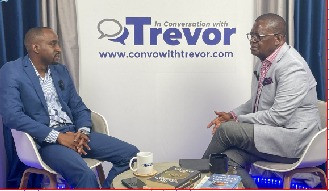
The rise of podcasts, digital publishing, online journalism, streaming platforms, and creator-led media has widened access to information and public discourse.
More importantly, these platforms allow a new generation of Africans to tell their own stories, challenge dominant narratives, and build communities beyond geographical boundaries. Yet despite growing digital adoption across the continent, these platforms remain underused as tools for deeper collaboration, knowledge exchange, and Pan-African engagement.
This requires three shifts: First, continental investment in digital public infrastructure that prioritises accessibility over surveillance. Second, educational curricula that teach media literacy and narrative analysis alongside numeracy and science. Third, funding mechanisms for cross-border creator collaborations that do not depend on Western platforms or donors.
Communication across Africa has always done far more than simply transfer information. It has preserved memory, strengthened community, and shaped political consciousness across generations.
Oral traditions, liberation literature, community gatherings, radio broadcasts, and intellectual movements all played a role in connecting African societies beyond colonial borders and imposed divisions. In many ways, communication became central to how Africans understood themselves, their histories, and their collective struggles for liberation, dignity, and self-determination.
Yet despite being more connected than at any other point in history, meaningful continental dialogue often remains fragmented. Much of Africa’s communication space still struggles to move beyond reaction, consumption, and political rhetoric towards deeper engagement capable of strengthening solidarity, accountability, and shared purpose.
While the continent continues advancing conversations around unity, development, and progress, the greater challenge may no longer be whether Africans can communicate with one another, but whether communication itself is helping build a more conscious, informed, and self-defined Africa.
Consider the contrast: West African podcasters move freely between Accra, Lagos, and Abidjan, building audiences across borders.
Meanwhile, in contexts like Zimbabwe or Tanzania, broad cybercrime laws have been used to detain journalists for interviews deemed inconvenient. The digital space is not one Africa. It is many Africas, unevenly policed and unequally accessed.
As the continent reflects on the significance of Africa Day, the conversation must extend beyond celebration towards the kind of leadership and public engagement required to shape Africa’s future.
Across many African societies, citizens are increasingly demanding more than political rhetoric and symbolic representation. They want leadership that listens, institutions that serve the people, and governments willing to engage openly with public concerns.
Communication therefore becomes inseparable from accountability and progress itself. A continent seeking unity, development, and self-determination cannot meaningfully advance where criticism is silenced, dialogue is weakened, and public trust continues to erode.
Ethical leadership requires transparency, responsiveness, and the willingness to communicate with honesty, responsibility, and respect for the voices of citizens.
Africa Day should not only serve as a moment of celebration, but also an opportunity to examine the kind of leadership and public engagement needed to shape the continent’s future. Citizens in many African societies are increasingly demanding more than political rhetoric and symbolic representation.
They want leadership that listens, institutions that serve the people, and governments willing to engage openly with public concerns. Communication therefore becomes inseparable from accountability and progress itself. A continent seeking unity, development, and self-determination cannot meaningfully advance where criticism is silenced, dialogue is weakened, and public trust continues to erode.
Ethical leadership demands transparency, responsiveness, and the willingness to communicate with honesty, responsibility, and respect for the voices of citizens. Perhaps the next phase of Africa’s liberation will not be defined by the struggle to reclaim territory, but by the struggle to reclaim voice, consciousness, and the power to shape the continent’s own narrative.
*Fungayi Antony Sox is the Team Leader & Managing Editor at TisuMazwi—a communications-driven social enterprise helping individuals and organisations shape, manage, and distribute their stories. He writes at the intersection of publishing, digital media, and African narrative transformation. A YALI alumni and award-winning communications consultant, he has worked with over 300 authors,creatives and institutions across Zimbabwe and Africa. He can be contacted on +263 776 030 949 or [email protected]