HEAVY rains that pounded most parts of the country, particularly in the southern and south-eastern communities resulted in floods that did more than wash away bridges and roads — they tore through homes and the fragile sense of safety families cling to during the rainy season.
Last Tuesday the Meteorological Services Department and the Department of Civil Protection (DCP) issued a joint weather alert for heavy rains exceeding 50 millimetres.
The alert came as southern Africa, including Zimbabwe, anticipated normal to above-normal rainfall for the 2025-26 season, raising the overall flood risk, especially along major rivers.
The broader southern African region is facing a major climate crisis.
Torrential rains and flooding across Zimbabwe, South Africa and Mozambique have killed more than 100 people since late last year, with hundreds of thousands affected, infrastructure damaged, and entire communities displaced.
In Mozambique’s Gaza province alone, over 300 000 people have been displaced as floodwaters submerge towns and farmland.
Relentless downpours across Manicaland province and southern parts of the country have caused rivers to burst their banks and bridges to submerge, claiming lives and leaving many families suddenly homeless.
Civil protection authorities have reported dozens of deaths and more than 1 000 homes destroyed as heavy rains continue to batter the country.
- Open letter to President Mnangagwa
- Feature: ‘It’s worse right now than under Mugabe’: Sikhala pays the price of opposition in solitary cell
- Masvingo turns down fire tender deal
- Human-wildlife conflict drive African wild dogs to extinction
Keep Reading
For families like Nyarai Makoni (48) in Dora Pindo, ward 35 under Mutare Rural District Council, the disaster struck without warning.
Her family’s house collapsed under the weight of incessant rains that pounded the area for much of last week, destroying household property accumulated over years.
“When the walls gave in, everything inside was soaked and broken,” Makoni told The Standard.
“What hurts most is that the items we had bought in preparation for my daughter-in-law’s baby were all damaged.”
At the time of the collapse, her pregnant daughter-in-law was not at home — a fact Makoni said still sends chills down her spine.
“If she had been inside, we could be mourning today,” she said.
Several families in ward 35, are still grappling with their losses after their houses succumbed to heavy rains and collapsed.
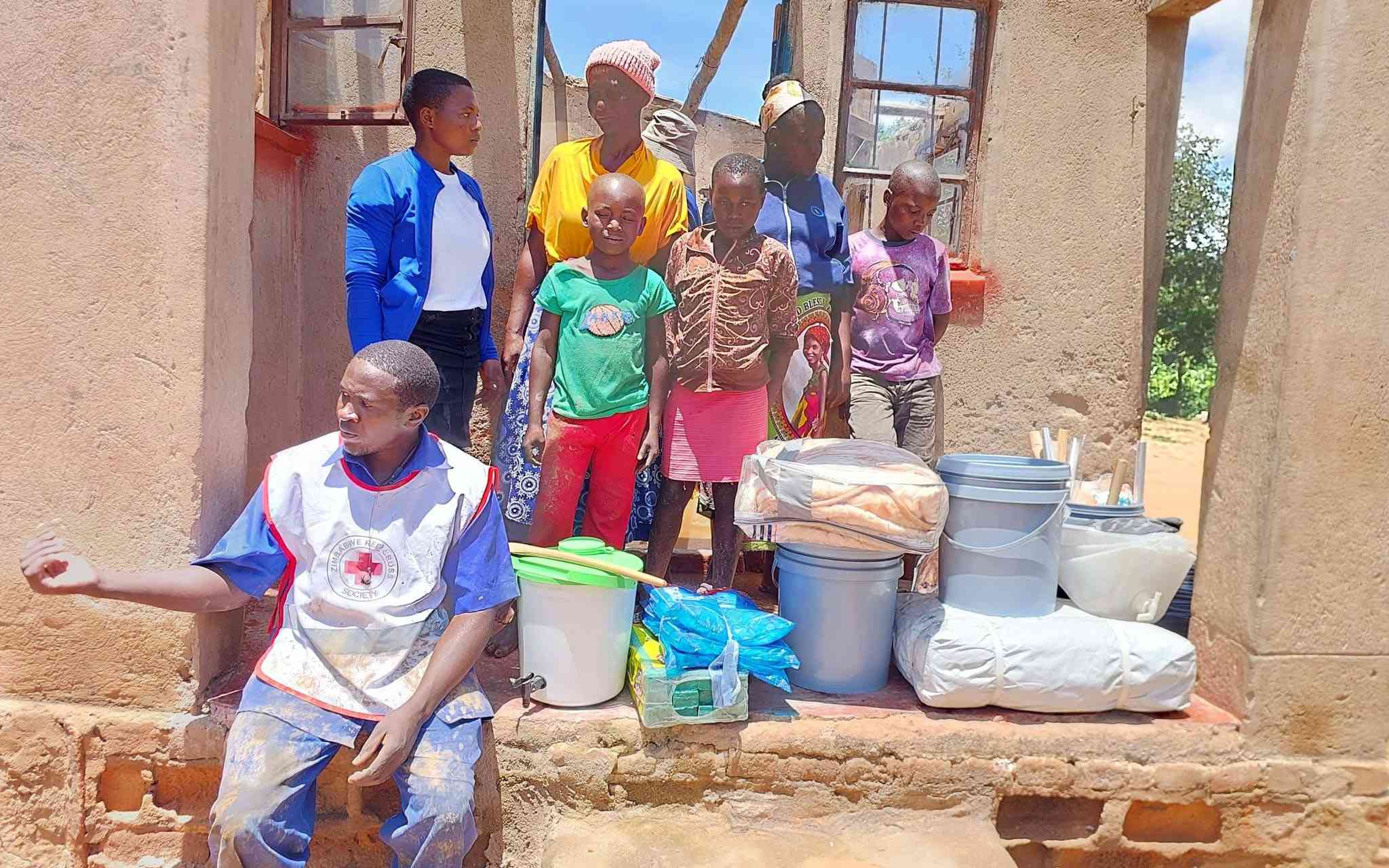
Makoni and several others from Dora Pindo were among the families assisted by the Zimbabwe Red Cross Society (ZRCS), receiving relief supplies to help their households cope in the immediate aftermath.
The families received blankets, toiletries, stationery, water containers and tarpaulin, among other non-food items.
The Red Cross response teams were forced to abandon vehicles after roads became nearly impassable, pushing on foot to reach stranded families.
Carrying relief supplies on their backs, they walked the final distance.
“These are the moments that define humanitarian work,” said ZRCS secretary-general Elias Hwenga.
“Even when access is difficult, we must reach people where they are. Lives, dignity and hope depend on timely assistance.”
Hwenga stressed that ZRCS provides humanitarian assistance that goes beyond traditional relief.
“You will realise that the Red Cross has a full package of humanitarian relief, from food, shelter and clothes to health services, sanitary wear and psychosocial support,” he said.
He added that the organisation’s role as an auxiliary to the government places responsibility on it to act swiftly in times of crisis.
“Our mandate as an auxiliary arm of the government is to identify vulnerable communities or communities affected by disasters and find possible means of assisting them,” Hwenga said.
The situation unfolding in Mutare Rural reflects a broader national emergency, with families in Chiredzi South also struggling to recover.
ZRCS confirmed that homes in Chiredzi South’s Ward 12 were swept away, forcing families into instant homelessness.
On the ground in Chiredzi South, Red Cross disaster response teams have conducted rapid assessments to establish the most urgent needs.
They found out that shelter, food, clean water and sanitation were immediate priorities, with children, the elderly and people with disabilities among the most at risk.
Local leaders said the damage goes beyond housing. Fields have been washed away, livestock drowned, and boreholes contaminated, compounding an already fragile food security situation.
“These floods have hit us at our weakest,” said a village head. “People had just planted their crops. Now there is nothing left in the fields, and families have nowhere to sleep.”
Meanwhile, communities in parts of Matabeleland South have been left isolated after major rivers including Mtshabezi, Thuli, Shashe and Mzingwane burst their banks following heavy rains, cutting off transport routes and disrupting daily life.
In Gwanda town, scenes of desperation and uncertainty unfolded along the Mtshabezi River, where hordes of people who normally work, trade and conduct business on either side of the river were forced to abandon their activities as floodwaters surged for about three days.
The normally busy crossing point turned into a standstill zone, with people stranded on both sides, watching helplessly as the raging water swallowed familiar pathways.
The situation was made worse by the state of the footbridge, which residents described as fragile and unsafe.
Only a handful of courageous individuals dared to cross, carefully navigating the shaking structure while others looked on in fear.
Most people, including students and workers, chose to wait, hoping the water levels would subside.
“I was supposed to cross to school, but the river was too violent,” said one student who had been stranded for hours.
“The bridge doesn’t feel safe, and the water is too strong. We are just waiting and praying it goes down.”
Motorists were not spared either. Several drivers were forced to abandon their vehicles on one side of the river, choosing to cross on foot via the narrow footbridge rather than risk being swept away by the floods.
Some vehicles were left unattended, highlighting the scale of disruption caused by the flooding.
Beyond Mtshabezi, flooding of Thuli, Mzingwane, Mtshelele, Insiza, Sengezane and Mwewe rivers, among others, has similarly cut off rural communities, limiting access to schools, clinics, markets and essential services.
The Standard also established that several bridges along Mzingwane River were impassable for the better part of last week.
These include the Elliot Bridge, upstream of Guyu, the bridge on the Manama-Kafusi road as well as the Mankonkoni bridge on the Tuli-Kafusi road, whose other part was destroyed by Cyclone Eline, two decades ago.
Villagers in low-lying areas now face isolation, food supply challenges and difficulties accessing emergency services.
The unfolding situation has once again exposed the vulnerability of communities in flood-prone areas, particularly where infrastructure such as bridges and drainage systems remains weak or underdeveloped.
Villagers are calling for urgent intervention, including safer river crossings, improved early-warning systems and disaster preparedness measures to prevent future tragedies.
Last year in December Matabeleland South Provincial Affairs and Devolution minister Albert Nguluvhe said there was an urgent need for the Mtshabezi bridge to be upgraded since it was substandard.
Nguluvhe yesterday called for vigilance in the face of the incessant rains.
"The rains have been excessive,” he said. “My plea to those in farming, let's even use our own hands to pull out the weeds.
“Let's dip our livestock and vaccinate against black leg and lump skin. We should not cross flooded rivers.”
Government authorities, working with civil protection units and humanitarian partners, have also reiterated calls for communities to avoid crossing flooded rivers and to suspend travel where bridges are submerged or unsafe.
Hwenga said the Red Cross had moved into full preparedness mode to ensure a rapid and co-ordinated response should disaster strike across the country.
“We have activated our response teams and materials are pre-positioned across the country to ensure that we can respond swiftly and effectively to flood-related emergencies,” he said.
He said the Red Cross was working closely with key government agencies to stay ahead of the evolving weather situation.
“We are working in liaison with the Department of Civil Protection and the Meteorological Services Department is updating us periodically on the weather outlook so that we can plan our interventions accordingly,” Hwenga said.
In recent days, several districts across the country have reported fatalities as desperate commuters attempted to cross raging waters.
Climate experts warn that extreme weather events are becoming more frequent, placing rural communities in the crosshairs of disaster.
Poor housing structures, lack of early warning systems, and limited evacuation shelters continue to magnify the impact.