EVERY day, under the relentless African sun, hundreds of second-hand vehicles roll off container ships and transporters at Zimbabwe’s border posts and ports.
Their origins are stamped on paperwork: Japan and the United Kingdom, nations with stringent environmental regulations and a relentless appetite for newer models.
To countless Zimbabweans, these imported sedans, minivans, and trucks represent attainable mobility, a vital cog in a struggling economy, a lifeline for transport operators, and a symbol of personal aspiration.
On paper, they are perfectly legal imports.
But beneath the polished hoods and behind the glossy exteriors of many of these vehicles lies a hidden, toxic cargo that could legally amount to hazardous waste.
As the global north upgrades its fleets to cleaner, smarter models, a silent and poisonous transfer is underway, turning developing nations into the dumping grounds for the automotive past.
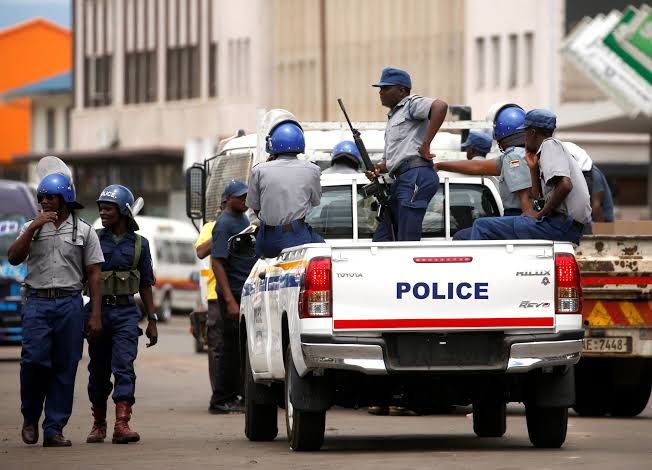
Customs officials at ports like Beitbridge and Chirundu are primarily tasked with assessing duty, checking for stolen vehicles, and ensuring documentation is in order.
They clear these imports as ordinary goods.
- Veld fires ravage Beitbridge
- Harare suspends Pomona deal
- It’s time to retire, are you ready?
- 340km of Harare-B/bridge highway revamp complete
Keep Reading
What they rarely, if ever, scrutinise is the hazardous cocktail many of them carry: asbestos in brake pads and clutch plates, mercury in tilt switches for trunk and hood lights, gallons of engine oil laced with heavy metals and additives, lead-acid batteries, and outdated electronic control units.
To an overstretched official, if it looks like a car, drives like a car, it passes as a car.
The toxic components are simply considered parts of the whole.
Zimbabwe Revenue Authority (Zimra) spokesperson, Gladman Njanji, said inspections focus on the nature of the transported goods, not on dissecting vehicles for embedded hazardous waste.
“The control of hazardous waste and full implementation of the Bamako Convention on the Transboundary Movement and Management of Hazardous Waste falls directly under (the Environmental Management Agency) EMA, who currently have a presence at all major ports of entry, including Chirundu,” Njanji said.
Njanji explained that Zimra enforces the convention by requiring exporters to be Authorised Economic Operators (AEO), regulated under the Customs and Excise Act and approved by the World Customs Organisation.
However, this system appears to govern the legitimacy of the trading entity, not the environmental composition of each shipment.
The agency directly responsible, EMA , conceded a critical gap in enforcement.
EMA spokesperson Amkela Sidange confirmed that they do not physically inspect second-hand vehicles for hazardous components.
“We might not have for now gone deeper into issues of inspecting vehicles,” Sidange admitted.
“But generally, when we look at fluid hazardous waste coming into the country, we use the existing laws to ensure that we shield ourselves from being a dumping ground for hazardous substances.”
Questioned on how Zimbabwe has domesticated the Bamako Convention — a treaty it signed, which outright bans the import of hazardous waste into Africa — Sidange pointed to the EMA Act itself.
“If we look at Zimbabwe, we have taken it so well because to date we have quite a number of environmental laws and procedures that curtail or prohibit the possible dumping of hazardous waste in the country,” Sidange said.
“For starters, if you look at the Environmental Management Act, it’s actually kind of the umbrella law that prohibits the importation, the distribution, and disposal of hazardous waste.”
Yet, this legislative umbrella seems to have holes when it comes to pre-emptive screening.
Sidange emphasised proper disposal of batteries and oils but acknowledged monitoring is indirect.
“We always ask for environmentally friendly ways of disposing such materials, but we leave all that to the manufacturing industry,” she said.
“This stance places the burden on a largely informal downstream sector, long after the toxins have seamlessly entered the country.
The driving force behind this toxic trade is a stark economic and regulatory asymmetry.
In Japan and the UK, stringent end-of-life vehicle (ELV) directives mandate expensive, responsible dismantling and recycling. Exporting a used car to a market like Zimbabwe is often far cheaper than disposing of it domestically.
It effectively externalises the environmental cost.
Harare-based environmentalist Billy Sauti called it by its true name.
“This is not just trade; it’s the externalisation of environmental risk,” Sauti said.
“The global north avoids its disposal headaches and profits, while we inherit a public health time bomb.”
Experts said the bomb’s timer is set for two to five years — the typical lifespan of many of these ageing imports in local conditions.
When they inevitably break down, the toxic components enter Zimbabwe’s vulnerable waste stream.
Asbestos-laden brake pads are ground into dust in roadside workshops.
Mercury switches are smashed or incinerated with general scrap.
Lead-acid batteries are cracked open in backyards, their acid drained into the soil and lead melted over open fires for resale.
Contaminated engine oil is often poured into drains or used to suppress dust on dirt roads.
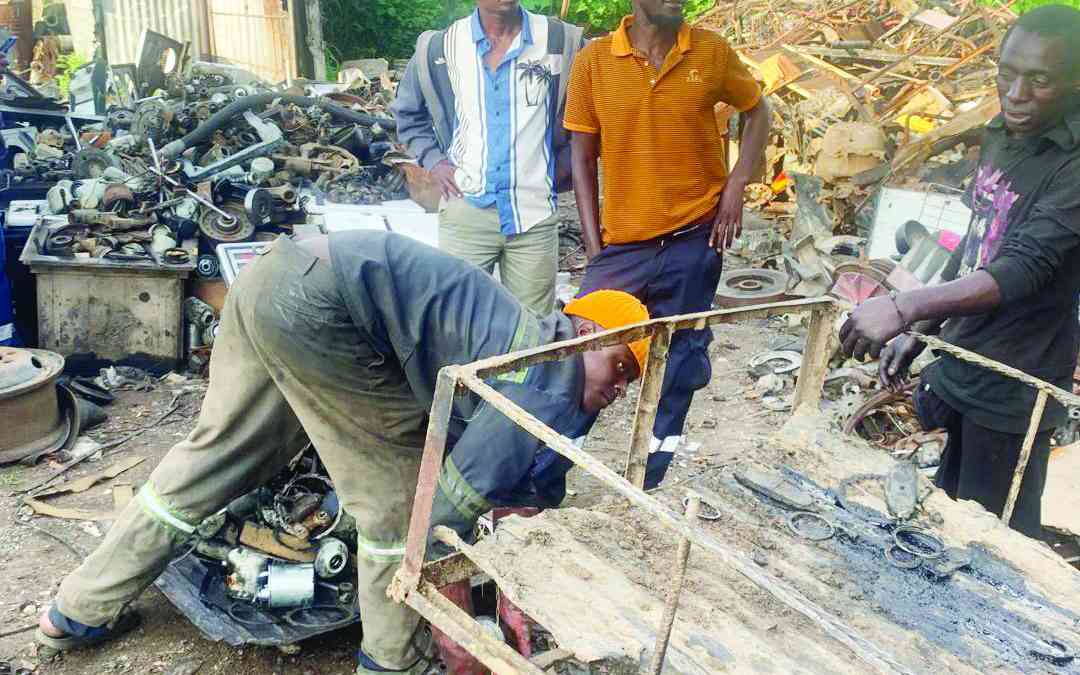
The human face of this crisis is found in places like the sprawling, chaotic scrapyards of Chikwanha in Chitungwiza.
Here, Tinashe Meki (24), spends his days dismantling carcasses of cars with little more than a hammer and chisel, no gloves, mask, or protective boots in sight. The air is thick with the smell of rust, oil, and burning plastic.
“I buy scrap metal from old cars from people around and some as far as Dema and sell it to big metal companies that make steel from Kwekwe,” Meki said, wiping sweat with a grimy hand.
He makes about US$200 a month.
“It’s not easy, but it’s a living. You just do it. The dust makes me cough sometimes, but what choice do I have?”
There is no Extended Producer Responsibility (EPR) scheme that makes the original manufacturer, the exporter, or the local importer financially responsible for a vehicle’s end-of-life.
The question of who pays when the car dies hangs in the toxic air.
Hundreds of kilometres away, in Chinhoyi, Garikai Chipato, a youth struggling to find formal employment, combs through farms and residential plots, seeking abandoned vehicle skeletons.
“I move around in houses and farms collecting scrap metal from broken-down vehicles for resell,” he explains.
Like Meki, he operates without protection, his health a currency exchanged for daily survival.
These informal recyclers are the de facto end-of-life vehicle industry, performing a vital economic function while absorbing staggering health risks from carcinogens and neurotoxins.
The Bamako Convention, adopted on January 30, 1991, in Mali, was Africa’s defiant response to being targeted as a waste dump for the world.
Its spirit was clear: a continent-wide ban.
Yet, as this investigation reveals, the convention is being circumvented by a trade that disguises hazardous waste as functional goods.
The toxic components are not in drums labelled “waste”; they are integrated into products that drive national economies. This grey area is where enforcement fails and danger thrives. Coordination between Zimra and EMA at borders, while improving, remains weak.
Environmental officers are present but lack the mandate, resources, or technical capacity to conduct the forensic inspections required to identify every asbestos gasket or mercury switch.
The sheer volume of imports — thousands per month — makes physical inspection of every unit logistically impossible without a radical shift in policy and investment.
As Zimbabwe opens its borders to affordable mobility, it is also unlocking a portal for a silent, toxic trade, environmental experts said.
The toxic wheels will keep turning, fuelled by global inequality and local necessity, until the definition of a “vehicle” at the border expands to include its environmental footprint at death.
Until enforcement agencies are empowered and mandated to look beyond the paperwork and under the chassis.
And until the world recognises that trading a driving hazard for a public health hazard is not progress, but a poison on wheels.