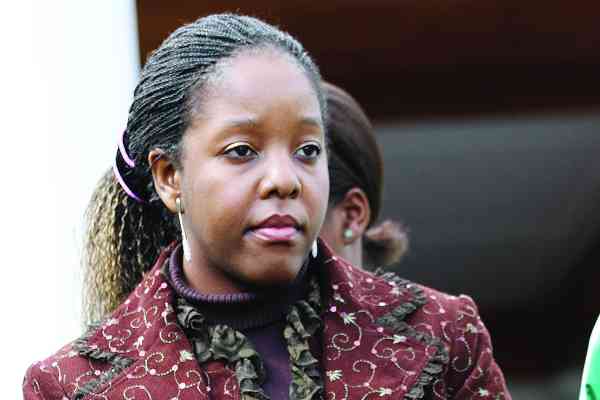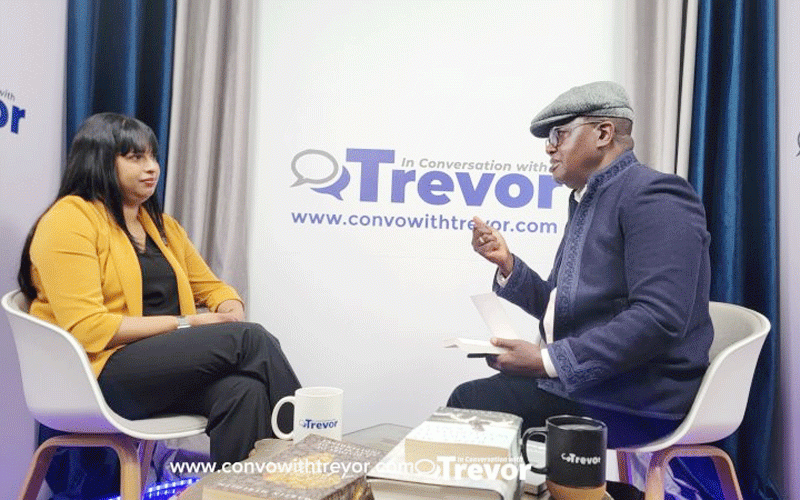
Trishula Rachna Patel, an associate professor of African history, is redefining what it means to be African.
Growing up in 1990s Zimbabwe, Patel’s childhood was shaped by a legacy of literature and a fierce insistence on her own agency.
After transitioning from journalism to academia in the United States, she turned her lens toward the overlooked history of her own community.
In this interview with Alpha Media Holdings chairman Trevor Ncube (TN) on the platform In Conversation with Trevor, Patel (TP) explores how Indian families supported Zimbabwe’s liberation and asserts that those born on the continent have "made roots in the soil," claiming a Zimbabwean identity that is undeniably their own
TN: Welcome to In Conversation with Trevor. Today I'm in conversation with Trishula Rachna Patel, an associate professor of African history and Asian studies at the University of Denver.
Talk to me about your upbringing in Zimbabwe and what effect those experiences have had on your worldview.
TP: It's easy to say you have an idyllic childhood, and growing up in the 90s in Zimbabwe, it felt that way.
- Panic grips Bulawayo
- SA remains Zim’s top trading partner
- The Soccer Whiz:The return of the European heavyweights
- ConCourt rules age of consent now 18
Keep Reading
I grew up in a house where my parents spoke English. I had no elders living with me until my grandmother came when I was in high school.
My parents raised me not to be part of just one singular community. They wanted me to experience the world outside our house.
My house was filled with books—three bedrooms just filled with books.
My grandfather didn't go to university but read widely, and that legacy of reading was passed down.
My mother was an English literature teacher. At one point for a birthday, I begged them to get me something other than a book, so they gave me a diary where I could write my thoughts.
TN: You have a middle name, Rachna. What does it mean?
TP: It means creation. It was my grandfather's name. In Indian culture, you're supposed to have your father's name first, then your husband's name.
The teacher would cross out Rachna and put my father's name. I would argue daily—even as a six or seven-year-old—saying, "No, I am my own person. I have my own name."
TN: Where was that coming from?
TP: From both my parents; this idea that a woman shouldn't be defined by who her patriarchal family are. I used to ask why I never had my mother's last name too.
I remember when my mother was trying to teach me to cook very unsuccessfully, my father walked in and said, "Just because she's a girl doesn't mean she needs to learn how to cook." I walked out and didn't come back.
TN: Then you went to Penn State for your BA and MA.
TP: I finished high school in 2007 during hyperinflation. As a child, I told my parents I'd go to the University of Zimbabwe like they did.
But by the time I was 18, that wasn't going to happen. My mother's family lives in the States, so I ended up at Penn. It was a freeing experience.
I could study whatever I wanted. I ended up studying history —my first love. I thought I was going to be a lawyer, but that got quashed.
I worked for a school newspaper, had internships in Philadelphia, and decided to go to journalism school at Columbia.
TN: What was that experience like in America?
TP: All my friends at university, we used to joke that white people were actually in the minority. We were a diverse group where whenever they took a photo of us, we'd end up on the website to showcase diversity.
Coming from Zimbabwe, you always worry: Will people understand where I'm from? Will they accept me?
I remember one friend, a few days into university, said, "You have the coolest accent." That immediately put my walls down.
I started feeling at home there too. Now I have many homes — Harare is my first, Philadelphia is my second, and Washington DC where I did my PhD is my third.
TN: Why this book? Where did the idea begin?
TP: I did journalism school, worked at the Washington Post, and realised I wasn't getting to write the stories I wanted to write. For some reason, they wouldn't let someone from Africa write about Africa.
So, I went back to Penn for my master's in history. I had a professor in African history class. We had to write a historiography paper, and I wrote about people who had written about Indians in Africa. She came to me and said, "Why aren't you writing about Indians in Zimbabwe? No one's done it."
That was the first time someone told me my own history was worthy of writing about. All my previous theses had been about US foreign policy toward Africa, top-down histories. This was the first time someone said, "Your history is worth considering."
TN: So it took someone from outside to tell you to write this book?
TP: Yes. The old idea about history is that it should be objective, told by someone removed from a situation. That's the gatekeeping Western academics held over African history for decades. In the 21st century, we've seen historians from Africa saying, "We want to write our own history and tell it in our way."
For me, it did take a professor at an American university to tell me this is what I should be doing. But once she did that, it unlocked something. I wanted to become a professor so I could do that for others.
TN: What did you unlock?
TP: It unlocked the idea that our history is not just worth telling, but has something to offer the world. That other people could learn from us.
TN: The book opens with a Joshua Nkomo story, a different one from the familiar story of his escape during the war.
TP: In 1964, a warrant was issued for Joshua Nkomo. He started to escape, aided by Indian families along the way. Many Indian families were critically involved in helping Zapu—they were members, they helped with operations.
The Rana family in Bulawayo, who had trading stores along the railway line, helped him. The women dressed him in a sari to disguise him, then put him in a car to help him escape to the border.
TN: Why open with this story?
TP: Whether the story is true isn't really the question. The question is: What does this story tell us about how Indians see themselves?
It tells us that Indians insert themselves into these pivotal moments in Zimbabwean history. They know they are a part of them, and they want that history to be told.
Second, there's this idea that Indian women have been kept away from the world, that Indians are insular. This story completely disrupts that. An Indian man wouldn't know how to put on a sari—it had to be the women.
TN: You make three assertions in the book about who can be deemed African.
TP: The assertions came in response to someone at a conference asking, "Who do we get to call Zimbabwean?"
A lot of this book was born from an identity crisis—when asked "Where are you from?" I start asking myself, "Where am I from?" I can confidently say I'm Zimbabwean, but others don't always see it that way.
First assertion: The history of Indians in Zimbabwe is African history. In the past, it's been treated as diaspora history, separate from the history of the country they migrate to.
The idea is there's always this distant homeland defining everything you do. I wanted to show that Indians' history here, like the Joshua Nkomo story, is not defined by an Indian homeland.
Second assertion: Indians born on this continent, who are of this continent, are African.
Rather than treating them as a migrant population in perpetuity, over generations they have made roots in the soil.
Third assertion: Indians in Zimbabwe are Zimbabwean. They were part of the country's transition from Rhodesia to Zimbabwe. They have a claim to citizenship and identity that has previously been denied them.
TN: How did this identity crisis manifest? Can you take us to a place where somebody asks you who you are?
TP: It starts before the US. It starts here in my childhood. You can meet someone and say "I am Zimbabwean" and they tell you "No, you are Indian."
It actually happened with a classmate. My mother can tell the story well. She was teaching at my school, and a classmate who was also Indian said, "No, we're Indian. We are not Zimbabwean."
I immediately smacked him and started chasing him around the library—that's how strongly I felt.
Even now, I went to the archives last week and the guard at the gate asked for my passport. I said, "I don't have my passport. Here's my Zimbabwe ID."
She was telling me where to go, and I said, "I've been coming here. I spent a whole year coming every day. This is my archive. This is my home."