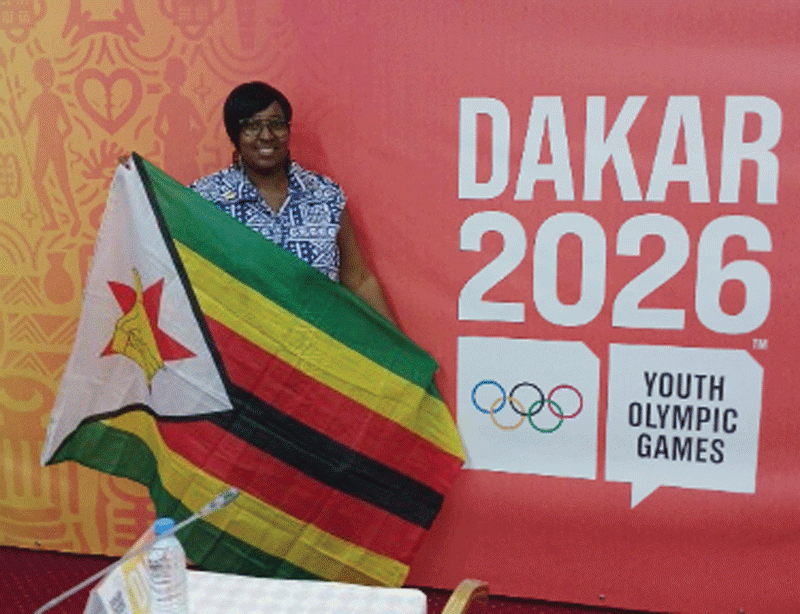
Dakar 2026 will mark a historic milestone for global sport as Africa hosts the Youth Olympic Games for the first time.
At the centre of this moment is Stade Abdoulaye Wade, one of Senegal’s flagship venues, now entering its final preparation phase with just over 150 days remaining before the Games begin.
Zimbabwean Farai Chigwedere, the event general manager overseeing operations at the 50 000-seat stadium, assesses the readiness, infrastructure upgrades, and the broader legacy of the event.
Chigwedere described her role as central to ensuring the venue meets Olympic standards across all operational areas.
“I serve as event general manager at Stade Abdoulaye Wade, a 50,000-seat venue in Dakar,” she told Standardsport.
“We are preparing it to host the opening ceremony and selected sporting events. My role covers overall coordination, operational readiness, and integration across security, logistics, and ceremonies.”
While final participation figures are still being confirmed, she noted strong international interest in the Games.
“We have a very high intake in terms of countries interested in coming. The exact number is still to be confirmed,” she said.
- Open letter to President Mnangagwa
- Feature: ‘It’s worse right now than under Mugabe’: Sikhala pays the price of opposition in solitary cell
- Masvingo turns down fire tender deal
- Human-wildlife conflict drive African wild dogs to extinction
Keep Reading
The Youth Olympic Games, she added, represent a defining moment for the continent.
“It is historic. Being part of the first Olympic event hosted in Africa is a major milestone. It represents pride, responsibility, and an opportunity to showcase African capability in delivering world-class sport infrastructure and operations.”
Stade Abdoulaye Wade has undergone targeted improvements to meet international requirements, including upgrades to playing surfaces, athlete facilities, and spectator movement systems.
“The stadium is Fifa-compliant and built to international standards,” Chigwedere said. “It includes modern changing rooms, recovery areas, media facilities, and athlete support spaces.”
Additional works include enhancements to pitch quality, expanded operational zones for security and media, and temporary structures to accommodate increased capacity during the opening ceremony.
“Additional temporary infrastructure is being installed to support the opening ceremony and increased visitor capacity,” she added.
However, she acknowledged that coordination remains the most complex aspect of preparations.
“Coordination is the biggest challenge, including security, transport, and crowd management, which must align perfectly,” she said.
“We are working closely with local authorities and security agencies to ensure safe access and smooth movement for athletes and spectators.”
Beyond infrastructure, Chigwedere highlighted human capital development as one of the most important legacies of Dakar 2026.
“The strongest legacy is human capital,” she said. “Through initiatives like the Learning Academy, young Africans are being trained in sports administration and event management, creating a new generation of professionals beyond the Games.”
She emphasised that Dakar 2026 also demonstrates Africa’s ability to host global sporting events successfully.
“The key lesson is that Africa can do it,” she said. “Collaboration, infrastructure investment, and a strong legacy mindset are essential. Venues must also serve communities long after the Games.”
The preparations have drawn participants from across the continent, reinforcing a Pan-African approach to delivery and skills development.
While creative elements of the opening ceremony remain tightly guarded, Chigwedere confirmed that work is progressing behind closed doors.
“It is highly confidential at the moment, but given that it is on the African continent, I think we will all be proud of what is produced.”
She also confirmed that Zimbabwean volunteers applied during the official recruitment phase, with selections currently underway.
“The volunteer programme closed at the end of April. We did receive applications from Zimbabwe, and they will go through the selection process. Volunteers are the backbone of any major event.”
Reflecting on Senegal’s sporting culture, she pointed to strong public engagement and national unity around football as a key strength.
“You see people watching matches in public spaces across neighbourhoods, which creates a powerful sense of unity,” she said.
She also cited Senegal’s success in continental football as evidence of a structured development pathway from grassroots to elite level.
“There are clear pathways from youth development to elite performance, supported by strong national recognition systems.”
As Dakar 2026 approaches, Chigwedere urged Africans to embrace the significance of the event.
“This is the first Youth Olympic Games ever hosted in Africa,” she said. “I encourage everyone to follow and support the athletes. It is a defining moment for African sport.”
With final preparations underway, she said the focus is now on operational precision and spectator experience.
“We are ensuring stadium readiness for 50 000 spectators and full operational integration to deliver a memorable experience.”