We will all have come across those cringe-worthy Christmas cracker type jokes, beginning with “What’s the difference between…” - some of us may even have recovered from the thought but just to remind us, let us consider a few.
What’s the difference between a sad song and lunch from a health shop? One is a soulful ballad, and the other is a bowl full of salad.
What is the difference between a cat and a comma? One has claws at the end of its paws, the other has a pause at the end of its clause!
What’s the difference between an early bird and an ineffective politician? One tastes worms, and the other wastes terms.
What’s the difference between an abacus and a flaky friend? You can count on an abacus.
Seeing this article is about education, we should really try to bring the subject round to education.
So, here we go: What is the difference between a teacher and a train guard? One trains minds, the other minds trains!
What’s the difference between a fisherman and a bad student? One baits his hooks, and the other hates his books.
- We’re not concerned by now-habitual State media propaganda
- A false unity
- Ekusileni Hospital faces closure
- The Fiddler: A strange endingA strange ending
Keep Reading
Put another way, one teacher once described the difference between his pupils: ‘They say there are three levels of pupils. One declares “I listen to the teacher all the time”, another says “I listen to the teacher some of the time”, while the third says “I can’t hear him from the corridor”!’
OK, OK, enough! No more! There is only so much that we can take! Let us turn it around now though and ask what certain people or things have in common.
So, what does a rugby player, a marketing agent, a teacher and a man proposing have in common?
As the extremely perceptive reader will deduce, it is that they all need to engage.
The rugby player in the scrum is called to ‘engage’, with the instructions, “Crouch; Bind; Set” before pushing with all his might to win the ball for his backs.
The man proposing to his girlfriend also crouches on his knee to win her agreement to bind with him and back him for life.
The marketeer seeks to win his customers to back his product by engaging with their minds, hearts, and whatever other means possible. They all engage in some form or another.
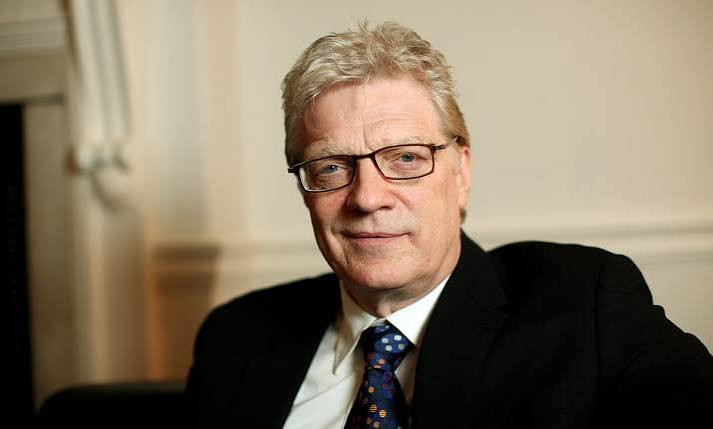
To bring a little more class to the proceedings, let us hear the respected late educationist, Sir Ken Robinson, explain education so beautifully simply when he said that “Education is the process by which we engage people in their fullness to give them a sense of who they are and what their capabilities are so they can lead a life that means something to them and to the rest of us”.
Without wishing to detract from the power of that statement, let us simply underline his key point.
Education is about engaging people – fully. Education is about people, young people especially.
Education is about engaging them, drawing them in, keeping them focussed, giving them understanding, holding their attention, capturing their interest, stimulating their appetite and committing to their future.
And how do they do that? It may be by engaging them with jokes, as this writer has attempted to do in this article, but there are better more meaningful ways, as Sir Ken Robinson shows.
Firstly, by giving them a sense of who they are; secondly by giving them a sense of what their capabilities are.
Thirdly, by showing them that such sense (it is common sense, after all) can enable them to lead a life that has purpose for them and lastly, by showing them that such sense can enable them to lead a life that has purpose for others. In education, we engage in order to engage– and engagement is a promise of greater fulfilment and ultimately commitment, as the young man kneeling believes.
We do well to go back to an earlier joke to understand this further. We asked: What’s the difference between a fisherman and a bad student?
And we were told that one baits his hooks, and the other hates his books. Teaching, engaging, is like fishing; we throw out the bait so that the pupil is tempted, persuaded, inclined to pick up on it (though we should not take the analogy too far as we do not hook the children in order to eat them!).
Engagement is the gate that opens the way for empowerment, enrichment, enlightenment, endowment.
We will achieve it by curiosity, discovery, anticipation. It speaks of closeness, of confidence. It is, quite simply beautifully engaging.
What’s the difference between unlawful and illegal?
One is breaking the law, and the other is a sick bird. A sick joke?
Maybe, but it is also unhelpful and inept if we do not engage our children. No joke!