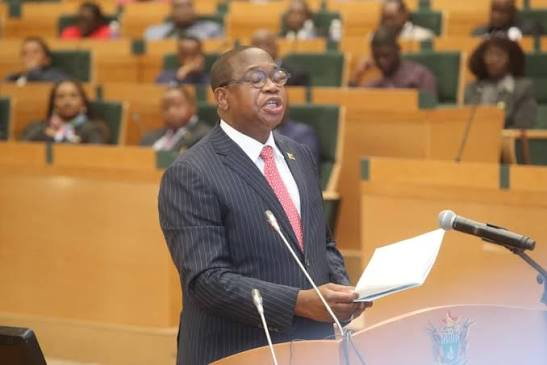
FINANCE minister Mthuli Ncube’s proposal to raise gold royalties by 100% effective January next year is most likely to discourage foreign investment in the sector and worsen the smuggling of the precious metal by small scale miners.
Ncube’s proposal will see miners paying a 10% percent royalty for gold selling above US$2.501 an ounce up from 5%. Under the current regime only large scale miners pay royalties, but the new regulations would see even small scale miners paying 10% of what they earn to government.
The minister’s justification for the proposal is that government must benefit more from record gold prices on the global market. But investors were jolted by the announcement and some are already reviewing their plans on future Zimbabwe operations.
Caledonia Mining Corporation, one of Zimbabwe’s top gold producers, said it was assessing “the implications on its portfolio of assets.”
The New York, London and Victoria Falls listed gold company said the royalty threatened its flagship Blanket Mine, whose good performance was driven by higher prices and output.
Caledonia CEO Mark Learnmouth said they were also assessing “potential effects on the recently announced economics of the Bilboes Gold Project.”
Only a few weeks ago the US$484 million Bilboes project in Matabeleland North was being hailed as a game changer for Zimbabwe’s gold sector.
Learnmouth was quoted saying: “Billboes should deliver substantial benefits to Zimbabwe, a project of this scale should help Zimbabwe to reclaim its position as a major gold destination in the eyes of the international investment community.”
- Cricket hero Raza draws inspiration from fighter-pilot background
- Trafigura seeks control of Zim metals over debts
- Cricket hero Raza draws inspiration from fighter-pilot background
- Caledonia profits up 16% after record production
Keep Reading
That goodwill will likely vanish when the royalty regulations come into effect. The regulations would also fuel gold smuggling as observed by the Zimbabwe Miners Federation (ZMF) in a letter to Ncube.
ZMF said: “As production shifts to illicit channels, official gold exports — a critical source of foreign currency — will decline, harming the country’s balance of payments and exchange rate stability.
“New investment in exploration and mine development will stall. We project a dramatic increase in smuggling as miners seek better returns in neighbouring countries with local fiscal impositions.”
The International Crisis Group estimates that Zimbabwe loses US$1.5 billion every year to smuggling, which is up to 40% of the potential revenues for the country from the sector.
Some of the reasons gold is smuggled out of the country instead of being sold to Fidelity Gold Refinery, include late payments. Adding another tax burden will only drive the small players to go underground.