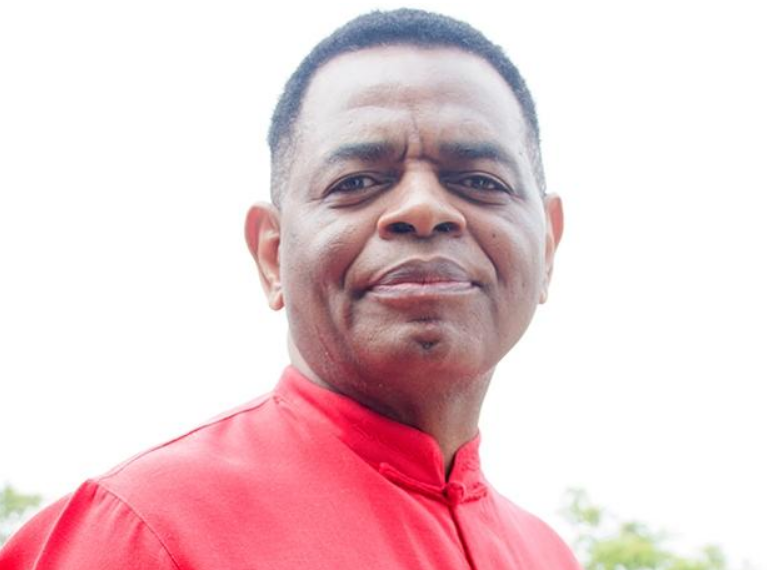
Surprisingly, I never met Brother Mutumwa Mawere in person, but kept a vast correspondence over the years.
I admired him intensely but disagreed with him equally intensely as well. This, I believe, was due to our different experiences before and after independence.
Brother Mutumwa was brilliant, almost a genius, self-assured and as far I know had never lost an argument.
His memory was photographic, and if I needed any information, his reply was immediate, within 24 hours, detailed and argumentative.
He had worked at the World Bank as a senior investment officer, and knew that type of world inside out.
Zimbabwe had achieved independence in 1980; the world was before us.
His experience was in the white man’s world, a stable and predictable world, contracts were generally honored and timely.
Robert Mugabe made us proud. That is where our experiences differed. I had come from Zapu, St. Andrews University in Scotland, represented the party in Jamaica and had experienced the workings of a black world-noting is predictable, the economy is not stable, promises are not kept, because players change and whole economies are wiped out.
- Police raise alarm over bribe-taking cops
- Corruption watch: Reasons why Zanu PF is a thieving cult
- Corruption watch: Reasons why Zanu PF is a thieving cult
- Zim has 2nd highest rising food prices: WB
Keep Reading
I was more suspicious than the brother.
Edison Zvobgo kept me informed of Mutumwa’s progress. I talked to vice-president Simon Muzenda.
Muzenda believed that it was through government’s empowerment initiatives that the brother was allowed to acquire Shabani-Mashava-Mines (1996).
Mutumwa believed otherwise-the company he dealt with Turner and Turner Incorporated was domiciled in the United Kingdom, therefore, proceeds of the sale would have to be paid in London.
That is where the catch was. Such transactions needed Reserve Bank authorisation.
But there was another catch. Muzenda and the Zanu PF elders believed that Mutumwa was not showing enough gratitude for government support; Mukomana akanganwa kwaakabva.
The brother neglected to pay his dues to Zanu PF in Masvingo province, where he was supposed to take the role of treasurer and party money-bag.
Muzenda himself was above board, but party elders travelled to Johannesburg, stayed at the Holiday Inn, and sent their bills to the brother.
It was revealed to me that one of the elder Supreme Sisters of the party had gone on a shopping spree and sent a 100 rand bill to Mutumwa’s office.
The brother had a simple answer. His secretary was instructed not to answer calls from the party elders.
Mutumwa, who had come from the white world, relied too much on “legalisms”, in the belief that he could win any argument at law.
One argument was the management of proceeds from asbestos sold and paid for in US dollars in Japan. The Zimbabwean government wanted him to account for all his sales, well over US$150 million per year- and situate these funds at the Reserve Bank.
His argument was simple-and I think he was correct. If he returned his accrued proceeds to Zimbabwe, he would have to “apply for permission from the Reserve Bank” to use certain portions of his earnings to pay his bills abroad, including the price for his mines in London.
In any case, at what point was the tax applicable? Was it at the total level of proceeds, or after expenses were deducted?
In this, Gideon Gono was now in charge at the Reserve Bank. According to my sources, once he had lost Muzenda’s support, because of his indifference to supporting party junketeers in Johannesburg, the Zezuru support in cabinet was never there.
He was accused of “externalising funds” an offence punishable by forfeiture.
He thought the Zimbabwe system of foreign exchange is naked theft. We have this on tape.
The brother had lost support from insiders as well. In setting up two financial institutions (banks), he had sought the expertise and support of political insiders, who spent a whole year working through the governmental labyrinth.
Having acquired his licenses, the two insiders hoped to be rewarded with directorships for life.
Again, the brother was too clever for his own good. He said: “I paid them for their services.”
In this regard, I think the brother was callous with human feelings.
He, therefore, found himself winning battle after battle in courts of law-one in the United Kingdom about ownership of the mines and sale of Turner and Turner Incorporated, some battles in South Africa; everywhere he turned, there was a fight.
I pointed out to him at the time, he was brilliant, sharp minded and had captured a market commanding 7% of all Zimbabwe’s foreign exchange reserves, an employment portfolio of 5 000 men-a genius.
But he was naïve about human nature. Africa is not Europe. In Africa, human interaction is by far more important than the law. One has to deal with people God has provided, Muzenda, Mai Shuvai Mahofa, Patrick Chinamasa and Zvobgo.
Zvobgo’s wise advice was often ignored. Mutumwa believed that if Mugabe was exposed to “the facts” the expropriation of his company would be reversed. I disagreed with him on this point. Facts are like water, our wise professor once told us, they take the shape of the vessel they are placed in.
I will miss the brother-his was a brilliant life that could have shown a light in darkness.