FROM prolonged droughts and destructive floods to heatwaves, cyclones and creeping food insecurity, the impacts of climate change are already reshaping lives and livelihoods.
With an estimated 3.6 billion people, nearly half of the global population highly vulnerable to these impacts, adaptation is no longer optional. It is an urgent necessity, equal in importance to cutting greenhouse gas emissions.
For years, global climate discourse has been dominated by mitigation: reducing emissions to slow global warming.
While mitigation remains essential to prevent catastrophic future scenarios, it does little to protect communities already facing climate shocks today.
Adaptation is about accepting a hard truth: some degree of climate change is unavoidable, and societies must adjust to survive and thrive under new conditions.
Failing to adapt condemns the most vulnerable to escalating losses, deepening inequality and avoidable human suffering.
At the individual and community level, adaptation can begin with relatively simple, low cost actions.
Planting and preserving trees around homes can lower temperatures, improve air quality and reduce heat stress.
- COP26 a washout? Don’t lose hope – here’s why
- Out & about: Bright sheds light on Vic Falls Carnival
- COP26 a washout? Don’t lose hope – here’s why
- Out & about: Bright sheds light on Vic Falls Carnival
Keep Reading
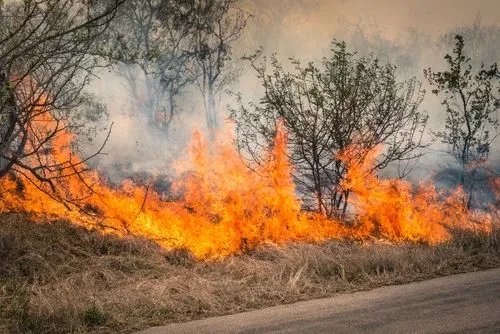
Clearing excess vegetation can reduce fire risks in drought-prone areas.
Farmers can diversify crops, adopt drought tolerant varieties and adjust planting calendars in response to shifting rainfall patterns.
Businesses can plan for climate risks by protecting workers from extreme heat, securing supply chains and adjusting operating hours.
These actions, while modest, collectively build resilience and reduce vulnerability.
However, adaptation cannot rely solely on individual effort. The scale and complexity of climate impacts demand systemic, large-scale responses.
Economies, infrastructure and social systems must be redesigned to withstand a more volatile climate.
Governments have a central role to play in driving this transformation.
Roads, bridges and buildings need to be constructed or retrofitted to endure higher temperatures, heavier rainfall and stronger storms.
Coastal cities must invest in flood protection systems to safeguard homes, transport networks and economic hubs.
In mountainous regions, strategies to manage landslides and glacial melt are essential to protect downstream communities.
Crucially, adaptation is not just a defensive exercise; it is a smart economic investment.
Spending now saves lives and reduces costs later on. Delaying action only compounds damage and inflates future recovery bills.
Evidence consistently shows that adaptation delivers high returns.
A global investment of US$1.8 trillion in early warning systems, climate-resilient infrastructure, improved agriculture, mangrove protection and resilient water resources could generate US$7.1 trillion in benefits.
These benefits come in the form of avoided disaster losses, improved health outcomes, job creation and ecosystem protection.
Few public investments offer such a compelling return.
Early warning systems, in particular, illustrate the power of proactive adaptation.
Universal access to these systems can deliver benefits up to ten times their initial cost by giving communities time to prepare, evacuate or protect assets before disasters strike.
In agriculture, adaptive measures such as solar-powered irrigation, improved seed varieties and weather information services could prevent a projected 30% decline in global yields by 2050.
In a world already struggling with hunger and malnutrition, this is not just an economic argument it is a moral one.
Yet despite the clear case for adaptation, a stark injustice persists.
The communities most vulnerable to climate change are often the least able to adapt.
Poor households, rural populations and developing countries many of which contributed least to global emissions face the greatest risks.
For them, adaptation is constrained by limited financial resources, weak institutions and competing development priorities such as health care and education.
Estimated adaptation costs in developing countries could reach US$387 billion per year by 2030, yet adaptation finance stood at only US$32.4 billion in 2022.
This gap represents a failure of global solidarity and climate justice.
Bridging this adaptation finance gap must be a global priority. Wealthier nations, international financial institutions and the private sector all have roles to play.
Climate finance should be scaled up, delivered faster and structured to reach local communities where it is most needed.
Grants, rather than loans, are essential to avoid trapping vulnerable countries in cycles of debt.
At the same time, adaptation efforts must be locally driven, drawing on indigenous knowledge and community-led solutions that have sustained resilience for generations.
Adaptation is also about governance and inclusion. Policies must prioritise women, children, people with disabilities and marginalised groups who are often disproportionately affected by climate impacts.
Strong institutions, transparent decision-making and community participation are key to ensuring that adaptation investments are effective and equitable.
Without this, even well-funded projects risk failing to reach those most at risk.
Ultimately, adapting to the impacts of climate change is about choosing foresight over denial and prevention over disaster response.
It is about recognizing that resilience is built long before a flood washes away homes or a drought wipes out harvests.
The science is clear, the economic case is strong and the human imperative is undeniable.
The question is no longer whether we should adapt, but whether we will act with the urgency, scale and fairness that the crisis demands.
How we answer that question will define not only our response to climate change, but the kind of world we leave for future generations.
*Gary Gerald Mtombeni is a Harare based journalist. He writes here in his personal capacity. For feedback Email [email protected]/ call — +263778861608