Productivity and progress are a symbol of a strong energy supply backbone, above all not every country is blessed with rich mineral resources.
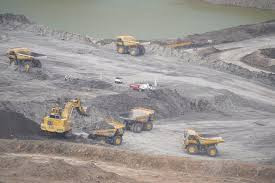
Zimbabwe is the fifth largest producer of Lithium, a commodity which is rare if not available in other countries.
The white gold can surely bring energy development, create thousands of jobs, particularly in our modern rural areas, mines, cities and a provision for exports. As the country continues to be investor friendly, every kilogram of our white gold should add a watt in our country, that's creating energy sovereignty through our white gold.
Tonnes of the same white gold should provide us with gigawatts, no holes should translate to poverty, but every blast should be a signal of progress to our motherland Zimbabwe.
The mining agreements on our white gold should clearly state that a portion of our white gold should benefit the natives of this country, other countries like China have decided to keep their white gold for their future generations.
If Zimbabwe becomes a hunting ground for our white gold then we should demand kilogrammes in exchange of national watts.
Zimbabwe’s future depends on how boldly we reimagine our energy landscape.
As we move deeper into the 21st century, the nations that will prosper are those that recognize energy as the lifeblood of development.
- Open letter to President Mnangagwa
- Feature: ‘It’s worse right now than under Mugabe’: Sikhala pays the price of opposition in solitary cell
- Time running out for SA-based Zimbos
- Masvingo turns down fire tender deal
Keep Reading
Zimbabwe must, therefore, set an ambitious, transformative goal, to generate 30 gigawatts (GW) of clean, sustainable, and diversified power by 2040, anchored on renewable energy and the strategic introduction of nuclear power generation and gas powered stations.
The country's wealth should surely balance our economic development and national balance sheet.
Without adequate energy, our AI data centres will not become a reality, as National Development Strategy 2 seeks to reach our national development goals by 2030, it's everyone's duty to support all national policies which seek to promote a better living standards.
The era of incremental change is over
What our nation needs now is a decisive leap, a deliberate shift from power shortages and import dependence to energy abundance and export capacity.
With vast mineral resources, susch as tin, iron, gold, platinum, gas, oil, diamonds, strong hydro potential, significant coal reserves for transitional baseload, and emerging nuclear technology partnerships, Zimbabwe is uniquely positioned to lead Africa’s green industrial revolution, not just becoming Africa's biggest power producer, but to become Africa's manufacturing hub of electric vehicles, manufacturers of solar products from panels to inverters.
From cables to transformers
Yes our country's installed generation capacity remains far below our developmental aspirations.
Load-shedding constrains industries, discourages investors, and limits our regional competitiveness.
But the solution lies not only in fixing existing infrastructure, it lies in expanding our vision beyond survival, toward energy dominance., through the Installation of New transmission lines, new step-up and step-down substations, construction of DC transmission lines across the country. Through experiences of our past lessons, the government should deploy our national army to oversee the protection of this new infrastructure from vandalism.
Some of our current power challenges were initiated by human vandalism, and to avoid such repeats harsher sentences should be given to perpetrators of vandalism.
As of 2025, I proposed a target of 30GW by 2040 and 15GW by 2030.
Hence if these targets are achieved they would signal to investors, developers, and financiers that Zimbabwe is ready for large-scale renewable and hybrid power generation, solar, hydro, wind, biomass, geothermal, and ultimately, nuclear.
Countries such as Egypt, Kenya, and South Africa have already mapped out aggressive renewable energy corridors.
Zimbabwe can do the same, but with a uniquely inclusive and locally driven model — one that empowers communities, creates jobs, and builds local manufacturing capacity for power components.
It's in the best interest of the country as this will make Zimbabwe a more attractive destination for investments.
Currently South Africa is vigorously expanding its Industriies up North of the Limpopo, in particular Zimbabwe.
Our country boasts of one of the best human capital in the world, therefore, we should protect it from exploitation by other countries.
Our country should not be known as a breeding ground of professionals. It should be also known for inventing and giving direction to other countries.
The power of technical knowledge
As one of Zimbabwe's most patriotic sons, I have also built Power Giants from a small engineering outfit to one of Africa’s leading EPC power infrastructure firms, demonstrates what is possible when technical expertise meets national purpose.
We have constructed and maintained transmission and distribution lines across southern Africa, executed high-voltage (HV) and extra-high-voltage (EHV) projects, and supported industrial and government clients with turnkey power solutions.
That experience positions us, and Zimbabwe, to scale into a new generation of renewable projects that deliver both megawatts and meaningful impact.
With the government's support in what we do, it's time for our citizens to concentrate on making Zimbabwe great again.
Let's draw our lessons from the geo-political tensions which are across the world, let us protect our country, let us protect our resources because other nations also want them, not just for a price but for free hence its our duty to provide decisions through zero emotions.
The role of gas and solar energy in Africa’s green future
While renewable sources such as wind and hydro are indispensable, the inclusion of large solar power plants must no longer be taboo.
Modern solar technologies have become more safe, and ideal for African grids. The introduction of gas powered generation plants provide consistent baseload power — a vital complement to intermittent renewables, while maintaining low carbon emissions.
Uranium deposits and its deployment
Zimbabwe, with its scientific base and mineral wealth, especially URANIUM should begin bilateral discussions and feasibility studies with nations that have mastered civilian nuclear programs, such as Russia, China, France, and South Korea.
Our long-term energy security demands that we diversify our generation mix, not only for resilience but for technological progress.
Nuclear energy represents the frontier of industrial civilization — the point where science, engineering, and sustainability converge. As a rich mineral country, Zimbabwe should surely take full of advantage of this rich resource.
Industrial growth through energy abundance
Every kilowatt of power we generate translates into national development , productivity, and progress.
Achieving 30GW by 2040 would unlock Zimbabwe’s manufacturing potential, power the digital economy, and sustain new cities, mines, and transport corridors. The energy transition must be treated as an industrial strategy, not just an environmental obligation.
Our interest towards nation building should be for all. As the government continues to deploy mechanisms which continues to strengthen PPPs, the private sector should also become fair players but not overcharging project costs, high mark-ups are deterrent to national progress.
Clean energy as an effective and low-cost alternative source of power
With abundant, low-cost, clean energy, Zimbabwe could become the manufacturing and logistics hub of Southern Africa.
Our industries, steel, fertilizer, cement, agriculture, mining, and ICT, would thrive on reliable power.
Green industrial parks could be established in energy-rich zones such as Hwange, Kariba, and Gwanda, hosting solar farms, EV battery assembly plants, and smart-grid technology incubators.
Moreover, through regional integration in the Southern African Power Pool (SAPP), Zimbabwe can become a net exporter of power, stabilizing neighboring grids and earning foreign currency through energy trade.
The policy and investment imperative
To achieve this vision, policy must evolve ahead of technology.
Its good news that government has been accelerating the implementation of independent power producer (IPP) frameworks, improved its tariff structures, and strengthened public-private partnerships (PPPs).
Investors have been ready, and as they were seeking for transparency, and a clear national commitment to energy expansion, all these issues were corrected through the National Energy Efficiency Policy of 2025.
National skills hubs
We must also invest in skills and innovation.
Our universities and technical colleges should be aligned with the needs of the energy transition, producing renewable energy engineers, nuclear scientists, AI-based grid analysts, and technicians capable of maintaining modern infrastructure.
Local firms must be given space to grow, not sidelined, but positioned as strategic partners in Zimbabwe’s energy transformation, re-tooling of our vocational national training centres, polytechnic colleges and our universities should be a major priority, our students and Industries should speak with one language.
As I often say, “A nation’s strength lies not in what it possesses, but in what it powers.”
Zimbabwe has the potential to power Africa, sustainably, intelligently, and with pride.