For decades, Africa has been fed a singular, unyielding narrative by the West: that our destiny is not ours to shape, but to surrender to Western models of politics and development.
We have been lectured to liberalise our economies, privatise our industries, accept loans shackled by political strings, and adopt Western legal and social systems as if they were the only recipe for progress.
These prescriptions — often enforced through the iron fist of institutions like the International Monetary Fund (IMF) and World Bank — have not delivered prosperity, but stagnation, inequality, and suffering.
They have weakened our economies, eroded our sovereignty, and stripped the state of its ability to lead our development.
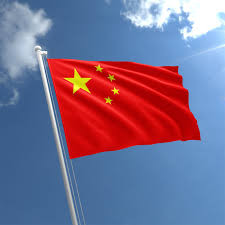
Yet today, there stands a beacon of hope, a powerful counterexample to the West’s tired dogma: China.
Its rise is not just an economic miracle; it is a testament to what a nation can achieve when it chooses its own path—one that is neither Western nor colonial, nor dependent on others’ approval, but rooted in disciplined state planning, unwavering national sovereignty, and a long-term vision for its people’s prosperity.
The story of China’s rise is remarkable not because it is easy, but because it was chosen and forged.
In 1978, China was still a largely rural and poor country with a per-capita income measured in the low hundreds of dollars.
- The key to building local economies is to invest in human capital
- Long-term planning can get rid of land barons
- Govt moves to capacitate smallholder farmers
- Sovereignty vs global membership
Keep Reading
Today, it is the second largest economy in the world, having lifted hundreds of millions of people out of absolute poverty and leading in key industries such as electric vehicles, solar technology and telecommunications.
This transformation was not the result of Western loans or Western guidance, but of a strategic vision held by China’s leaders and people.
China’s development model is a “mirror Africa must gaze into.” This is not to say that Africa should copy China verbatim — Africa’s history, cultures, and challenges are different, but it is to say that Africa must finally consider a development model beyond Western prescriptions.
China’s path shows that development requires a governance system that is disciplined, systematic, and rooted in a deep understanding of national reality. It shows that strong states can guide economic transformation and that long-term planning is essential.
China’s rise also challenges the dominant Western narrative that markets must always come before the state, and that private interests lead the way. In China, the state plays a central role in planning infrastructure, guiding industrial policy, and building human capital. African countries, too, can learn from this.
Zimbabwe, with its wealth of minerals, its human capital, and its strategic location in southern Africa, has potential that has long been underused.
But minerals do not mine themselves, and wealth does not grow without deliberate effort. Zimbabwe needs a governance system that prizes strategic planning, infrastructure investment, and disciplined implementation, rather than just short-term political survival.
China’s relationship with Africa is significant in another way. Unlike outdated Western approaches, which were often tied to political conditionalities, China’s partnership with African nations has generally focused on cooperation and development.
Across the continent, Chinese investments under initiatives such as the Belt and Road Initiative (BRI) have built roads, railways, power plants, digital infrastructure, airports and industrial parks that are transforming economies.
These projects are not perfect, and they must be managed wisely to ensure they benefit local people first. But they represent a departure from the old model where Africa was simply a supplier of raw materials to Western factories.
In countries like Kenya, Uganda, Ethiopia and others, we see examples of infrastructure and industrial facilities rising thanks to Chinese cooperation.
Africa is not passive in this process; it is learning, adapting, and in some cases, leading these projects.
What Africa must now demand is not just infrastructure, but a shift in the very nature of development: from dependency to strategic agency, from aid to partnership, from exporting raw materials to building value-added industries.
Moreover, Zimbabwe has shown that this partnership can be deep and practical. As China and Zimbabwe recently agreed to upgrade their ties to an “all-weather community with a shared future,” there is growing cooperation in infrastructure, mining, trade, investment, and the rejection of external interference.
This framework is not just diplomatic language; it reflects a mutual desire to change the global order that has historically left Africa on the margins.
Let us be clear: China’s rise is not without lessons or imperfections, and no development model is free from challenges or shortcomings.
Yet the Western model has proven deeply flawed when applied in Africa.
The Structural Adjustment Programmes in the 1980s and 1990s pressured African countries into rapid privatisation and liberalisation, without first building up their local productive capacities.
The result was deindustrialisation, mass unemployment, and heightened vulnerability to external shocks.
Zimbabwe experienced these failures firsthand: policies that undermined domestic industries and failed to deliver sustainable growth.
Today, as China and other Global South partners offer alternative approaches, Africa must not fall into the same trap of embracing models ill-suited to our own conditions. What we need is our own path, — one informed by our own realities, and strengthened by partnerships based on mutual respect and aimed at mutual benefit.
China’s development model also challenges the notion that Western-style democracy is the only route to progress.
In China, governance has been structured and organised around long-term goals and accountability mechanisms that prioritise performance and expertise.
This is not to disregard human rights or democratic aspirations; rather, it is to affirm that development cannot be measured solely through Western political frameworks. Africa must find ways to create systems that respect both its traditions and its ambitions for economic transformation.
For Zimbabwe, looking into the mirror of China’s development journey means envisioning a future where our people can work, build, innovate and thrive without being told what kind of economic system they must adopt.
It means building industrial parks that process raw minerals into value-added products, digital industries that empower young Africans, and governance systems that reward expertise and planning over short-term political expediency. It means rejecting external interference in our domestic affairs and upholding the right to development as an inalienable sovereign right that cannot be compromised.
China’s story is not just a tale of economic miracle; it offers a wealth of valuable lessons in agency, resilience, and determination.
It is compelling proof that a nation does not need to bow to Western dictates to rise — it only needs the courage to chart and stick to its own course.
Africa can and should learn from China’s journey, adapt its principles to our unique realities, and build a model that is uniquely our own.
If we refuse to look into this mirror, we risk repeating the same cycles of disappointment, dependency, and stagnation imposed by Western powers for generations.
But if we choose to act with discipline, strategic foresight, rigorous planning, and genuine partnership — if we choose to take our own destiny into our own hands — Africa’s rise can be more than a dream.
Forged by our hands, guided by our vision, and unshackled by the chains of Western domination, it can become our reality.
*Mafa Kwanisai Mafa, is a Pan-Africanist political commentator based in Gweru, Zimbabwe.