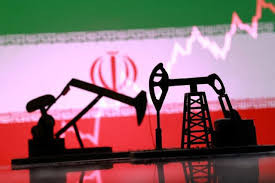
As I write this column, the Strait of Hormuz — a narrow waterway between Iran and Oman that carries roughly 15 to 16 million barrels of oil per day — remains effectively closed.
An active war between the United States, Israel, and Iran is now in its fourth week. And on Wall Street, global markets are doing what they always do when history is being written in real time: swinging wildly between panic and relief, often within the same trading day.
Here is what happened at the close of US markets on Tuesday, March 24, 2026 — and what it means for you.
US stocks resumed their decline on Tuesday as investors weighed new developments in the Iran conflict. The S&P 500 dropped 0.37% to close at 6,556. The Dow Jones Industrial Average fell 0.18% to 46,124. The tech-heavy Nasdaq Composite slid 0.84%, leading indices lower amid a broad sell-off in software stocks.
This followed a strong Monday session where the Dow gained 1.38% to close at 46,208, and the Nasdaq rose 1.38% to 21,946 — after President Trump suggested the US and Iran had held “productive” talks. Tuesday’s reversal tells the full story of where we are: any hint of diplomacy sparks a relief rally; any sign the war is deepening wipes it out the very next day.
Tech giants took a particular beating. Salesforce dropped 4.16%, IBM fell 3.64%, and Microsoft slid 1.96%. Risk-sensitive AI companies including Oracle, Palantir, and Salesforce dropped between 2.5% and 6%. The software sector ETF (IGV) is now down 22 % Year-to-Date (YTD) in 2026 — a brutal number for anyone who loaded up on tech names at the start of the year.
The VIX — Wall Street’s “fear gauge” — closed at 26.95, up 3.06%, signalling that professional investors are still pricing in meaningful near-term turbulence. For context, a VIX above 25 typically indicates elevated market stress. Defensive names like Walmart gained 1.09% and Chevron rose 1.01%, confirming the classic flight-to-safety rotation in force.
The Iran war has done what every oil market analyst feared: it has placed a premium of historic proportions into the price of crude. WTI crude closed around US$91.72 per barrel on Tuesday, while Brent — the international benchmark — climbed to approximately US$103.70. Brent had surged above US$112 just days earlier before collapsing nearly 11% on Monday, then swinging back more than 3.5% on Tuesday alone.
- Time running out for SA-based Zimbos
- Sally Mugabe renal unit disappears
- Epworth eyes town status
- Commodity price boom buoys GB
Keep Reading
That kind of price action does not signal calm. It signals a market trying to price several incompatible outcomes at once. US crude futures rose further in early Asian trade as markets reassessed supply risks after Iran denied that talks with Washington had even taken place — directly contradicting Trump’s public statements.
Analysts at Citi have warned that if the Hormuz blockage persists, Brent could test US$200 per barrel. Goldman Sachs estimates the surge in energy prices from the Iran war could shave 0.3% off global GDP and push headline inflation 0.5 to 0.6 percentage points higher worldwide. Iran has also started charging transit fees of up to US$2 million per voyage on commercial vessels passing through the Strait — an informal toll on the world’s most critical energy channel.
For Zimbabwe, and for all of Africa, this matters enormously. Higher oil means higher transport costs, higher electricity generation costs, higher import bills, and more pressure on currencies already under strain. The pain at the pump flows directly from what is happening in the Persian Gulf.
Gold has been one of the most fascinating — and confusing — stories of 2026. The metal reached an all-time high of US$5,595 per ounce in late January 2026. As of Tuesday’s close, gold is trading at approximately US$4 402 per ounce — still up more than US$1 300 year-on-year, but well off its peak.
Why did gold fall even as a war broke out? The answer is counter-intuitive but important. Paper traders holding leveraged positions in gold futures faced margin calls when the US dollar strengthened. They sold gold not because they thought it was a bad investment — but because they needed cash, fast. The gold price drop in March 2026 was a liquidity event in a leveraged market, not a verdict on gold’s fundamental value.
The long-term case for gold remains intact. J.P. Morgan’s 2026 gold price target is US$6 300. Deutsche Bank sees US$6 000. The 10-year US Treasury yield closed at 4.39% — a headwind for gold — but with geopolitical risk at its highest level in a generation, most analysts still view gold as a critical portfolio anchor. For Zimbabweans who hold physical gold or who follow the ZiG’s gold-backed structure, the message is clear: short-term volatility does not erase the structural case for gold in uncertain times.
China is navigating this crisis carefully. The Hang Seng surged 681 points, or 2.8%, to 25,064 on Tuesday, halting a three-day losing streak as bargain hunters entered the market. Sentiment improved after Trump cited “productive” talks with Iran, and PBoC Governor Pan Gongsheng pledged to maintain supportive monetary policy to foster stable growth and financial market stability.
The mainland CSI 300 added 0.52%, while South Korea’s KOSPI surged 3%. China’s energy companies — PetroChina and CNOOC — sit in a complex position: higher oil prices boost their revenues but threaten the broader economy with inflation. Beijing is balancing those forces carefully, and so far the PBOC’s steady hand has prevented the kind of panic seen in Western markets.
For Africa, China’s economic stability matters enormously. Zimbabwe’s trade relationship with China — from tobacco exports to infrastructure financing — depends on Beijing maintaining its growth trajectory. A China managing this crisis with greater stability than the US is, from Zimbabwe’s vantage point, a stabilising force in an unstable world.
Bitcoin closed near US$69,344 on Tuesday, down 1.83% on the day, though still up roughly 10% since the Iran war began on February 28. The token has outperformed gold during this conflict — a notable development that signals Bitcoin’s maturing role as a geopolitical hedge. Bernstein analysts reaffirmed a US$150,000 Bitcoin target for end-2026, noting that Bitcoin ETF outflows seen at the start of the year have fully reversed, with ETFs now holding approximately 6.1% of total supply.
The US dollar has strengthened against most currencies as the classic safe-haven of last resort, putting pressure on emerging market currencies across Africa, including the ZiG and the South African rand. This is the financial spill over that matters most to everyday Zimbabweans: when the dollar strengthens, your purchasing power erodes and import costs rise — regardless of what Harare does domestically.
The global financial system is more interconnected than ever. What happens in Tehran echoes in Harare. What the Federal Reserve decides in Washington shapes interest rates on loans in Bulawayo. Understanding these connections is not just for professional investors — it is essential literacy for any Zimbabwean businessperson, farmer, or saver navigating this environment.
- Isaac Jonas is a Zimbabwean-Canadian economist, trader, and founder of Streetwise Economics — a global platform blending real-world experience with financial education for emerging market investors. Based in Canada, he shares financial education through his YouTube channel and social media. His website: www.streetwiseeconomics.com and his email [email protected]. Disclaimer: Educational content only — not financial advice.