The relationship between South Africa and Zimbabwe is a complex tapestry woven with history, proximity, and shared economic destiny.
However, in recent decades, this relationship has been severely strained by the rise of Afrophobia a specific form of xenophobia directed at Africans from other nations.
Among the immigrant populations in South Africa, Zimbabweans occupy a precarious position.
Fleeing a crumbling economy and systemic political instability, they have sought refuge in the "Rainbow Nation," only to find their hopes shattered against the glass ceiling of structural and physical hostility.
The prophetic warning issued by Kwame Nkrumah in 1960 that the untenable minority rule in South Africa was "steadily building a wall of intense hate" destined to result in "violent and barbaric regrettable consequences" continues to resonate in the country’s modern socio-political discourse, albeit in a transformed iteration.
While the formal structure of apartheid has been dismantled, the structural inequalities, systemic poverty, and competition for scarce resources have fueled a new, virulent strain of xenophobia directed at fellow Africans.
Recently the volatile environment, often manifested in periodic waves of attacks against foreign nationals, mirrors the "wall of hate" Nkrumah once envisioned; it reflects a society still grappling with the dehumanizing legacies of its past, where the frustration of the marginalized is redirected toward the "other."
Nkrumah’s insight remains a grim reminder that when a nation fails to address the root causes of systemic injustice, the resulting bitterness does not simply vanish it mutates, leaving the nation vulnerable to the very cycle of violence and instability he so presciently feared.
- Letter from America: Wake up call from South Africa: Dudula and self-hatred!
- Letter from America: Wake up call from South Africa: Dudula and self-hatred!
- Amplified Silence earns Masapa global accolade
- Amplified Silence earns Masapa global accolade
Keep Reading
While institutional responses are often bogged down by bureaucracy or malice, the survival of stranded detainees and displaced migrants frequently falls to the hands of ordinary individuals.
In the vacuum left by state agencies, community networks, church groups, and spontaneous movements of concerned residents have emerged as the primary providers of food and essential supplies.
These grassroots actors frequently bypass exclusionary state policies, recognizing that the hunger of a child or an elder does not recognise political borders.
This persistent discourse of exclusion and state-sanctioned silence has fundamentally reshaped the landscape of immigration policy across Southern Africa.
The normalisation of "Operation Dudula" rhetoric and the revocation of the Zimbabwe Exemption Permit (ZEP) have moved the goalposts of regional cooperation from a promise of open borders and mutual development to one of securitisation and populist exclusion.
As noted by Crush et al. (2022), the deliberate scapegoating of migrants for internal structural failures such as unemployment and the collapse of infrastructure has emboldened policymakers to frame immigration as a matter of national security rather than a human rights priority.
This shift has institutionalized an "us-versus-them" logic that undermines the Southern African Development Community (SADC) protocols on the free movement of people.
Consequently, immigration discourse in the region is now characterised by a paradoxical tension: while economies remain deeply integrated, the political narrative is increasingly defined by border rigidity and a fierce, state-led rejection of regional citizenship (Crush et al., 2022).
This discourse effectively creates a "fortress" mentality that ignores the economic realities of interdependency highlighted by the World Bank (2023), which emphasises that regional stability is inextricably linked to the protection and integration of mobile labor forces.
Afrophobia in South Africa is not merely an abstract prejudice; it is a lived, violent reality. Zimbabweans have frequently been the targets of xenophobic riots.
These movements are fueled by the fallacious narrative that foreign nationals are responsible for the collapse of public infrastructure, the scarcity of jobs, and the surge in crime.
However, this anger is misplaced. Research by Crush et al. (2022) indicates that migrant communities often stimulate local economies by filling labor gaps that local workers avoid, yet they remain primary targets for populist scapegoating.
The violence is rarely random; it is often calculated and invasive. Zimbabwean migrants have been dragged from their homes, their businesses looted, and their documentation torched. This aggression is worsened by a culture of impunity.
When victims approach the South African Police Service (SAPS), they are frequently met with secondary victimization.
Systemic indifference emboldens perpetrators, turning the dream of a neighboring haven into a waking nightmare of vigilance and survival.
As families lose the steady stream of remittances due to the revocation of permits and deportation , the ability to put food on the table, pay school fees, or access life-saving medication vanishes.
This loss of financial support plunges households into a cycle of poverty that is nearly impossible to escape (World Bank, 2023).
This afro-exclusion stands in direct opposition to the founding principles of the Africa Free Trade Continental Area (AFTCA).
Designed to foster economic integration and reduce the barriers that have historically stifled the continent’s growth, AFTCA is predicated on the free movement of goods, services, and labour.
Weaponising Afrophobia, regional actors have disturbed these major tenets, replacing the spirit of a unified African marketplace with a "fortress" mentality.
This regressive approach ignores the reality that economic prosperity in Southern Africa is inextricably linked to the protection and integration of mobile labor forces, as emphasized by the World Bank
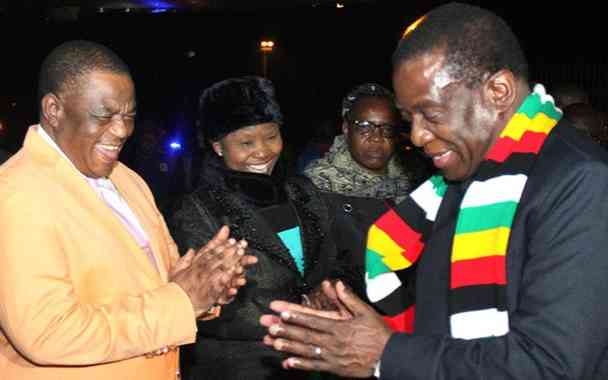
Paradoxically, the response of the Zimbabwean government to the plight of its citizens in South Africa has been characterized by a tepid, dismissive posture.
This lackadaisical approach is largely rooted in a strategic reliance on South Africa.
Maintaining an intentionally quiet diplomatic stance, the Zimbabwean administration seeks to avoid destabilising its relationship with its largest trading partner. In essence, the government prioritises the maintenance of fragile regional diplomatic ties and the continued, albeit strained, flow of capital over the physical safety of its own people.
The narrative of "economic infiltration" is further disproven when one looks at the hard data.
The economic loss resulting from xenophobic violence is profound.
According to the South African Institute of Race Relations (2022), the destruction of foreign-owned small businesses leads to a measurable contraction in local trade, causing a ripple effect that worsens food insecurity in low-income neighborhoods.
Simultaneously, remittances to Zimbabwe are a vital macroeconomic pillar. Official figures from the Reserve Bank of Zimbabwe (2023) highlight that diaspora remittances reached over US$1.8 billion annually, serving as a lifeline that prevents total humanitarian collapse during periods of hyperinflation.
The plight of Zimbabweans in South Africa is a regional crisis of humanity. It underscores the failure of southern African integration and the dark side of nationalism, where the "foreigner" serves as a convenient scapegoat for the systemic failures of governance.
Until the Zimbabwean government takes active, tangible steps to protect its citizens abroad, the cycle of violence and separation will continue.
Ultimately, the border remains a site of immense human suffering, where dreams of prosperity are met with the reality of prejudice, and where families are kept apart by the cold, hard logic of geopolitical exclusion.
For the Zimbabwean in South Africa, life remains a precarious balancing act a struggle to survive in a land that refuses to hold them, while mourning the home they were forced to leave behind.
Through its silence, the Zimbabwean government is not merely failing its diaspora; it is actively forfeiting the economic and social foundations of its own nation's future.
*Lovemore Nyawo is a development practitioner ,writer and public speaker .These weekly articles are coordinated by Lovemore Kadenge ,an independent consultant ,managing consultant of Zawale consultants(private) Limited ,past president of the Zimbabwe Economics Society and past president of the Chartered Governance and Accountancy institute in Zimbabwe. Email [email protected] Mobile no 263772382852