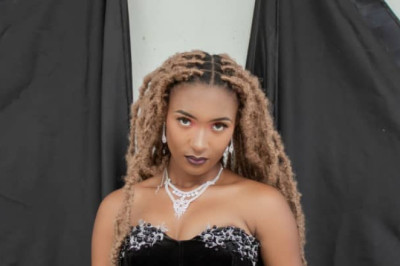
In a world where beauty often speaks louder than intention, Diana Kennedy known professionally as Kikki walks with a different kind of glamour.
Her stride is confident, yes, but it is the kind of confidence born not from flashing cameras, airbrushed perfection, or the glitz of pageant stages.
It rises instead from conviction, from a woman who insists that modelling can be something deeper than aesthetics: a platform for self-definition, a catalyst for empowerment, and a stage for rewriting how young women see themselves.
In the Zimbabwean fashion landscape, which is still finding its global footing, Kikki stands at an intersection of artistry and advocacy.
Her portfolio spans runway modeling, commercial work, and storytelling projects rooted in uplifting women.
But it is her philosophy quiet, steady, and defiantly grounded that sets her apart. “Modeling is not just about being seen,” she often says. “It’s about being heard. It’s about impact.”
Kikki’s artistry is often described as fluid able to move between high-fashion runway presence and emotionally driven commercial narratives with ease.
But her journey began, like many bold careers do, with a simple desire: to show that purpose should walk side by side with beauty.
- Saruchera still not satisfied
- Eva heads for Miss Heritage Global
- Eva heads for Miss Heritage Global
- 'I have a burning desire to help the vulnerable'
Keep Reading
“I wanted women especially young girls to know that confidence isn’t built on mirrors,” she says. “It’s built on stories, on scars, on the brave things we say to ourselves when no one is watching.”
This is the foundation upon which she built her brand: modelling as a vessel, not an endpoint.
Growing up, she watched how society policed women’s bodies, how confidence was often mistaken for arrogance, and how beauty was narrowly defined.
Instead of conforming, she decided to challenge the script.
Her early shoots were more than photos; they were statements visual essays communicating identity, resilience, and the vulnerability behind glamour.
Her role as a Top 10 Voice of Change finalist pushed her even further into the centre of national conversation.
The initiative, designed to celebrate women using their platforms for transformation, became a natural extension of her advocacy. “My voice is part of my work,” she says. “If I only walk, only pose, only perform beauty, then I’m limiting the power of my art.”
These recognitions didn’t just elevate her career they clarified her mission.
Many models speak about influence; Kikki enacts it.
Her storytelling projects focus on self-love, body positivity, and reclaiming one’s narrative in a world that constantly tries to define womanhood for women.
She uses fashion and visual performance as educational tools a kind of edutainment where aesthetics meet social conversation.
Her advocacy also extends to community engagement.
Whether she’s speaking to young women about confidence, hosting workshops on self-presentation, or using fashion spaces to highlight social causes, she treats art as a living language. “Fashion is a voice,” she says. “The body becomes the script, the runway becomes the page, the moment becomes the message.”
Kikki represents a new generation of Zimbabwean creatives who refuse to separate art from identity. Her work is influenced not just by high fashion, but by cultural memory, African aesthetics, and the need for local representation in global fashion narratives.
She advocates for inclusivity in modelling standards, challenges hyper-commercialised beauty norms, and uses her platforms to argue for diverse African stories told through clothing, movement, and image-making.
In her world, a photo shoot is not merely a technical process; it is a cultural event.
“The future of Zimbabwean fashion lies in authenticity,” she explains. “We do not need to imitate the world. The world needs to learn how to see us.”
Beyond the curated images, Kikki is deeply introspective. Her friends describe her as a thinker, someone who spends just as much time reading as she does modelling, someone who considers purpose before performance.
Her creative decisions are rarely random. When she chooses a campaign, a collaboration, or a brand alignment, she asks: Does this speak truth? Does this uplift? Does this reflect who I am becoming?
The modelling world is notorious for constructing personas that overshadow the humans behind them. Kikki refuses that swap. She prefers transparency. “I’m a work in progress,” she says. “I’m learning, changing, unlearning every day.”
Every era produces an artist who quietly changes the way their industry speaks. Kikki is one of those artists deliberate, thoughtful, resisting the superficiality often attached to her profession.
Her work matters because it represents the fusion of creativity and conscience.
She is part of a larger cultural shift redefining what modern Zimbabwean womanhood looks like in the 21st century: self-aware, bold, socially engaged, and unafraid to challenge inherited narratives.
Her modelling career is not an escape from real issues but an entry point into them.
Through her craft, she amplifies stories of self-worth, empowerment, and social responsibility.
Through her advocacy, she pushes for safer emotional spaces for women to express themselves.
Through her journey, she demonstrates that beauty when rooted in purpose has the power to transform.
As she continues expanding her brand, her influence is spreading into mentorship, digital storytelling, and women’s empowerment spaces. She is becoming not just a face in fashion, but a voice in social dialogue.
Kikki walks with vision. She models with intention. She advocates with clarity.
But perhaps her greatest strength is this: she shows that a woman can stand tall without being loud, can inspire without being performative, can lead without stepping on others, and can shine without dimming anyone else’s light.
She is, in every sense, an artist of purpose.And her journey is only beginning.
Raymond Millagre Langa is an independent researcher, cultural critic, and creative writer whose work blends academic inquiry with the transformative power of arts-based activism. His storytelling rooted in community, memory, and social justice positions him as a distinctive voice shaping contemporary edutainment discourse in Zimbabwe.