In Zimbabwe, Christmas is not officially announced by the calendar.
It is announced by smoke rising from backyards, the smell of roasting meat drifting through townships, and the quiet anxiety of households calculating whether “this year will be better.”
Christmas arrives on a plate.
And like most Zimbabwean stories, that plate is layered, complicated, and deeply political whether we acknowledge it or not.
One of the most striking features of the Zimbabwean Christmas table is not what is present, but what is missing.
Sadza, the unquestioned cornerstone of daily life often disappears.
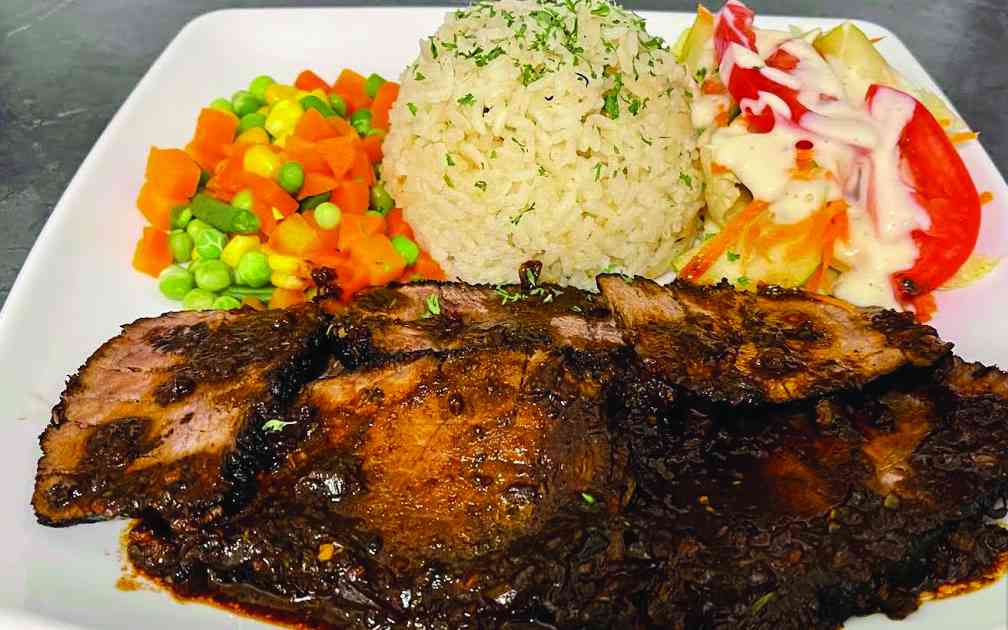
In its place sit roast chicken, beef, mashed potatoes, rice, coleslaw, and sometimes even cranberry sauce.
For one day, the food of survival steps aside for the food of celebration. But why?
- We’re not concerned by now-habitual State media propaganda
- A false unity
- Ekusileni Hospital faces closure
- The Fiddler: A strange endingA strange ending
Keep Reading
To understand this, we must treat Christmas cuisine not just as food, but as a historical document.
The “traditional” Christmas meal in Zimbabwe looks suspiciously British.
Roast meat. Potatoes. Pudding.
These are not indigenous festive foods; they are inherited rituals from colonial rule, when African diets were deliberately devalued.
Indigenous foods were labeled poor, backward, or inferior, while European foods symbolised progress, wealth, and civilisation.
Over time, these ideas seeped into the subconscious.
Sadza became associated with struggle and ordinariness - something you eat because you must.
Christmas, meanwhile, became the one day you eat “proper food.”
In many homes, serving sadza on Christmas Day still feels like an admission of failure, not tradition.
This is how colonialism survives: not through laws, but through taste.
Zimbabweans often speak proudly of the “seven colours” of Christmas cuisine a vibrant plate meant to signal abundance and success.
Golden-brown roast meat. Green vegetables. Red tomatoes. White starches. Yellow corn. Brown sweet potatoes. Crimson condiments.
On the surface, it is joyful. Instagram-worthy. A visual feast.
But beneath the colour is pressure.
For many families, achieving the seven colours is not about nourishment or celebration it is about performance.
It is proof that “we are doing well,” even when wallets say otherwise.
Some families go into debt for a single meal.
Others borrow, overspend, or stretch already-thin resources to avoid the shame of appearing inadequate.
Food becomes a status symbol. Christmas becomes a test.
Yet to reduce Zimbabwean Christmas cuisine to colonial damage alone would be unfair. Zimbabweans are not passive consumers of history. They are active remixers.
Local greens still find their way onto plates. Sweet potatoes sit next to roast beef. Peanut butter sauces appear beside rice.
Cooking methods blend firewood, electric stoves, and inherited knowledge from grandmothers who never read a cookbook but fed generations.
This hybridity is not confusion it is creativity.
Zimbabweans have taken imposed food traditions and reshaped them with local ingredients, tastes, and constraints.
The Christmas table is neither fully African nor fully European.
It is unmistakably Zimbabwean: adaptive, inventive, and resilient.
However, the Christmas menu also exposes Zimbabwe’s deep inequalities.
For middle- and upper-income families, Christmas is indulgence.
For struggling households, it is stress. Children compare plates.
Neighbours compare smells.
Social media amplifies the gap.
Those who cannot afford meat may feel invisible, ashamed, or excluded from the national celebration.
Ironically, the original spirit of Christmas community, generosity, and togethernes is often drowned out by consumption.
This raises an uncomfortable question: when did Christmas become less about sharing and more about self centered consumerism.
Perhaps the most radical act this Christmas is not adding more dishes but rethinking meaning.
What if sadza returned to the Christmas table, not as a symbol of lack, but as one of pride?
What if indigenous foods were celebrated, elevated, and intentionally included?
After all, sadza is not poverty it is heritage. It is the food that sustained communities long before roast chicken arrived in supermarkets.
Reclaiming sadza does not mean rejecting hybridity. It means rejecting hierarchy.
It means refusing the idea that some foods and by extension, some people are inferior.
So what can be done?
Redefine a “proper” Christmas
Communities, churches, and families can consciously shift narratives. A good Christmas is not measured by meat quantity but by shared presence.
Media, food writers, and influencers can highlight creative Christmas recipes that centre local ingredients sadza, rapoko, groundnuts, and pumpkin leaves presented with pride.
Shared meals, potluck-style gatherings, or community kitchens reduce pressure on individual households and restore collective joy.
Teach food history
Schools and cultural platforms should teach the history of food systems, helping young people understand why we eat what we eat.
Buying less, cooking intentionally, and sharing excess food can shift Christmas from performance to purpose.
The Zimbabwean Christmas plate is bittersweet because Zimbabwe’s history is bittersweet.
It tells stories of loss and survival, domination and creativity, inequality and hope. Every dish is a chapter.
This Christmas, perhaps the most meaningful tradition we can adopt is curiosity. Asking why certain foods appear. Asking who feels included. Asking how celebration can heal rather than divide.
Because food is never just food.
It is memory. It is power. It is identity.
And if we listen closely, our plates may teach us how to build a Christmas and a country that truly nourishes everyone.
nRaymond Millagre Langa is a Zimbabwean independent researcher, writer, and multidisciplinary creative working at the intersection of art, social justice, and community development. His work uses arts-based research and storytelling to address gender-based violence, child protection, disability inclusion, and digital safety, with a strong focus on everyday advocacy and community empowerment.