The Harare International Festival of the Arts (Hifa) is officially making a dramatic comeback.
On April 18 — as Zimbabweans celebrated their Independence Day — festival organisers broke years of silence by announcing its grand return, locking in August 3 to 9 for this year’s edition.
Underscoring their long-term commitment, the trust has already mapped out the festival dates for both 2027 and 2028.
This resurgence marks the end of a painful hiatus that began in 2019, when a perfect storm of economic collapse and political hostility forced one of Africa's premier cultural showcases to pull down its curtains.
Established in 1999 by classical pianist and artistic director Manuel Bagorro, Hifa quickly became the golden standard of Zimbabwe’s cultural calendar.
For one vibrant week, the festival completely took over the capital, transforming the Harare Gardens and surrounding spaces into a mesmerizing oasis of theatre, music, dance, visual arts, and poetry.
At its peak, Hifa achieved global acclaim by seamlessly blending local excellence with international stardom, hosting legendary performances from Oliver “Tuku” Mtukudzi, Chiwoniso Maraire, Hope Masike, Winky D, and Jah Prayzah, to premier talent from over 30 countries, including world-class classical orchestras and breathtaking international street circus acts.
Hifa’s eventual demise did not happen overnight. As a massive and expensive machine to run, the festival relied heavily on a delicate ecosystem of corporate sponsorships, multinational partners, foreign embassies, and local ticket sales.
- In the groove: Is Patrick Mukwamba jinxed?
- In the groove: Chiwoniso Maraire remembered
- In the groove: Is Patrick Mukwamba jinxed?
- Religion: Overcoming doubt and unbelief
Keep Reading
When Zimbabwe’s macro-economic environment crumbled into hyperinflation, acute cash shortages, and extreme currency instability, that ecosystem collapsed.
Corporate sponsors pulled out, international flights became unaffordable, and the local public could no longer afford ticket prices.
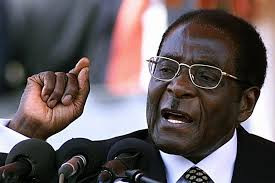
Beyond economics, Hifa’s commitment to using art to articulate complex socio-political issues repeatedly put it at loggerheads with the administration of the late president, Robert Mugabe.
The festival was forced to shelve an edition for the first time due to soaring political tensions when European election observers — whose home countries sponsored key facets of Hifa — were barred from entering Zimbabwe.
The financial and political cracks became impossible to ignore, resulting in the temporary cancellation of the main showcase.
While organisers staged resilient comebacks in 2017 and 2018, the latter would become its swan song.
In early 2019, executive director Maria Wilson officially announced the cancellation of the event, citing that the festival could no longer responsibly commit to staging a showcase of Hifa’s standard under the country's severe economic distress.
The definitive catalyst for Hifa’s institutional friction with the state traces back to a high-profile showdown with the acclaimed South African Afro-fusion band, Freshlyground.
In 2010, Freshlyground released their album Radio Africa, featuring the politically explosive track Chicken to Change.
The song was a direct, unapologetic critique of Mugabe’s then 30-year hold on power. Its music video featured a latex puppet of Mugabe depicted as an aloof, out-of-touch leader riding in a luxury presidential car, reading a fictional propaganda newspaper titled Bob’s Times with the headline Glorious Victory for Zanu PF.
Days after the video went viral in September 2010, Freshlyground was scheduled for a standard concert in Harare.
Zimbabwean media authorities reacted swiftly, abruptly revoking their work permits and forcing the band to cancel the show.
The tension reached a boiling point four years later. Hifa organisers boldly booked Freshlyground as the star-studded closing act for the festival’s main stage on May 4, 2014. Thousands of tickets were sold.
Assuming time had healed old wounds, the band flew from Johannesburg and landed at the then Harare International Airport on Sunday afternoon.
Instead, immigration and state security officials intercepted them immediately upon arrival.
Without providing any official written justification, authorities revoked their visas on the spot, denied them entry, and escorted them directly back onto a return flight to South Africa.
Hifa was plunged into a massive logistical, financial, and reputational nightmare.
Just hours before the closing ceremony, organisers were forced to issue a public apology and scramble to refund thousands of angry, disappointed fans.
Arts critic and journalist Plot Mhako said the return of Hifa was an important development.
“Over the years, we have seen a lot of initiatives built within the arts, but played a unique role by bringing all artistic disciplines under one roof for an exciting six-day festival — something that has been deeply missed,” he said.
“It is a very welcome development, and I hope that after such a long absence, they will pick up right where they left off.
“Unfortunately, not much information has been given yet regarding the lineup or who will be performing. I am a product of Hifa myself; I worked there in my early stages and even had a production featured there.”
After succumbing to the weight of political censorship and economic stagnation, Hifa’s newly announced August dates represent more than just a calendar update.
For Zimbabwe's creative industry and the city of Harare, it marks the highly anticipated resurrection of a platform that once brought the entire world to its stages.