What happens when you have planted, watered and waited, only to watch those around you harvest while your own field remains barren?
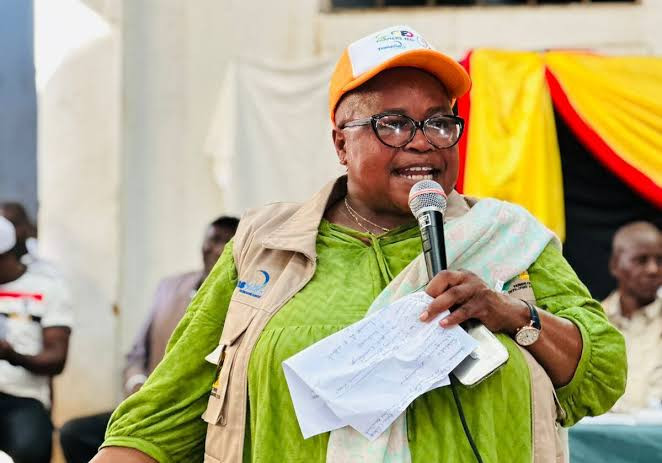
That painful question lies at the heart of Argatha Murudzwa’s 2025 gospel release, Eloi — a deeply reflective song about waiting on God, unanswered prayers and the struggle to hold on to faith when the expected breakthrough seems delayed.
Murudzwa has established herself as a formidable voice in Zimbabwean gospel music, with worship songs such as Makatendeka, Semafashamu and Press On. But Eloi takes her music into more vulnerable and contemplative territory.
The song opens with a reminder that everything has its appointed time: “Chimwe nechimwe chine nguva yacho, ndozvazviri pasi pezuva.” Life has its seasons, Murudzwa suggests, and believers must learn to navigate both the good and difficult ones.
The optimism, however, gradually gives way to lament. She speaks of a season of war followed by a season of planting. She has planted her seed like everyone else, watched it grow, yet remains without a harvest while those who began the journey alongside her have already filled their granaries.
This is where Eloi cuts deepest. It captures the frustration of someone who feels they have done everything possible—worked hard, prayed and remained faithful—yet still cannot see the door of opportunity opening.
It gives voice to a question many believers quietly carry: Why are others harvesting while I am still waiting?
The title Eloi adds another layer of spiritual depth. It evokes Christ’s cry from the cross: “Eli, Eli, lema sabachthani?”—“My God, my God, why have you forsaken me?” recorded in Matthew 27:46. Mark 15:34 uses the corresponding form, “Eloi, Eloi, lema sabachthani?”
- News in depth: Zimbabwe’s recurring cyclones leave women, children in a lurch
- Currency crisis haunts listed firms
- News in depth: Zimbabwe’s recurring cyclones leave women, children in a lurch
- Currency crisis haunts listed firms
Keep Reading
The biblical connection is significant because Murudzwa’s song similarly gives space to a believer who is hurting, questioning and struggling to understand God’s silence.
Yet the questioning never becomes a rejection of faith. The cry is directed towards God, not away from Him.
Murudzwa deepens this anguish by questioning why God appears absent despite her efforts to seek Him. She speaks of working hard, trying her best and seeking God’s face every day. She even wonders whether her own shortcomings could be standing between her prayers and God’s response.
The honesty of these lyrics is among the song’s greatest strengths.
The repeated cry, “Eloi, mandisiirei Mwari?” becomes particularly powerful.
The repetition feels like a heart returning to the same wound because the wound has not yet healed.
Each refrain intensifies the sense of abandonment and draws the listener into the experience of a prayer that appears to go unanswered.
In that sense, Eloi moves beyond conventional gospel music into something more raw and human. It is not primarily a song of triumph, but one of survival—the survival of faith in the face of silence.
Musically, Murudzwa’s emotional vocal delivery complements the weight of the lyrics. Her voice carries a sense of pleading rather than mere performance, while the restrained instrumental arrangement creates a prayerful backdrop that keeps the words at the centre.
For gospel music lovers, Eloi is more than a song to be heard; it is a song to be experienced. It speaks to those who have worked, prayed and waited while wondering whether their season will ever come.
Murudzwa’s greatest strength is giving voice to an uncomfortable prayer many people carry silently: I have planted. Others are harvesting. When will my season come?
And in that aching, persistent cry, listeners may find permission to voice their own doubt and disappointment—and perhaps discover that even when the harvest is delayed and God seems silent, the cry of a wounded heart can still be an expression of faith.