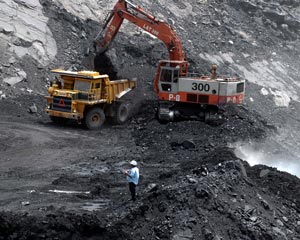
Hwange Colliery Company Limited (HCCL) — the largest coal mining firm in the country — has resuscitated its underground mining operations in a move that is set to increase coal production in the country.
environment By Kennedy Nyavaya

The bringing in of underground mining equipment may create new jobs, facilitate quicker payment of outstanding employees’ salaries as well as increase energy supply in Zimbabwe.
At face value, the HCCL “turnaround strategy” seems like a eureka moment, but it comes with underlying repercussions on the livelihood of the environment as a result of the climate change implications it has.
“Hwange is like a burning hell on earth and trying to unearth the coal, will just make life unbearable for local residents,” said mineral resource governance environmentalist Kudakwashe Makanda.
“Unfortunately, our government has double standards of shunning environmental crime in public, but at the same time allowing it to happen.”
True to Makanda’s sentiments, Zimbabwe is part of the Paris Climate Agreement, whose dictates are expected to enter into force locally on September 6 2017, aiming at reducing activity tantamount to increasing global warming.
The accord is an agreement within the United Nations Framework Convention on Climate Change (UNFCCC) dealing with greenhouse gas emissions mitigation, adaptation and finance and it compels signatories and parties to strive for sustainable energy sources.
- Chamisa under fire over US$120K donation
- Mavhunga puts DeMbare into Chibuku quarterfinals
- Pension funds bet on Cabora Bassa oilfields
- Councils defy govt fire tender directive
Keep Reading
Not only is coal production unstainable but an apparent sabotage of goal seven of the Sustainable Development Goals (SDGs) which aims at:
“By 2030, enhance international cooperation to facilitate access to clean energy research and technology, including renewable energy, energy efficiency and advanced and cleaner fossil-fuel technology, and promote investment in energy infrastructure and clean energy technology.”
Reportedly, one in five people still lack access to modern electricity and three billion people rely on wood, coal, charcoal or animal waste for cooking and heating, but that could be changed if renewable energy is paid attention to.
According to the SDG blueprint, energy production is the dominant contributor to climate change, accounting for around 60% of total global greenhouse gas emissions and coal as a fossil fuel adds a great deal.
“A global economy reliant on fossil fuels and the increase of greenhouse gas emissions is creating drastic changes to our climate system,” the document postulates.
With an increase in population, the need for energy is also on the increase worldwide and fossil fuels are proving to be unsustainable as they are not only fuelling global warming, but are also prone to run dry.
At one point Water and Climate minister Oppah Muchinguri-Kashiri said Zimbabwe required at least $55 billion to invest in renewable energy mitigation actions with a short-term target being 2030.
While presenting the country’s Intended Nationally Determined Contributions (INDCs) to the UNFCCC, Muchinguri-Kashiri pointed out how funds would be mobilised combined from locally coffers and complemented by affordable international financial support.
“The various funding, technology and capacity mechanisms related to the convention, such as the Green Climate Fund, Climate Technology Centre and Network, Adaptation Fund, Global Environment Facility and continued investment by developmental partners in the national climate change discourse will be critical,” she said.
“The type of contribution that the Zimbabwe government is presenting relates to emissions of greenhouse gases in line with the country’s development pathway. The proposed renewable energy mitigation actions will result in a significant reduction in the greenhouse gases.”
The current state of affairs, however, points to a different reality, with coal mining expansion and a 25-year supply agreement between HCCL and the Zimbabwe Power Company rendering the 2030 mark meaningless.
On the other hand, the Zimbabwe Energy Regulatory Authority (Zera) has reportedly licensed dozens of independent power producers, with a significant number pledging to tap into the renewable energy market but, that has so far been largely a pie in the sky.
“Given the climatic changes or variations happening globally, Zimbabwe now has more sunlight because of clear skies and longer days. This means more solar energy can be derived from that,” suggested Makanda, who added that green energy developments will create more employment.
“The funds that are being channelled towards these mines should just be directed towards developing solar power grids which will not only create employment but will also go a long way in ensuring that the electricity tariffs for this country are reduced.”
Apart from prompting global warming, carbon dioxide emissions are also inducing toxics in the atmosphere, making the air and water dirty, hence plunging mankind’s future into uncertainty.
Globally, the second biggest carbon emitter, United States, has pulled out of the Paris Climate Accord with President Donald Trump planning to bring back “coal jobs”.
Ironically, a renewable energy source, particularly solar, is said to be employing more than coal, oil and gas in the US and other developed countries.
Meanwhile, countries like Sweden have embraced the green energy revolution and reports point at its high benefits, which is what Zimbabwe should also focus on.
With over 300 days of sunlight a year, investing in solar energy looks like a decent way out of energy shortages and the financial stress of investing in unsustainable fossil fuels.
But, while the debates rage on as to which energy production method is sustainable, one fact which remains is that the climate is changing fast and there is need to mitigate and adapt in line with SDG 7 for the future’s sake.