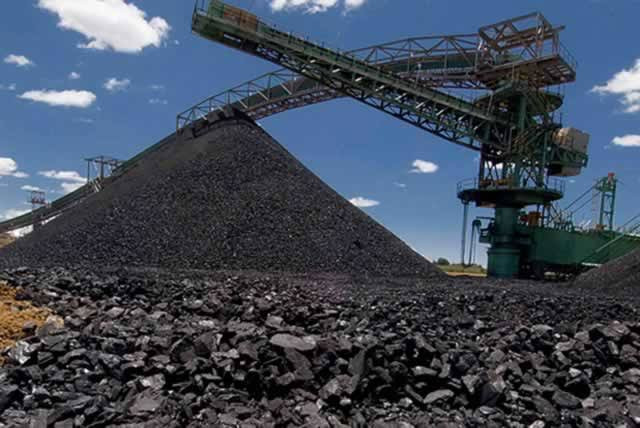
Hwange Colliery Company Limited (HCCL) says it has overcome major production constraints and now has the capacity to produce up to 15 million tonnes of coal annually, but the company faces a new challenge of securing markets and logistics capacity to move increased output.
After years of battling ageing equipment, financial distress, and declining production, the coal miner says extraction is no longer its biggest hurdle.
Management is now focused on expanding its customer base, both locally and internationally, while addressing transport constraints that could limit growth.
The shift marks a major turning point for the company, which has been rebuilding its operations under reconstruction.
Having invested in operational improvements, restructuring, and technology upgrades, Hwange is now moving from recovery to commercial expansion.
“Our biggest focus, as we speak, is actually markets and logistics. That's where the bottleneck is,” HCCL administrator Munashe Shava said in an interview.
“In terms of coal extraction from the mines, that's not an issue. We have sorted out that side of things. We can do up to 15 million tonnes a year. “But it's how to move that product into the markets and how to find those markets. That's where our focus is.”
The company expects to produce about seven million tonnes during the current financial year before increasing output to 10 million tonnes next year, as investments made during the restructuring programme begin yielding results.
- Hwange plans massive capex after ZW$4 bn loss
- Endemic govt corruption at Hwange Colliery Company ...Van Hoog comes out guns blazing
- Coal reserves sold for a song: Report
- Zimbabwe Consolidated Diamond Company boss suspended
Keep Reading
However, production remains below Hwange’s installed capacity, highlighting the scale of the company’s ambitions and the need to secure additional markets.
The challenge is not only finding buyers but also ensuring efficient transportation of coal to power stations, industrial users, and export destinations.
With production constraints easing, logistics has become a key factor in Hwange’s growth strategy.
The company is also embarking on one of its biggest technological upgrades, with plans to introduce what Shava described as Africa’s first longwall mining machine.
The technology is expected to transform underground coal extraction by improving recovery rates, reducing production costs, and extending the life of Hwange’s reserves.
“The extraction efficiencies are going to jump from between 50% and 60% recoveries to above 95%,” he said.
“Not only does it improve efficiency and reduce unit costs, but it's also going to ensure that our life of mine is increased.
“Previously, we would mine a block and recover only around 60%. We are now going to recover more than 95%.”
The new technology is expected to allow the company to recover significantly more coal from each mining block while reducing waste and improving profitability.
Hwange is also diversifying its operations to reduce reliance on coal revenues and create additional income streams.
The company has established standalone businesses in property development, agriculture, healthcare, financial services, and mining, with each unit operating as an independent value creator.
Among the new ventures is the expansion of the company’s microfinance business into a long-term lending institution aimed at improving employee financial security.
Plans for a cancer centre of excellence are also at an advanced stage as part of its healthcare expansion.
Shava said the diversification strategy was aimed at building a sustainable business ecosystem.
“We are building an ecosystem of related companies, but which are standing alone and operating as value creators in their specific areas,” he said.
He also credited employees with helping drive the turnaround, saying rebuilding confidence within the organisation had become a key part of the company’s recovery.
“The people who are now part of the bigger Hwange family understand the vision,” Shava said.
“They believe in it, and they are living it. They are operationalising the strategic focus areas that we developed.
“They no longer see the business as a separate entity. It is part of them.”