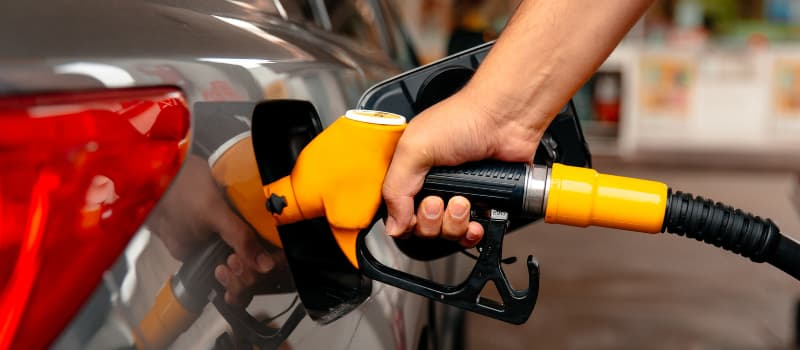
The government has declared fuel taxes one of its most effective tools for taxing the country’s vast informal economy, in its latest defence of a pricing regime that has long drawn criticism from motorists and businesses over the country's high fuel costs.
Zimbabwe has endured months of heightened pressure on pump prices after the escalation of conflict involving the United States and Israel against Iran, which began in February and has since disrupted global energy markets and pushed up international fuel prices.
In Zimbabwe, diesel and petrol prices rose from US$1.52 and US$1.56 per litre, respectively, to US$1.77 and US$1.71, before climbing to US$2.05 and US$2.17 on March 18. By April 2, the price of diesel and petrol per litre reached a peak of US$2.11 and US$2.23, respectively, as the Middle East crisis intensified.
On May 5, the price fell to US$2.09 and US$2.08 per litre of diesel and petrol, respectively.
To cushion consumers, the government temporarily deferred some fuel-related taxes, a move that the Treasury later revealed cost more than US$74 million in revenue during the first half of the year.
The relief helped lower diesel and petrol prices from their peaks to US$1.99 and US$1.98 per litre on June 19, and then to US$1.87 and US$1.93 on July 8.
However, renewed tensions late last month involving the United States and Iran pushed fuel prices back up to the current US$1.95 and US$1.96 per litre of diesel and petrol, respectively.
While the conflict amplified price increases, Zimbabwe has remained one of only two Sadc countries where both petrol and diesel prices exceeded US$2 per litre, reflecting structural costs that extend beyond global oil prices.
- Mavhunga puts DeMbare into Chibuku quarterfinals
- Bulls to charge into Zimbabwe gold stocks
- Ndiraya concerned as goals dry up
- Letters: How solar power is transforming African farms
Keep Reading
The government has acknowledged that Zimbabwe’s fuel pricing model is driven by a higher free-on-board (FOB) cost than in neighbouring countries, describing the country as a “price taker.”
The FOB component accounts for about 67% of the diesel price and 50.3% of the petrol price, while the country’s relatively high ethanol blending ratio also adds to petrol costs on top of levies.
“Fuel is a fiscal instrument. We actually use it as an instrument to collect taxes from everyone,” said George Guvamatanga, the permanent secretary for the Ministry of Finance, Economic Development and Investment Promotion.
He was speaking during a post-2026 Mid-Term Budget and Economic Review breakfast meeting.
“Whichever way you travel, you cannot walk from Kambuzuma to town,” the Permanent Secretary said.
“One way or another, you will get into a bus, a kombi or drive your own vehicle. That is where we are able to capture everyone”.
According to Guvamatanga, individuals may avoid direct taxes by remaining outside the formal economy, but they cannot avoid paying for transport.
However, he acknowledged frequent public complaints that fuel prices in Zimbabwe remain higher than those in neighbouring countries, but maintained that the pricing structure reflects the government’s broader fiscal objectives.
He added that telecommunications services provide another avenue through which the government can collect revenue from the wider population.
This is mostly through several levies on airtime and data services, including a health levy intended to support healthcare financing.
“You need a mobile device, you need data and airtime. We therefore capture revenue through ICT as well because people cannot disconnect themselves from the digital economy,” Guvamatanga said.
The need to tax the informal sector comes as previous research from the Reserve Bank of Zimbabwe shows that this economic segment generates over US$14 billion in revenue annually and has US$2.5 billion in cash at any given time.
“Our next policy direction is to identify those areas where the informal economy inevitably formalises and ensure that government is able to collect revenue from those activities,” Guvamatanga said.
On the controversial Intermediated Money Transfer Tax (IMTT), he said previous tax reductions had not always translated into lower consumer prices, as businesses often retained existing pricing structures despite reductions in their tax burden. “Our studies indicate that IMTT has already been fully embedded in the pricing framework of the economy,” Guvamatanga said.
“The question is whether industry would remove it from their prices if the government abolishes it”.
Confederation of Zimbabwe Industries (CZI) chief economist Cornelius Dube noted that, despite fuel remaining an important revenue source, collections from fuel-related taxes had declined during the first half of the year. He said revenue from excise duty on fuel had fallen by about 4% compared with the corresponding period in 2025, while collections from fuel levies declined by approximately 3.7%.
“The government took a knock in terms of fuel tax collections,” Dube said. However, he observed that overall tax revenue had increased by about 30% compared with the same period last year, reflecting improved revenue mobilisation across other tax heads. Dube said industry hopes the stronger revenue performance will translate into improved public service delivery, reduced fiscal pressures and more efficient government spending.