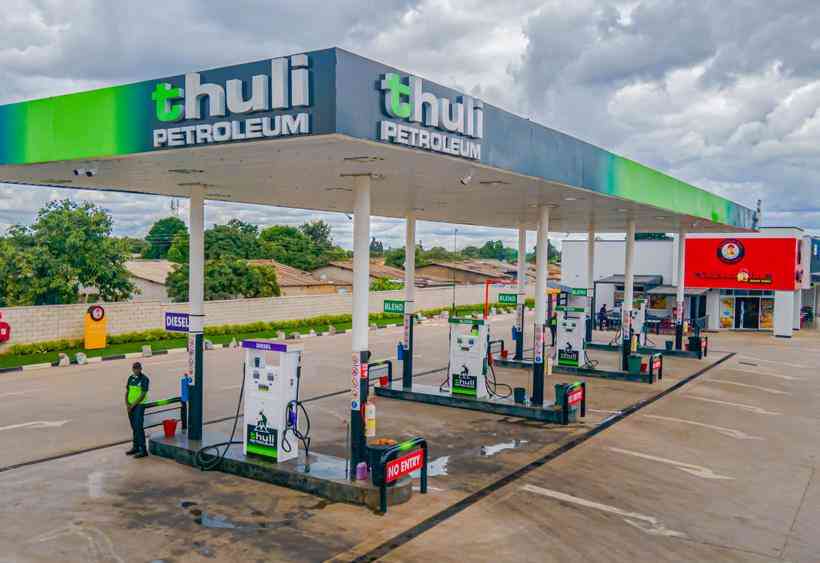
On a busy stretch of Harare’s Samora Machel Avenue, three new fuel stations stand within a kilometre of each other, their gleaming canopies competing for attention with flashing LED price boards.
Yet, just a stone’s throw away, residents are struggling through daily blackouts and businesses are scrambling to install solar systems.
It’s a paradox that has left many Zimbabweans puzzled: why is the country witnessing a mushrooming of fuel service stations when the world — and even Zimbabwe itself — is making deliberate steps toward renewable energy and electric mobility?
According to the Zimbabwe Energy Regulatory Authority, the number of licensed fuel stations has ballooned in the past decade, particularly in urban centres like Harare, Bulawayo, Kwekwe and Gweru.
In small cities like Kadoma and Chegutu filling stations now stand side by side, raising questions of market saturation.
A senior planner at Harare City Council, who requested anonymity, admitted that the city has lost control of rational urban planning.
“We are under immense pressure to approve these projects, some pushed by politically connected individuals,” he said.
“In some cases, we are simply handed a directive and told to sign.”
- Chamisa under fire over US$120K donation
- Mavhunga puts DeMbare into Chibuku quarterfinals
- Pension funds bet on Cabora Bassa oilfields
- Councils defy govt fire tender directive
Keep Reading
Behind the glossy branding, ownership of many new service stations is murky.
Investigations by Truth Diggers traced several stations to companies linked to politically exposed persons, some with interests in fuel importation and gold mining.
Truth Diggers is the investigative journalism unit under Alpha Media Holdings (AMH), publishers of NewsDay, Zimbabwe Independent, The Standard and Southern Eye.
AMH also operates HStv, an online broadcasting channel.
Analysts suggested that fuel retailing has become a convenient channel for money laundering and foreign currency arbitrage.
“The fuel sector is cash-rich and opaque, which makes it attractive for recycling illicit funds,” said an energy economist.
Residents across Zimbabwe are raising alarm about the siting of fuel stations in inappropriate places.
In some residential areas, fuel stations sit directly opposite schools while in other areas fuel stations were approved in the middle of houses.
Environmental Management Agency (EMA) guidelines require Environmental Impact Assessments (EIAs) before construction, but residents and watchdogs say these rules are frequently ignored.
“Putting petrol tanks next to homes is reckless. One accident could wipe out a neighbourhood,” said a Harare resident Charles Moyo.
Underground tanks at fuel stations pose long-term risks of groundwater contamination, while increased traffic around new stations adds to air pollution and congestion.
However, Environmental education and publicity manager for EMA Amukela Sidange said the Environmental and Social Impact Assessments seek to enhance sustainable practices by the petroleum industry.
“The Environmental Management Agency ensures that any development project, including service stations, adheres to relevant environmental legislation and standards to minimise its ecological footprint,” Sidange said.
“Service stations (petroleum) are classified as prescribed projects under the First Schedule of the Environmental Management Act (CAP 20:27) and these should be implemented under an Environmental and Social Impact Assessments (ESIAs) licence so as to reduce and/or avoid both ecological and social impacts.”
She said EMA employs several measures to ensure that new service stations do not exacerbate environmental risks such as underground fuel leaks, soil contamination, and air pollution.
Sidange said all proposed service stations are required to undergo a comprehensive ESIA.
“This assessment identifies potential environmental impacts, including risks of fuel leaks, soil and water contamination, and air pollution from fumes,” she said.
“The ESIA mandates the submission of detailed plans for risk mitigation, such as the use of double walled tanks, leak detection systems, impermeable liners, and spill containment measures.”
She said EMA, in collaboration with other regulatory bodies, enforces specific design and construction standards for fuel storage tanks, piping, and dispensing units to prevent leaks. This includes regular tank integrity testing, and proper ventilation systems.
Sidange said service stations must submit and adhere to waste management plans that detail the safe disposal of hazardous waste, including contaminated soil, used oils, and other chemicals.
An environmentalist with a local authority warned: “Fuel leaks are silent killers. Once groundwater is contaminated, it is almost impossible to reverse. In a city like Harare, where boreholes are a lifeline during water shortages, this is a disaster waiting to happen.”
The surge in service stations is happening against a backdrop of shrinking fuel demand.
With frequent fuel price hikes, many motorists drive less, while businesses and households increasingly shift to solar power to cushion against unreliable electricity supply.
Zera itself has promoted electric mobility, commissioning the first EV charging station in Gweru last year and partnering with Zuva Petroleum to roll out solar-powered charging hubs.
Local firm Munesu Energy is targeting 200 solar-powered charging stations by 2026.
So why continue licensing fossil fuel stations? Analysts point to distorted investment priorities.
“It’s less about meeting demand and more about providing a safe investment haven for elites with access to foreign currency,” said a local economist.
On one hand, the Treasury has introduced duty rebates on solar equipment and EV charging gear, slashing electric vehicle import tariffs to encourage a green transition.
On the other, Zera continues to license dozens of fuel service stations, effectively deepening dependence on fossil fuels.
Natural resource governance and climate change expert Tapuwa O’bren Nhachi says this contradiction reflects “a state captured by short-term rent seekers rather than long-term sustainable planners.”
“There is definitely a contradiction here. Zera licensed more than 900 fuel stations in 2024 while simultaneously promoting renewable energy initiatives,” he said.
“It's like trying to quit smoking while opening cigarette shops - the mixed signals are confusing for investors and communities alike.
“Zimbabwe committed to a 40% reduction in greenhouse gas emissions by 2030, but flooding the market with new petrol stations creates infrastructure that will be used for decades.
“It's counterproductive to our climate goals and makes the 40% target look unrealistic.
“Urban centres like Harare and Bulawayo are already struggling with space constraints.
“More fuel stations mean increased air pollution, soil contamination risks, and loss of potential green spaces.
“The cumulative effect on air quality in densely populated areas could be devastating.”
Nhachi said civil society organisations were rightfully worried.
“Underground storage tanks can leak, contaminating groundwater that communities depend on,” he said.
“Air pollution from increased traffic and fuel vapours affects respiratory health, particularly for children and the elderly.
“Many service stations are built in residential areas, affecting property values and community character.
“Some displace small businesses or limit access to public spaces. There’s often little community consultation before these developments are approved.”
Truth Diggers established that in many neighbourhoods, residents said they were never consulted before stations mushroomed around them.
Property values are falling, traffic is worsening, and fears of accidents linger.
“We woke up one morning to bulldozers clearing a stand opposite our house. Within months, a fuel station was standing there. Nobody asked us anything,” said a resident in Waterfalls.
Zera chief executive officer Edington Mazambani said his organisation’s current regulatory framework for licensing new service stations aligned with the country’s renewable energy roadmap and climate change commitments.
“Zera’s licensing framework involves requirements for compliance with the ZWS 970:2020 Standard for Service Stations,” he said.
“Service stations are also required to have EMA certificates which show compliance with the EMA Act.
“New sites are being encouraged to install solar systems for the supply of electricity to their operations.
“At the same time, they are also encouraged to look at the possibility of setting up electric charging systems in line with increased demand from electric vehicles.”
Mazambani said there were no plans to integrate renewable energy requirements, such as solar rooftops, EV charging points or energy-efficient systems into the approval criteria for new service stations.
“There are no plans for such inclusion in the approval criteria. Service stations are encouraged to embrace renewable energies and energy efficiency,” he said.
“Zera has installed an EV charging point at one service station in Gweru as proof of concept.”
Mazambani said Zera licensed 996 retail fuel service stations.
“The 2025 licensing process is still in progress and the final number will be confirmed at the end of the licensing year,” he said.
“Zera will publish the updated figure once the exercise is complete.”
One path doubles down on fossil fuel infrastructure, tying the country to a sunset industry vulnerable to global divestment.
The other accelerates into the renewable energy transition, aligning with climate goals and regional trends.
For now, the pumps keep multiplying, feeding a sector where money, politics, and power intersect.
But the bigger question remains: in a world shifting away from fossil fuels, will Zimbabwe’s fuel station boom prove to be a visionary investment — or a stranded asset in the making?