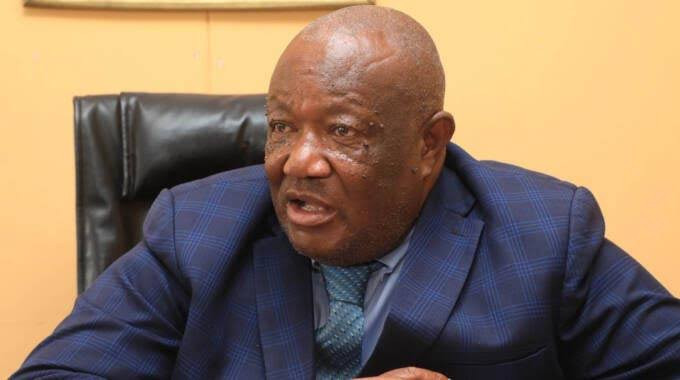
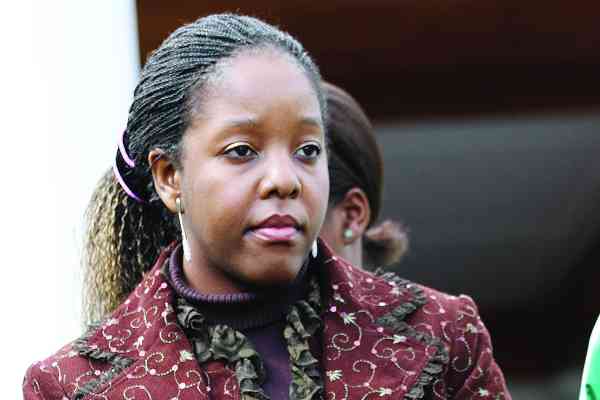
A draft amendment to the constitution to extend President Emmerson Mnangagwa’s term of office will be published in the government gazette soon by Justice and Legal Parliamentary Affairs minister Ziyambi Ziyambi.
Zanu PF political commissar, Munyaradzi Machacha, said this is because the ruling party did not adopt a resolution to extend Mnangagwa’s term of office for ‘fun.’
Mnangagwa’s term of office constitutionally ends in 2028, but the party adopted a resolution to extend his tenure to 2030.
This is despite Mnangagwa indicating that he is a constitutionalist, and does not intend to remain in office when his term of office expires.
According to Machacha, the Justice minister is seized with draft amendments on the controversial 2030 agenda that has left Zanu PF divided over Mnangagwa’s succession.
“Whilst it is the mandate of the secretary for Legal Affairs who is also the minister of Justice, Legal and Parliamentary Affairs to come up with the package of constitutional amendments as would give effect to the resolution, I am aware that he is presently working on drafts aimed at achieving this,” Machacha submitted.
“I can place it on record that the draft amendments will be published through the Government Gazette soon.
“It will become clear from the publication whether the amendments trigger section 328(7) or not.”
- NoViolet Bulawayo’s new novel is an instant Zimbabwean classic
- Jah Prayzah, Zanu PF rekindles ‘lost love’
- Bank workers appeal to Ncube for tax relief
- Indosakusa marks 21-year anniversary milestone
Keep Reading
He said this in his notice of opposition to a Constitutional Court application by Bulawayo based activist, Mbuso Fuzwayo, challenging a Zanu PF resolution to extend Mnangagwa’s tenure.
In his application, Fuzwayo cited Zanu PF, Ziyambi, speaker of Parliament Jacob Mudenda, attorney general Virginia Mabhiza and Mnangagwa as respondents..
Fuzwayo said the Zanu PF resolution violated his rights.
Constitutional experts have said amending the constitution to extend Mnangagwa’s tenure requires a referendum, with the incumbent also not benefiting.
Machacha said Zanu PF intends avoiding a referendum, and is focusing on a parliamentary route where the ruling party enjoys a two-thirds majority.
“A referendum is not the process of public participation set out by the constitution of Zimbabwe,” he submitted.
“The constitution of Zimbabwe in section 328 as read with section 131 mandates a clear rigorous and non-political gauntlet: a 90-day Gazette notice, public hearings and submissions, and two-thirds affirmative votes in each House of Parliament at final reading, culminating in a presidential assent.
“This is a parliamentary and technical odyssey, not a partisan skirmish in the political gutter.
“It is, therefore, puzzling that applicants simply declare that an amendment of section 95 (2) of the constitution of Zimbabwe would require a national referendum without grounding that declaration under subsections (1) and (7) of section 328.”
Machacha said the country’s constitution was not immune to amendments.
“No democratic constitution worldwide immunises itself from its amendments,” he submitted.
“All amendments are amenable.”
The Zanu PF political commissar made bizarre claims that there were growing calls in Africa for extended term limits of up to seven years.
“I must mention that the first respondent did not pass resolution 1 of 2024 for the fun of it or oblivious to the realities faced by our people,” declared.
“Against this background, there are now growing calls across Africa advocating “stabilising shifts” to seven year presidential and parliamentary terms of office for breathing space to combat “electoral fatigue”...
“It is my view that for our dear Zimbabwe, adopting this change at this juncture would strategically break the toxic cycle of disputed elections, empower consensus-driven governance and advance the attainment of an upper-middle-income future by 2030.”
Observers have linked the 2030 agenda to Mnangagwa’s succession.
The late Robert Mugabe was removed from office despite a spirited push by his loyalists to remain in office despite failing health, and a deteriorating socio-economic situation.