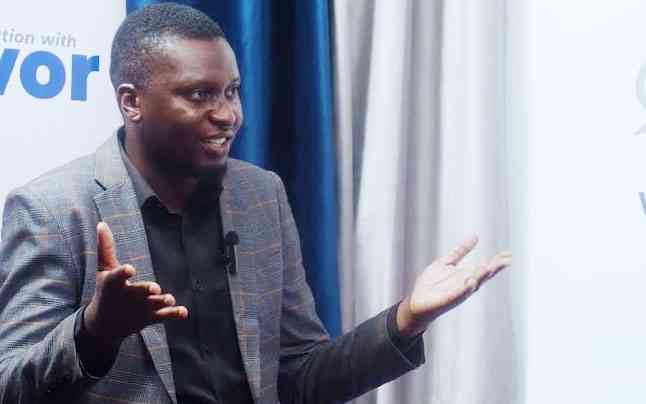
In this episode of In Conversation with Trevor, host Trevor Ncube (TN) explores the future of urban planning with Mufarowashe Donald Mandevhana (MD), a computational design lead and climate expert.
Driven by the personal tragedy of Cyclone Idai in his hometown of Chimanimani, Mandevhana discusses how he uses mathematical algorithms to create “climate-responsive” buildings.
By blending modern AI tools with indigenous knowledge systems, he advocates for a “regenerative urban design” that honours local environments.
His work emphasises building structures capable of withstanding future disasters while drastically reducing carbon emissions. Below are excerpts from the interview.
TN: Greetings and welcome to In Conversation with Trevor, brought to you by Heart and Soul Broadcasting Services. I go beyond the headlines and beyond the sensational.
Today, I am in conversation with Mufarowashe Donald Mandevhana, a computational design lead and climate expert.
I have to admit, I am stumbling over your title! It is quite a mouthful. Welcome to the show.
MM: Thanks very much, Trevor. I am humbled to be here, and I am really excited. I recently had a conversation with your good friend, Evidence, and now I am sitting with you. Young people like him inspire me.
- Matiza’s widow in estate wrangle
- SA insurer targets Zim after US$2.4 million payouts
- Addressing climate change the green building way
- Hit hard by storms and forest loss, Zimbabweans building stronger homes
Keep Reading
TN: So, talk to me. You are a computational design lead and climate expert. What does that actually mean?
MM: It is an interesting blend. Basically, we have architects and interior designers. I initially trained as an architect at Nust. But during my studies, I realised something was missing in my design process: the ability to translate what was in my imagination onto paper.
I looked for tools to improve my designs and discovered that I could use complex software to make those ideas a reality.
So, computational design is the use of algorithms and mathematical computations to produce complex designs. It helps us tackle issues like building comfort and climate-responsive design.
Currently, we face a global disaster: climate change. Computational design acts as a bridge between architecture, environmental resilience, and regenerative urban design. It answers all of those challenges simultaneously.
TN: You studied for your first degree at Nust. Where did you go from there?
MM: After my first degree, I went to the University of East London for a Master's in Infrastructure Engineering and Management. I then completed a second Master's in Climate Change and Sustainable Development.
TN: Why the specific pivot to climate change?
MM: Initially, climate was not on my radar. But while I was working in Namibia, Cyclone Idai hit. I am originally from Chimanimani. Our homes were destroyed. Many people lost their homes and their lives. I asked myself, "What is really happening to my home?"
Through study, I realised climate change is real, and we had become complacent. That was when I understood that climate is a huge part of our design philosophy. We must include it from the inception.
The environment in which we build should be respected. The key question is: Are you designing something proper for that specific place?
TN: The assumption is that architects always factor in the environment. But you are talking about a very intentional, deep study of it. How has overlaying climate change onto your profession been useful?
MM: It allows us to be proactive. When I am working on a project, I can advise other architects: "We are designing for an area that might face floods in the next few years. Our buildings need to be resilient."
We need to ask: when a flood comes in five or ten years, do we want people to die and buildings to be destroyed?
Or do we want structures that can withstand it? We must start from scratch and incorporate those philosophies from the very beginning.
TN: What drew you into architecture in the first place?
MM: Honestly, I never wanted to be an architect. My dream was aviation; I wanted to be a pilot. But growing up, you have big ambitions, and then reality hits. Aviation school costs a fortune. I needed to go to university. I applied to a few, including Nust, and was accepted.
Fortunately, my older brother is an architect. I looked at him and thought, "This lane is okay. I will survive." So, I chose architecture.
TN: Any regrets?
MM: None at all. I realised I have a creative side that needed an outlet. If I had become a pilot, I do not think it would have been as fulfilling. I can always learn to fly as a leisure activity, but design is my true passion.
TN: What inspires your designs?
MM: Something a bit crazy. I consider myself an inexplicable person. Once, when I was working in Namibia, I did a presentation, and my brother told me, "You do not read.
Your designs are just floating; they are not rooted." I was so angry that I started reading voraciously. One of the first books I read was The Act of Creation by Arthur Koestler.
The book discusses bringing two previously unrelated matrices of thought together to create something new.
For example, you have architecture, and you have indigenous knowledge systems about local climate and water.
They are two unrelated concepts, but when you merge them, you get something that makes real sense.
Reading that book triggered my “weirdness”. I started imagining these wild concepts. The challenge then became execution: how do I put these complex ideas on paper?
TN: How did you solve that?
MM: I went back to the desktop and learned to design using algorithms. It is like coding—telling a computer, "I need these curves, these lines, this parametric relationship."
The software can then tell me, "This design will not work because the building will be too hot or uncomfortable." It allows me to test my creativity.
The joy of seeing a thought in your mind become a tangible design is incredible.
TN: What does that joy look like?
MM: It is like the work of Daniel Libeskind, one of my favourite architects. I was inspired by his deconstructivism — doing the weird, the unknown, the inexplicable. I wanted to express myself through design.
But to do that, I had to be well-read and well-researched so that my designs had meaning. There is nothing as shameful as designing something that does not make sense.