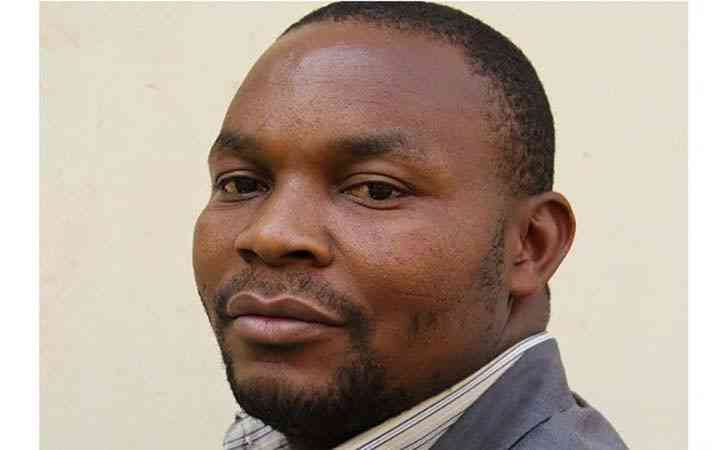
Acclaimed writer Petina Gappa returns to the spotlight with a raw exploration of the human psyche.
In a candid conversation with Alpha Media Holdings chairman Trevor Ncube (TN) on the platform In Conversation with Trevor, Gappa (PG) reveals how profound personal loss — the deaths of her father, mother, and brother — informed her latest play, Yellow Dog Dingo.
This production marks the beginning of a “trilogy of trauma” tackling men’s mental health, addiction, and suicidal ideation.
Gappa critiques the “crisis in masculinity” in Zimbabwe, where social conditioning prevents men from seeking help.
By weaving traditional customs with modern tragedy, she challenges the silence surrounding suicide and advocates for national healing. Below are excerpts from the interview.
TN: Greetings and welcome to In Conversation with Trevor, brought to you by Heart and Soul Broadcasting Services.
Today I'm in conversation with Petina Gappa, the writer and producer of Yellow Dog Dingo. You have your play launching soon.
What I want to find out first: how many plays have you done? How many books have you written so people understand the kind of person I'm talking to?
- In Conversation With Trevor: Munyati: Sports, arts are viable careers
- In Conversation with Trevor: Bango: ‘Street wisdom’ shaped me
- In Conversation With Trevor : Diplomatic posting was a mistake: Chihombori-Quao
- I’ve been a victim of racism in classical music: Mhambi
Keep Reading
PG: I say I am somebody who is more a writer than an author because an author is somebody who publishes, and I write every day. I am currently sitting on about 10 manuscripts and about five plays.
Not every play has been produced, and not every book has been published. I call myself a writer rather than an author because I tend to have about six years between books.
I have talked before about my imposter syndrome. Even now, four or five books later, including the translation of Animal Farm, I still get very nervous about being published and producing theatre. I hold myself back, which is something I'm working on, I promise.
TN: So, this is your third play?
PG: Yes, this is my third play that has been staged. The first one, Rotten Row, we talked about back in 2019 when I first appeared on the show. It was based on four stories from my collection also called Rotten Row. The second play is about Dambudzo Marechera, called Black Sunlight. That one had a staged reading, and we are waiting in 2027 to actually produce it. So Yellow Dog Dingo is the third play.
TN: Why is Yellow Dog Dingo not just another theatre production? Why one that seems to want to stimulate a national conversation?
PG: The play is based on a small section of a novel called A Feast of Mourning. If you know your Bible, you'll know the prophet Amos wasn't a happy guy. He threatened all sorts of things because Amos was about justice.
There's a verse where he says, "I shall turn your feast into mourning, and the end of it shall be as the death of a beloved son." I have been going through grief for the last six years. My father died, then my brother died, then my mother died. So, I felt I was in the middle of a feast of mourning.
The subject of grief became really present not just in my life, but it seeped into my writing. I started writing a novel about a family grieving different things.
In this family, one of their sons goes to a school where he is subjected to sexual abuse by a member of the Catholic clergy, the man he calls a "yellow dog dingo." In the play, I took just one segment where he confronts this man as an adult.
TN: Correct me if I'm wrong, how much of this, Petina, is your own personal healing? How much of this is about what you've gone through as a family?
PG: I actually had to step away from a house I bought in Highlands for my parents because my memory of that house is two funerals, two memorial services, two unveilings of tombstones, and lots of relatives.
I love my relatives, but you can only put up with 200-300 people in your house for so long. My memory of that house had been clouded. I wanted to recover the previous happy memories, the graduations, the parties but I couldn't have those memories while in that house. So, I stepped away and moved to this lovely place, which you're very welcome to. And the minute I moved into this space, I started writing again. I sing.
TN: So, this is part of your healing.
PG: Stepping back is really important—disconnecting from things linked to your pain. There's a tradition in kumusha where when someone dies, they knock down the hut of the deceased. I used to think, "Oh gosh, how wasteful." But now I get it. These are small huts, and you go in there and you are immediately surrounded by the aura and presence of the person. Obviously, I am not going to destroy a house in Highlands, that would be crazy, but stepping away and moving into a different space has really helped me.
TN: Let's go to the motivation behind the trilogy and the issues you've chosen to focus on. I'm passionate about these issues, and I'm glad you've decided to tackle them. Why men's mental health, trauma, addiction, and suicide ideation?
PG: The trilogy is a trilogy of plays. The first is Yellow Dog Dingo, going on stage at Reps at the end of July. The second is Black Sunlight, which we'll launch next year. It's about the author Dambudzo Marechera, dealing with the demons of his past while trying to fight censorship of his novel. The third play is about the final days in the life of Biggie Tembo, the frontman of the Bundu Boys, and we'll get permission from his family to write about him sensitively.
What I found in common with these three characters — one a fictional doctor based on real men who went through abuse at my old school, St Ignatius; the other Dambudzo Marechera; and Biggie Tembo — is that these are highly successful, highly acclaimed men beset by trauma, beset by the past, unable to escape it.
The conversation I want to have in Zimbabwe is about suicidal ideation and trauma, especially in men. Women get help, women have resources, women talk.
We go to the hairdressing salon, we talk to our families. But men don't. Men keep it all inside. It's partly social conditioning — "boys don't cry," "shinga semurume," this is what we tell boys and men.
But men are incredibly fragile, particularly because they're not allowed to not be fragile. I think there's a real crisis in masculinity in this country.
If you look at the statistics on suicide, it's very troubling. I was talking to Philip Mataranyika the other day, and he told me that one year, Nyaradzo buried people, I think 30% were suicides.
And when you look at what happens to the family... Simba's Marks World Suicide Prevention Day, and they had a wonderful statement a few years ago saying that suicide extends beyond the person, it also affects the families because we have a very cruel way of burying people who've killed themselves. The body's not allowed to come into the home, and you're supposed to get rid of all the clothes. The healing kugova numbi ceremony where people laugh and share things and take bits of memories of the deceased, that doesn't happen if you kill yourself.
I find it devastating that we're acting as though this is not a health crisis. It is a health crisis, recognised by not only our own companies like Simba and Nyaradzo, but also by the WHO.
TN: Behind each statistic is a life interrupted, a family shattered, a community left grappling with grief and confusion. Can we unpack that?
PG: We all lose people, and grief affects us whenever a loved one goes. But the grief that comes with suicide is particularly difficult to deal with. There's no catharsis, no real healing. You're left with so many questions: "What could I have done?" I have friends who've lost loved ones to suicide, and it's a particularly bleak kind of grief. In our culture, it's especially sad.
One of the loveliest things I remember about burying my father, my brother, my mother, is the kugova numbi ceremony. The varoora bundle up all the clothes in sheets, they quarrel amongst themselves, they tell you to pay them $10 to open the sheets — and we laugh. There's humour. People choose the best things. It's so lovely.
But if the deceased person has committed suicide, they don't get that. The relatives don't get that healing moment because tradition says everything should be buried or burnt. There's an idea that if you touch the things belonging to the deceased, the spirit of suicide will enter you. It's really sad.