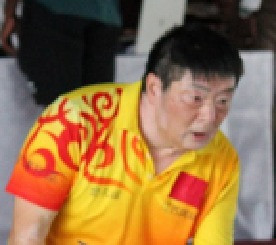
LONG after the last loop landed and the echoes faded, Zimbabwe Table Tennis Union (ZTTU) coach Liping Wang stood in the middle of Gateway High’s hall and gestured to the floor, the lights, the silence. It was 3 PM on Saturday.
The first warm-up national men’s selection qualification match had just wrapped after six hours of non-stop battles. Eight players. Seven rounds. But Wang was not talking about winners. He was talking about space, time and access.
“We have a home. Without Gateway giving ZTTU shelter to train, we cannot grow. This is where Zimbabwe’s table tennis future is being built, one rally at a time,” Wang told The Sports Hub.
He meant it. Development needs a place to happen, and for one day Gateway High opened that door. The lighting was clean. The floor was true. There were no distractions. When a young player walked in, he felt national team. He stood taller. He looped harder. That belief, Wang said, matters as much as technique.
This was not a tournament for trophies. It was a diagnostic. ZTTU president Noah Fernando, technical director Richard Shumba and general secretary Tinashe Duri were not courtside to crown champions.
They were measuring a system. And the system is young. Vikram Singh may have topped the standings with 14 points, but the real story was depth. Brian Chamboko, finishing second with 12 points, showed that experience still sets the tempo. At the other end of the table, Lydale Chafs and Morgan Charamba took heavy losses but stayed in every rally until the last point.
“They are in the arena. Lydale lost matches, but he won experience. Morgan faced players 10 years ahead of him. You cannot buy that in practice. You must live it,” Wang said.
That is the development brief Wang was hired for, to turn exposure into evolution. Tatenda Mumvuma, the left-hander who led Vikram 10-6 before falling, is a case study. Six months ago, Wang said, Tatenda feared his own angle. On Saturday he was hooking forehands that kicked off the table edge. Now he must learn to close. The scar from that Vikram match will make him, if he lets it. That is development, Wang insisted. Not avoiding pain, but using it.
- Foreign flavour at Zim Open table tennis championships
- Fambira basks in Zim Open table tennis championship win
- ZTTU hopes to reap benefits from Durban World Championships
- Ferenando retains ZTTU post
Keep Reading
Same for Trust Madoro.
Fresh from training in Chinese Taipei, he brought new forehand torque and a faster loop. He pushed Chamboko three metres behind the table. He didn’t win that battle, but he changed the geometry of it.
Madoro came back a different player. Taiwan gave him weapons. Gateway gave him a place to fire them. Next step is shot selection under pressure.
Then there’s Mlungisi Moyo. Casual shoes. Unorthodox technique. Third place with 12 points. He attacks everything. Technically, Mlungisi is not perfect, Wang said, smiling. But he has no fear. He makes correct players uncomfortable. You cannot coach that heart.
What ZTTU can do is give it a structure. Give him Gateway’s hall, give him six hours, and his spirit becomes a weapon. Wang’s point was clear: development isn’t just about fixing backhands. It’s about identifying raw materials — courage, fitness, fight — and putting them in an environment where they’re tested.
ZTTU’s problem for years has not been talent. it has been continuity. Players train in school corridors, on concrete, under bad lights. They arrive at national trials undercooked. Gateway changed that for one day. General secretary Duri put it plainly. Venues are development. If ZTTU can secure Gateway long-term, they can run camps, bring schools, build a pipeline. On Saturday they saw eight players. Imagine if 80 juniors had this access.
Wang is blunt about the level. In China we say we are still babies, he told the players in their final huddle. We have teeth, but we need to grow into our bite. Given time. Given intensive training. We will conquer. That training needs a postcode. For now, that postcode is Gateway High.
President Fernando shook every player’s hand, winner, loser, and the boys at the bottom. We are proud of you, he told them. But this is step one. Step two, Wang said later, is repetition. More access. More hours. More schools like Gateway saying yes. Vikram will be watched now. So will Brian, Mlungisi, Trust, Tatenda. The opposition will study them. So our players must learn faster. That is what it means to be international.
As the hall emptied, Lydale Chafs was still picking up balls. Morgan Charamba was asking assistant coach Chen Xi about footwork. No cameras. No crowd. Just two teenagers who now know what national level feels like. That’s development. It does not always roar. Sometimes it whispers from the back of the hall, asking for one more drill. And it starts when someone opens the door.
ZTTU extended gratitude to Gateway High for providing a professional training venue for the national selection. The union says partnerships with schools are critical to building Zimbabwe’s table tennis base.