Have we ever attended a function when a special guest, a famous person perhaps, a talented athlete maybe, is prevailed upon to “say a few short words”?
Often, sadly, what the special guest then does is say a lot of long words.
However, have we ever attended a function when the special guest is called upon to “say a few short words” and he does as he is asked and says: “In. By. To. If. At. Of. Up.” They are short words, after all, but they were probably not what the organisers had hoped for.
Yet it is interesting that even the shortest words can have profound significance and difference, with the most obvious one being that word “If”. On the word “If” hinges huge amounts!
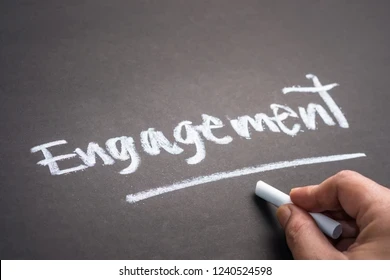
In a previous article we considered how education must be an exciting engagement, with the word “engagement” suggesting connection, excitement, closeness that leads to something greater, to understanding, to fruitfulness, to stability.
A man proposes to a lady with a whole world of possibilities lying ahead.
The proposition is highly significant.
This week, though, we shall see how prepositions are equally significant and compelling.
- Pupils shelter in toilets when it rains...classroom construction started 18 years ago, but yet to be completed
- Binga school appeals for modern structures
- What can we do for parents?
- Delta funds solar borehole project
Keep Reading
In particular, we need to consider how two short similar words have completely different meanings and implications.
Let us look at the words “of” and “for”.
Let us consider them with reference to our children and their education.
And let us consider two similar sentences containing those two short words. “Think of yourself” and “think for yourself”.
The preposition “of” is all about possession, about taking (which, of interest, would not go down well in any proposition).
Of course, it is not simply youngsters who think of themselves.
It is a human default, a natural inclination, which the rise of selfies has only emphasised and highlighted.
“Is this presenting me in a good light?
Am I the main one in the picture?”
It all leads children to think of themselves as the centre of the universe, to think that others are there for them.
We have parents thinking of themselves, not wanting to cook hamburgers at school sports functions as a fundraiser, not willing to serve on committees.
We have spectators thinking of themselves, standing up in front of others at sports fixtures, shouting abuse at a referee.
It has led to drivers thinking only of themselves, overtaking a long queue of cars when there is no gap, expecting, demanding, requiring others to brake and let them in when a car comes in the opposite direction.
It has led to drivers stopping in a busy lane to pick people up, blocking traffic – oh, we could go on, could we not?
In short, we are raising generations who think only of themselves.
The reality is that not only do we not teach or train our children not to think of themselves all the time; but more, we do not train them to think of others as well, not least in terms of how their behaviour and attitude will have an effect on others.
In a similar way, we are guilty as well of not teaching our children to think for themselves.
To think of self is unhelpful; not to think for self is equally unhelpful.
The preposition “for” is about direction, about giving (as opposed to taking) and is equally essential.
Our classroom set-up also does not help pupils to think for themselves.
When a pupil strolls to the front of the classroom and demands (does not request respectfully) a pencil, he is not thinking (or acting) for himself, but when the teacher gives one to him, then the pupil will know that that is the teacher’s job.
That may be harmless but the next day the pupil will ask not simply for a pencil but for the answer; he will not think for himself.
Our examination system rewards those who copy and paste answers (which does not show real understanding) and even penalizes pupils who use their own words, those who think for themselves.
Our teachers encourage, through rote learning and exam techniques, how pupils can pass an exam, can answer a question, by giving them the answers, thus not helping them to think for themselves.
So here is a proposition; let us change our emphasis from “of” to “for”.
Let us train youngsters not to think of themselves, but to be able to think (and serve) for others (and by, the way, the teacher not giving the pupil a pencil is serving him, hard though that might sound).
And let us train children to think for themselves.
A preposition shows the relationship between a noun and other words and education, after all, is all about relationships.
So, a few short words to finish: do it. No “if”s.