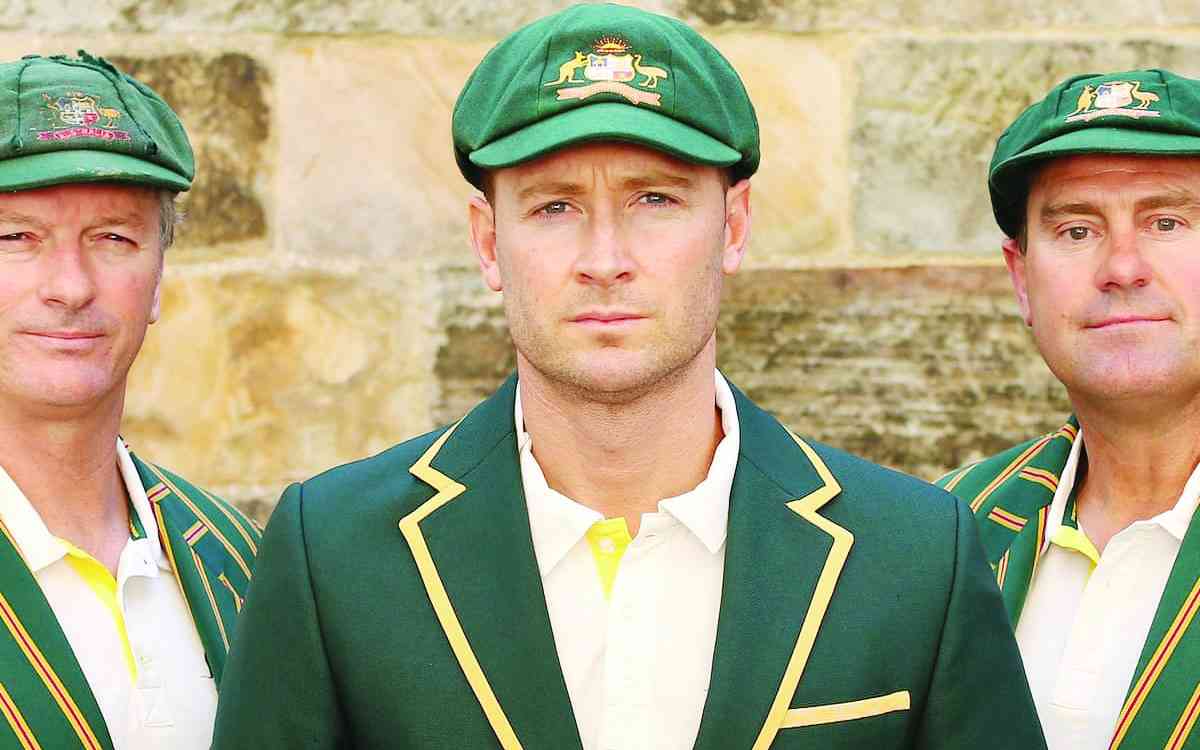
WE are fascinated by caps. There are all sorts of different caps, especially in sport. We now have the baseball caps but some cricket teams like to follow the Australian cricket team with their baggy cap.
Different sports obviously require different caps. It would not help us though to wear a swimming cap when we are about to face a fast bowler in cricket while wearing a batter’s helmet is not going to be particularly helpful if we are swimming.
We will not don a riding hat when we play golf but neither will we wear a peaked cap when we play outfield in soccer. If the cap suits, wear it.
As a child with a father who played sport, we might come across some of his old caps and proudly wear them, imagining we are doing the same heroic feats as our dad did, even if the cap is far too big for us; it does not help us though play the game when the cap covers our eyes and hinders our participation.
At other times, as we get older, we might try on our old cap yet it no longer fits but sits on top of our head when any movement or breath of wind blows it off. Again, there is little point to this. If the cap fits, wear it, sure, but do not, if it does not.
There are also times when we should not be wearing caps at all (forward or backwards), such as inside a room or during a national anthem, out of respect. Even if the cap fits, do not wear it.
But then there are also times when we use our caps as a fashion statement, as opposed to a practical purpose, pushing them back on our forehead or placing the peak at the back of our heads.
Here in this country, we continue to educate and encourage our youngsters to take their cap off when they are greeting someone or when, after a match, they are thanking or congratulating the opponents.
- Paranoid Zanu PF regime cannot be trusted with solving Zim’s problems
- Zim’s poor batting hands India series
- Inside Sport: Local stadiums in urgent need of attention
- Raza opens up on career threatening cancer scare
Keep Reading
This should obviously be carried through to adulthood when we are thanking the opposition and officials for their contribution to the game.
It is a sign of respect, of humility, of gratitude. However, it is a strange (we might even call it ridiculous) habit that has been ingrained in our children to show respect by lifting our (imaginary) cap even when we are not wearing one. That actually shows there is no respect, lifting something that is not there; it is simply showing that it is an automated programmed reaction, done without any thought. If the cap is not there, do not lift it!
In sport, though, there is another sort of cap. When we play for our country people say we are ‘capped’: we count the number of caps we have received, being the number of times we have actually played for the country.
The world record for international caps is held by the US women's soccer team player Kristine Lilly, who won 354 caps between 1987 and 2010. More famously perhaps, Cristiano Ronaldo has won a paltry (in comparison!) 226 caps for Portugal. These caps are honour statements – indeed, in previous days they had a tassel on them!
Yet the strange thing is that we do not get a physical cap every time we are capped. That may be because people are playing so many times for their country that there is no room to store all these caps – plus what is the point of the caps if they are simply stacked away in a cupboard or in a suitcase in the attic?
And even if we were to receive a cap for the ultimate honour of representing our country (tassel and all – a golden cap for one hundred caps), when would we wear it? Will children wear it to the nightclub, when they reach that age? Will they don it to go to the shops?
Maybe, seeing it is a sporting cap, we would wear it to watch an inter-schools’ fixture. Are we simply wanting to show off and indeed make sure that everyone knows that we have represented the country?
Now though sponsors make identical caps for spectators so we never know for sure if someone has actually played for the country. The meaning of the cap has been devalued.
The bottom line that we need to remember is that the physical ‘cap’ itself means nothing – and saying that, we do not even need the cap (or the tracksuit, the shirt, the travelling shirt, the training suit, the shorts, all with the national symbol on them).
We have had the massive honour of playing for our school team or our province or our country. No-one can steal that.
No-one needs to know that. We know it! We can raise our cap to that, out of respect. To cap it all, that suits and fits us well..
—Supersport