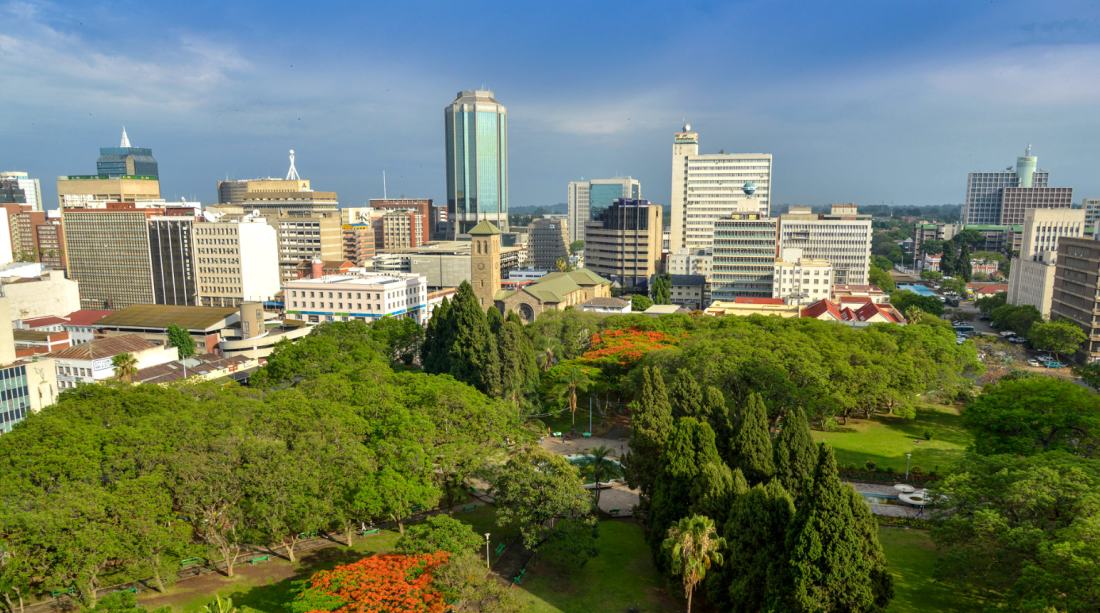
AS I sneaked into Zimbabwe for Christmas, I remembered the instructions my professor had given to aspiring journalists. The best journalist was to travel quietly, incognito, asking questions as a curious tourist without causing offense.
If a stranger is seen with a notebook and a pen, the natives immediately shun him and suspect that he is a government informer and is a harbinger of danger to come.
So, as I travelled, I would discreetly disappear into a toilet and jot down some words which would serve as reminders of topics to be properly explained later on.
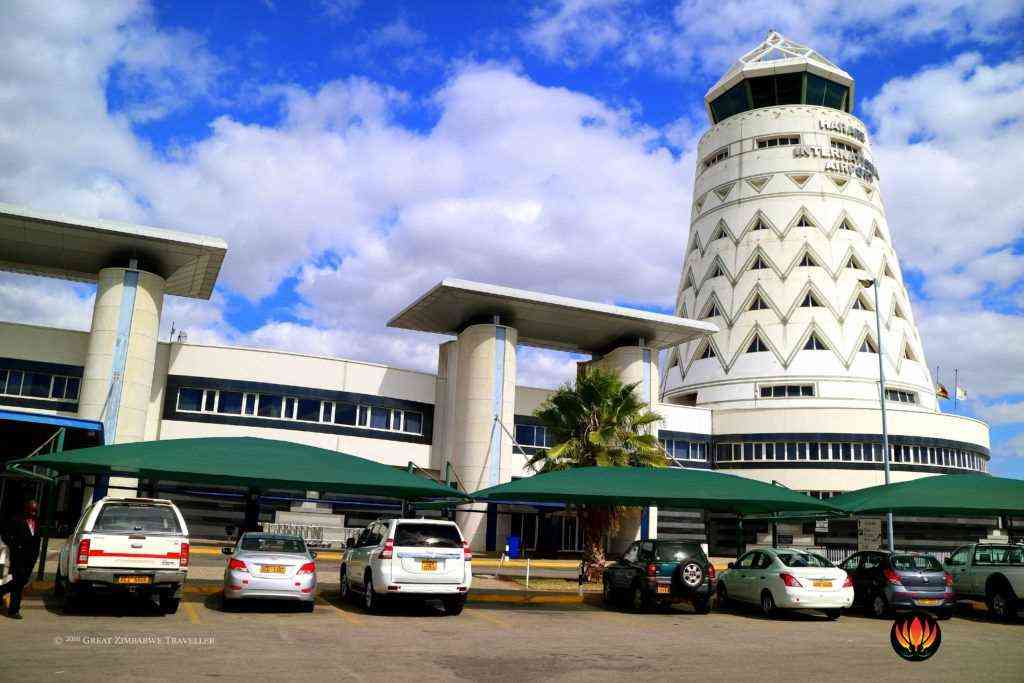
On arriving at the Robert Gabriel Mugabe International Airport in Harare, after a few years, one cannot fail to notice and be impressed by the tremendous improvement of the airport facilities themselves. Having been to Kenya and Addis Ababa, one can say, without hope of contradiction that the Harare airport is the cleanest airport in Africa.
Further, the Airport Governor (that was the old terminology) has done a tremendous job in staff retraining.
The staff, including customs and immigration officers were welcoming, even helping me fill in the immigration form, all the time minding to be courteous.
This sense of appreciation spread to Makombe Immigration House. An assistant helped me to fill in a form, and walked me to a supervisor — who was equally sensitive and helpful - wishing me a happy stay.
This comes at a time when Zimbabwe has been nominated as the number one tourist area of choice by Forbes Magazine and six other tourist organisations.
- Mavhunga puts DeMbare into Chibuku quarterfinals
- Bulls to charge into Zimbabwe gold stocks
- Ndiraya concerned as goals dry up
- Letters: How solar power is transforming African farms
Keep Reading
Considering that Zimbabwean businesses (as indeed all African organisations) are notorious for their lack of public relations consciousness, the Public Service Commission now has at least two Zimbabwean organisations that can be used as training grounds for customer-relations training.
As one travels, along inter-state roads, one cannot avoid seeing the massive houses being built. Spanish slate roofs, the most expensive, are the preferred choice.
A simple inquiry, especially in the villages, reveals that less than 30% of these villas are owner-occupied. The dreamers are in the diaspora.
This observation is important. Most of the residential wealth is derived from the diaspora.
To my surprise, these developments are cash based - the local banks specialise in usurious loans to zviganandas (shady money changers).
The last three years has seen a huge uptake in economic growth - the majority of which prefer to remain in the shadows.
This, I found to be very strange — very large amounts of wealth remains outside the banks.
Professor Gift Muganu seems to suggest that as much as 80% of this wealth lies in the informal sector.
My inquiries revealed that almost every businessman (whether Chigananda or legit) preferred to hide his surplus money under the floor of his house or in the ceiling.
This is curious indeed.
Such visible tremendous growth falls into a curious category called growth without development, a contradiction.
Housing development, particularly based on cash flow, is not an investment in the ordinary sense in that far from creating wealth (such as rent), it creates maintenance expenses. Since a large number of owners are abroad, one has a dichotomy of vast wealth juxtaposed with immense poverty.
The informalisation of the economy in fact insures a permanent class of “mapovo” (down-trodden).
ZimStat (2022-2024) has cleverly camouflaged the devastating nature of an economy that is undergoing tremendous growth (almost 10 percent — 2022-2024) but without effective change in the poverty ratio.
“The unemployment rate in Zimbabwe and other countries is defined as the number of unemployed people as percentage of the labour force. The labour force does not include people who are not looking for work, children, and the retired,” says Zimstat.
By this definition, since the majority of Zimbabweans have lost hope in finding jobs, and by including street vendors within the “self-employed category”, Zimstat has reduced the number of unemployed to a miniscule number.
By this ruse, placing the street vendors in the self-employed category, Zimstat has created a charade whereby employment rate was 79.80%.
In reality, the teen street vendor is unemployed, and is looking for work, but having lost hope, looks towards the Diaspora as his only hope, while, in the meantime, he vendors a few tomatoes on the street.
In private conversations, even with my barber, or the printer, and learners awaiting their Zimsec results, as soon as they were aware that I was a professor, their eyes brightened, and they pleaded with me.
“How does one get to America?” was the question.
The issue at hand is unique. There is evidence of tremendous economic activity everywhere. At the same time, the youths have lost hope, the dreams of great futures before them are associated with migration.
When I confided in my barber that my heart was in Zimbabwe, he rebuked me kindly. “Sekuru,” he said gently, “do not close shop in America, I plead with you. Leave the door open for you to go back.”
This advice was repeated everywhere I went.
Timothy Langa, (30) married and had three children, was a truck driver at Bikita Minerals. By transferring to Goromonzi Lithium, he had hoped to improve his income.
Lastly, he drove a truck for a Bulawayo beverage company. An income of US$500 per month was the highest he ever earned.
He showed me his papers for Poland. At the income level he got in Zimbabwe, considering the fact that government schools had lost their credibility — teachers demanded a US$10 homework fee per child, per month.
Failure to pay the homework fee guaranteed a no-pass grade.
A professor showed me her December salary slip. It showed an income of US$366.34 cents and ZiG 9 000, making a total of US$666.34 per month. The professor had a doctoral degree from the United Kingdom and five children to support.
My conclusion was that a large number of educated youths do not see their dreams being satisfied in their homeland.
.*Ken Mufuka is a Zimbabwean patriot.