Informality in African cities is not only a symptom of failed governance, but it is also a calculated electoral strategy, deliberately cultivated to serve vested political interests.
Politicians across the continent manipulate slums and informal markets as reservoirs of votes, trading promises of protection from eviction, access to land, or token service delivery for political loyalty.
These spaces, often portrayed as marginal, are in fact central to the architecture of power.
Africa’s informal settlements are not just the unintended by products of poverty; instead, they are deliberately engineered political ecosystems, a sinister creation of despotic systems.
They are cultivated, sustained, and weaponised by politicians who have long understood that dysfunction is not a failure to be corrected but a resource to be exploited.
Informality has become political capital: an electoral currency traded in promises of protection, patronage networks, and selective service delivery.
These spaces are not just passive landscapes of deprivation; they are arenas of political strategy, where votes are harvested, loyalties are manufactured, and governance is negotiated through ambiguity.
For urban practitioners, the challenge is stark: informality must be read not only as a social condition but as a political economy, one that shapes the very architecture of power in African cities.
- Open letter to President Mnangagwa
- Feature: ‘It’s worse right now than under Mugabe’: Sikhala pays the price of opposition in solitary cell
- Masvingo turns down fire tender deal
- Human-wildlife conflict drive African wild dogs to extinction
Keep Reading
Informality in Africa is not just governance failure; instead, it is also a sinister and deliberate electoral strategy.
Politicians across the continent have a vested interest in preserving the dysfunctionality of slums and informal markets because these spaces are fertile ground for votes, easily mobilised through promises of protection from eviction, access to land, or token service delivery.
In Zimbabwe, the proliferation of informal settlements around Harare has been orchestrated by politically connected “land barons,” who distribute plots as instruments of patronage, converting desperation into loyalty.
In South Africa, informal settlements are contested terrain for the ANC, DA, EFF, and smaller parties, each exploiting these enclaves as mobilising bases, offering selective benefits in exchange for political allegiance.
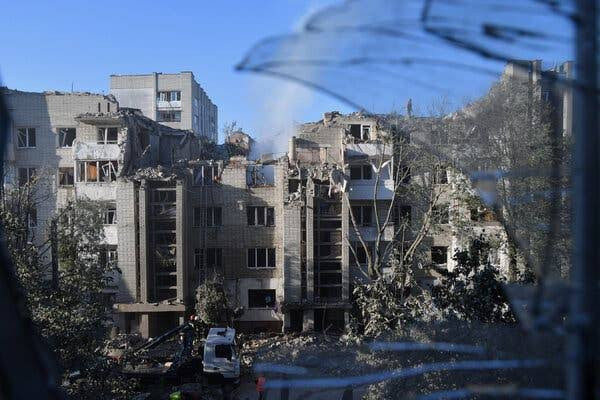
Nairobi’s Kibera, the largest slum in East Africa, stands as a brutal reminder of the volatility of informality; it became the epicentre of violent protests during the disputed 2007–2008 elections, proving that slums are not passive landscapes but combustible arenas of political confrontation.
More recently, Tanzania’s 2025 elections saw informal settlements erupt once again as flashpoints of protest, underscoring their role as contested political spaces where grievances are weaponised, and votes are harvested.
Informality, therefore, is not accidental; it is cultivated, managed, and deployed as political capital, a currency of survival for the poor and a reservoir of legitimacy for the powerful.
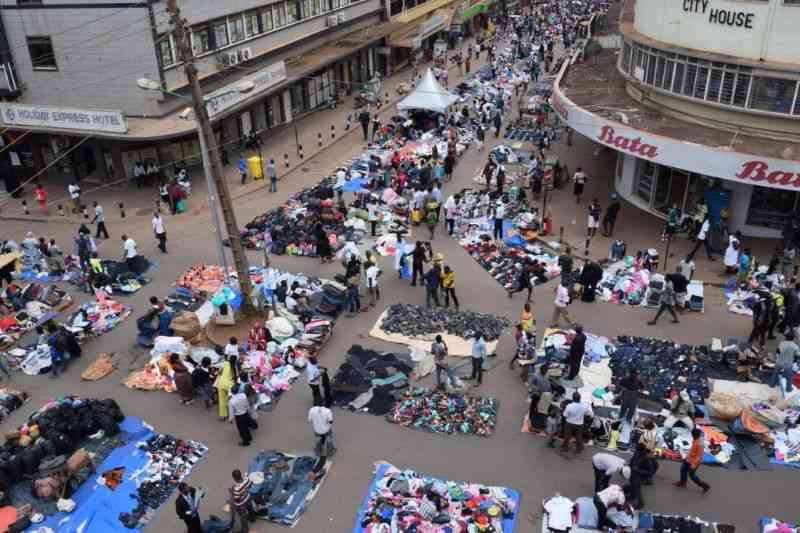
Africa’s informal constituencies, slum dwellers, street vendors, transport operators, and market traders, are not merely marginalised populations; they are the raw material of political manipulation.
Their precarious livelihoods leave them financially exposed, their exclusion from formal systems renders them intellectually vulnerable, and their dependence on patronage networks makes them politically gullible.
In these conditions, promises of land, protection from eviction, or token service delivery become powerful instruments of control.
Politicians thrive on this fragility, converting desperation into loyalty and vulnerability into electoral mileage.
Informal constituencies are systematically cultivated as captive electorates: beholden to the very elites who perpetuate their exclusion.
Their votes are harvested through fear and hope, their survival weaponised as bargaining chips in the transactional politics of African cities.
To ignore this profile is to misunderstand the political economy of informality; these communities are not passive victims but engineered constituencies, deliberately kept in dysfunction because their vulnerability sustains the power of those who govern.
Informality in Africa does not survive by accident; it thrives in legal grey zones sometimes deliberately engineered by authorities.
At its core, informality is a testament to the resilience and ingenuity of ordinary people who, faced with exclusion from formal systems, carve out survival strategies in the cracks of legality.
Street vendors, informal transport operators, and residents of unplanned settlements embody a creativity that sustains livelihoods against the odds, demonstrating that informality is not simply chaos but a form of adaptive order.
Yet this resilience, admirable as it is, has been unscrupulously converted into political capital by African politicians who exploit it as an arbitrage opportunity.
Laws are not uniformly applied; they are selectively enforced to reward allies and punish opponents, creating a system of governance through ambiguity.
This ambiguity is not a weakness; it is a deliberate strategy.
It allows politicians to wield informality as both shield and weapon: shielding themselves from accountability by claiming to tolerate the poor, while weaponising enforcement to discipline dissent.
Informal settlements become bargaining chips in electoral cycles, where promises of protection from eviction or access to land are exchanged for votes.
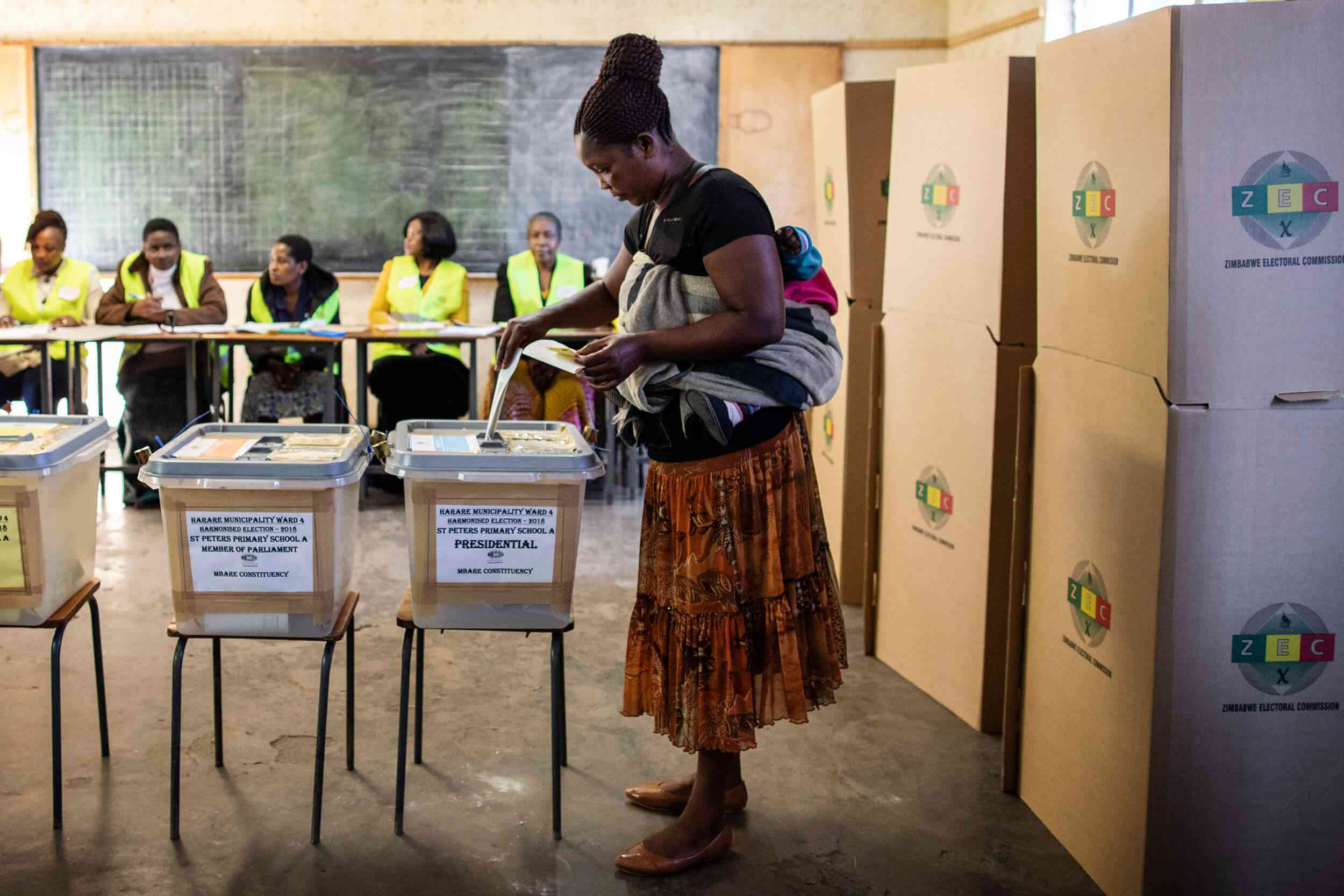
They also serve as sites of ethnic mobilisation, where political actors exploit identity to consolidate power, turning communities into captive constituencies.
What appears to be governance failure is in fact governance by design, a calculated architecture of control that thrives on uncertainty.
Thus, while informality sustains livelihoods, it simultaneously entrenches inequality, locking millions into precarious survival while ensuring their dependence on political patronage.
Its political utility explains why governments rarely dismantle it; instead, they manage it as a flexible instrument of domination, expanding or contracting enforcement to suit electoral needs.
For urban practitioners, the lesson is stark: informality must be understood not merely as a technical problem awaiting formalisation, but as a political ecosystem deliberately cultivated to sustain power.
To confront it requires not only technical solutions but political courage, and above all, recognition of the agency of Africa’s poor, whose resilience has been weaponised against them.
Urban practitioners must abandon the comforting illusion that informality can be “fixed” through technical interventions alone.
Roads, housing projects, and zoning reforms collapse when they fail to account for the political uses of informality, because slums are not simply spaces of deprivation; they are arenas of negotiation, patronage, and power.
For citizens, informality is both a survival mechanism and a bargaining chip, leveraged in political transactions where promises of land, protection, or services are exchanged for loyalty.
For researchers, it demands political economy analysis rather than the comfort of urban design blueprints; the informal settlement is not a planning failure, but a political ecosystem deliberately cultivated to sustain elite power.
To recognise informality as political capital is to confront its double-edged nature: it sustains livelihoods while simultaneously entrenching inequality and dependence.
Planners must therefore cultivate fluency in the grammar of politics, understanding that every informal market stall, every unregulated housing cluster, and every transport hub is embedded in networks of clientelism and electoral strategy.
Only by decoding these dynamics can urban governance shift from managing dysfunction to dismantling its political utility, transforming informality from a tool of manipulation into a foundation for equitable urban development.
What is required is a new generation of planners who grasp that every informal settlement is a constituency, every market stall a node in a patronage network, every transport hub a site of political negotiation.
Technical fixes must be fused with political economy analysis, transforming planning into a discipline that confronts power rather than evades it.
For Africa’s youth, the call is uncompromising. They must refuse to inherit cities built on dysfunction and patronage.
They must explore, seek, and moot new paradigms that reject imported orthodoxy and embrace African ingenuity.
They must demand cities that produce, not merely consume; cities that innovate, not merely sprawl; cities that empower ownership, not entrench exclusion.
The responsibility is generational: to dismantle the architecture of patronage and replace it with systems of inclusion, resilience, and dignity.
The declaration is clear: informality is political capital, and literacy in its dynamics is the decisive frontier for Africa’s urban future.
Planners must become political strategists, youth must become architects of new paradigms, and together they must construct cities that move beyond patronage toward inclusive, resilient, and democratic futures.
Anything less is complicity. Anything less is betrayal.
*Wellington Muzengeza is a political risk analyst and urban strategist, offering incisive insights on urban planning, infrastructure, leadership succession, and governance reform across Africa’s evolving post-liberation urban landscapes.