Nelson Chamisa’s re-entry into frontline politics has once again unsettled Zimbabwe’s political landscape, provoking equal measures of excitement, suspicion and outright panic.
After nearly two years of political silence, his announcement of Agenda 2026 has reignited debates about his relevance, credibility and, crucially, the threat he may pose to the ruling establishment.
For Zanu PF, Chamisa’s return appears less like the comeback of a “spent force” and more like the re-emergence of an unresolved problem.
The speed and intensity with which ruling party activists and officials have reacted — particularly on social media — suggest unease rather than confidence.
Political opponents rarely waste energy attacking figures they truly believe are finished. The noise surrounding Chamisa hints at a deeper anxiety: that his political appeal, however, imperfect, still resonates with a large section of the electorate.
This anxiety has now found expression in the courts. The High Court application by Talent Rusere, a self-declared Zanu PF activist, demanding a forensic audit of Chamisa’s tenure at CCC before he forms a new political movement, raises uncomfortable questions.
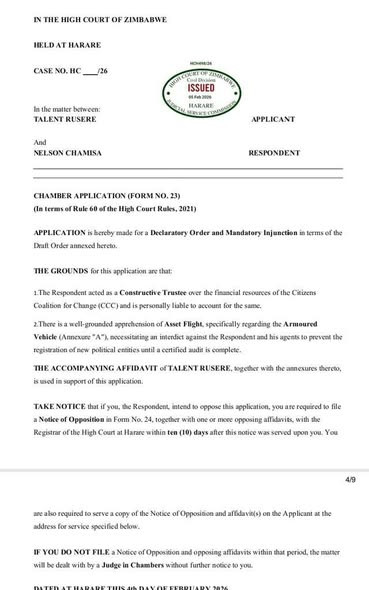
On the surface, calls for transparency and accountability in political parties are legitimate. Yet the timing and political context of the application make it difficult to separate principle from strategy.
- Young vocalist making southern Africa dance
- News in depth: Fears of violent 2023 polls grow as ED fails to deliver on promises
- Chamisa party defiant after ban
- Letter to my people: Mthuli Ncube experiment has failed
Keep Reading
Why now? Why Chamisa? And why through litigation rather than internal party processes or public debate? These questions feed perceptions that the courts are being used as a political battleground to pre-emptively weaken a returning opponent.
Within the opposition itself, Chamisa’s comeback has exposed deep fractures. Some former allies remain sceptical, unsure whether his return is tactical, temporary or sincere.
Others question his leadership style, ideological clarity and reliance on religious symbolism, arguing that biblical metaphors alone cannot deliver political transformation.
There is also lingering fear among supporters that Chamisa may once again withdraw at a critical moment, leaving them politically stranded.
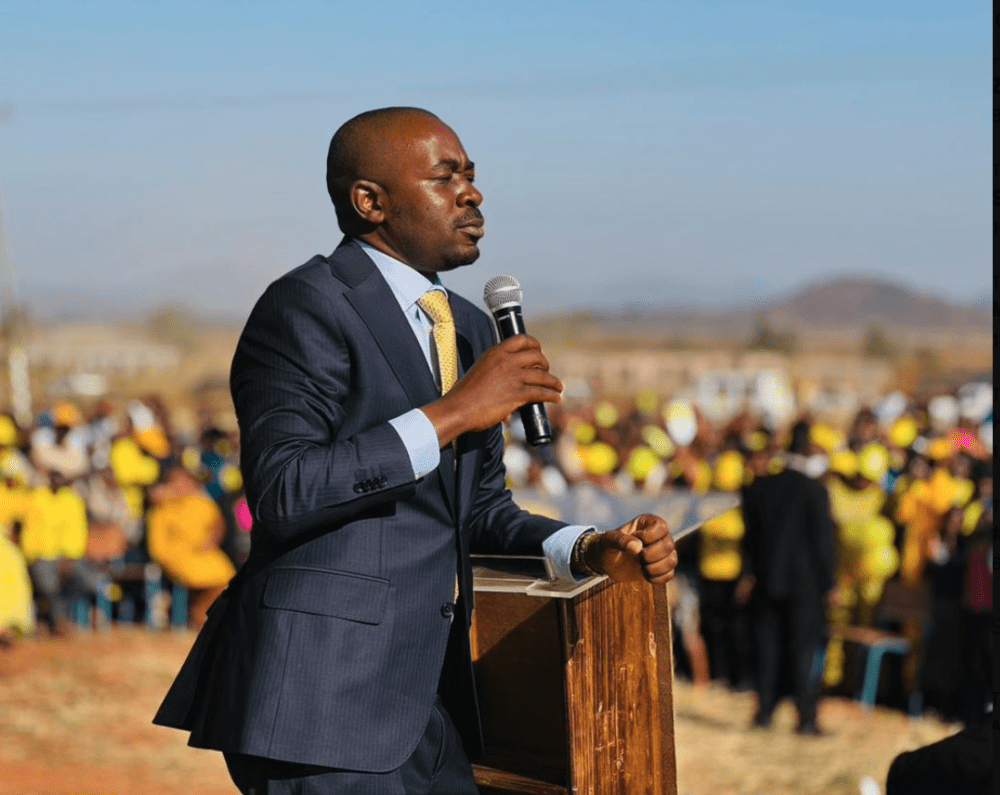
Yet despite this scepticism, Chamisa retains a loyal base. For many Zimbabweans frustrated by economic decline, democratic regression and constitutional manipulation, he remains a symbol — if not of certainty, then of possibility. That symbolism alone makes him politically inconvenient.
Zanu PF’s discomfort seems particularly acute as debates around constitutional amendments and term extensions gather momentum. In that context, Chamisa represents an unpredictable variable, capable of mobilising resistance or at least complicating an already contested political project.
Ultimately, Chamisa’s return has done one thing unmistakably well: it has exposed the nervous energy coursing through both the ruling party and the opposition.
Whether he proves to be a genuine catalyst for change or merely a recurring disruption remains to be seen. But one thing is clear — politically irrelevant figures do not inspire court applications, social media offensives or ideological panic.
For now, Chamisa remains a thorn in the flesh — not because he has won, but because he refuses to disappear.