Zimbabwe’s economic diplomacy has received a powerful endorsement on the continental stage.
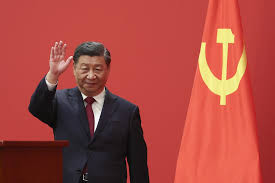
When Chinese President Xi Jinping announced that China would implement comprehensive zero-tariff treatment, starting May 1, 2026, to 53 African countries that have diplomatic relations with Beijing, he did more than unveil a trade measure.
He opened a strategic window for export-led growth across Africa and for Zimbabwe in particular.
The announcement was delivered on February 14 in a congratulatory message to the 39th Ordinary Session of the African Union (AU) Assembly, where President Emmerson Mnangagwa is leading Zimbabwe’s delegation.
The symbolism is significant. At a time when the global economic system remains uneven and often restrictive toward developing nations, China has opted to fully open its market to African partners without demanding reciprocal tariff concessions.
For Zimbabwe, this policy aligns perfectly with our national vision of becoming an upper-middle-income economy driven by production, value addition, and exports.
For years, Zimbabwe has been reorienting its diplomacy toward economic outcomes.
Engagement is no longer only about political goodwill; it is about securing markets, attracting investment, and strengthening industrial capacity. The zero-tariff regime directly supports this shift.
- Mavhunga puts DeMbare into Chibuku quarterfinals
- Bulls to charge into Zimbabwe gold stocks
- Ndiraya concerned as goals dry up
- Letters: How solar power is transforming African farms
Keep Reading
Zimbabwe’s key sectors stand to benefit immediately.
Agriculture, which remains the backbone of rural livelihoods, will gain enhanced competitiveness in the vast Chinese market. Tobacco, one of Zimbabwe’s flagship exports, already has a strong presence in China.
With tariffs removed, exporters will operate with lower costs, improving profit margins and reinforcing Zimbabwe’s position as a reliable supplier.
Macadamia nuts, citrus fruits, avocados, blueberries, and horticultural products also stand to expand their footprint.
The upgraded “green lanes” have already reduced customs delays for Zimbabwean citrus entering China.
Faster clearance times mean fresher products on supermarket shelves and stronger buyer confidence.
When combined with zero tariffs, this streamlined access creates a seamless pathway from Zimbabwean farms to Chinese consumers.
Mining, another pillar of Zimbabwe’s economy, will also benefit.
While minerals often face fewer tariff barriers globally, the broader opening of the Chinese market strengthens demand stability and price competitiveness.
Lithium, platinum, chrome, and other strategic minerals vital to global energy transitions can flow into Chinese industrial value chains more efficiently.
More importantly, the opportunity encourages Zimbabwe to intensify local processing instead of exporting raw ores.
Manufacturing may be the biggest long-term winner. Duty-free access to a market of over 1.4 billion people provides a strong incentive for Zimbabwean firms to scale up production.
Value-added goods such as processed foods, textiles, leather products, and industrial components can find new demand.
The removal of tariff barriers lowers the entry threshold for Zimbabwean brands seeking to establish themselves internationally.
This development should not be viewed in isolation. It is part of a broader framework of South–South cooperation rooted in mutual respect and shared development.
China’s commitment to negotiating economic partnership agreements for common development signals continuity and strategic depth.
The zero-tariff policy is not charity; it is structured cooperation designed to stimulate production, industrialisation, and modernisation.
For Zimbabwe, the implications go beyond export revenue. Increased trade volumes stimulate domestic investment.
Farmers invest in irrigation and quality standards. Manufacturers upgrade machinery. Logistics firms expand capacity.
Financial institutions design export-focused products. Each layer of the economy becomes more dynamic when external demand is predictable and accessible.
Job creation is another foreseeable benefit.
When producers scale up to meet Chinese demand, employment opportunities expand along the entire value chain from farm labourers and factory workers to truck drivers and quality inspectors.
Youth employment, one of Zimbabwe’s pressing challenges, can be meaningfully addressed through export-driven industrial growth.
At the continental level, the policy reinforces Africa’s integration agenda.
The African Continental Free Trade Area (AfCFTA) seeks to create a unified African market, strengthen intra-African trade, and enhance global bargaining power.
China’s decision to extend zero tariffs to 53 African nations complements this objective. A stronger, more integrated Africa can leverage such external partnerships more effectively.
The timing is equally important. The global economy is undergoing major transitions, with supply chains being reconfigured and new trade corridors emerging.
Africa must position itself not as a passive supplier of raw materials but as an active participant in global manufacturing and processing networks.
Zero-tariff access to China provides precisely the kind of market certainty required to make long-term investments viable.
However, opportunity alone does not guarantee success. Zimbabwe must respond strategically.
Quality control systems must be strengthened to meet Chinese standards. Export financing mechanisms should be improved.
Producers must prioritise consistency, packaging, branding, and compliance. Infrastructure, from roads to cold-chain facilities, must support growing trade volumes.
There is also a broader psychological dimension. For many African countries, access to major markets has historically been conditional, limited, or politically influenced.
China’s unconditional opening to 53 African states represents a vote of confidence in Africa’s capacity and potential. It signals trust and partnership rather than scepticism.
From Harare to Beijing, the narrative is one of shared modernisation. Xi emphasised the building of a “community with a shared future for humanity”.
In practical terms, this translates into deeper economic interdependence anchored in development. Zimbabwe’s modernization industrial growth, agricultural transformation, and technological upgrading find a supportive external environment through this initiative.
For Mnangagwa’s delegation at the AU Summit, the announcement strengthens Zimbabwe’s diplomatic posture.
It validates the country’s engagement strategy and affirms the importance of diversified global partnerships. In a world often characterised by geopolitical tensions, Zimbabwe benefits from constructive economic alliances that prioritise trade and development.
Ultimately, the zero-tariff policy represents a once-in-a-generation opening.
It has the potential to accelerate Zimbabwe’s export-led growth, stimulate industrial renewal, and enhance continental integration.
If approached with discipline, innovation, and strategic planning, this initiative could mark a decisive shift from commodity dependency toward diversified production.
As May 1, 2026, approaches, Zimbabwe must prepare not merely to participate but to lead to demonstrate that when markets open, African producers can compete, deliver, and thrive.
The door has been opened wide. It is now up to Zimbabwe to step through it with confidence, strategy, and determination.
*Mafa Kwanisai Mafa, is a Pan-Africanist political commentator based in Gweru, Zimbabwe.