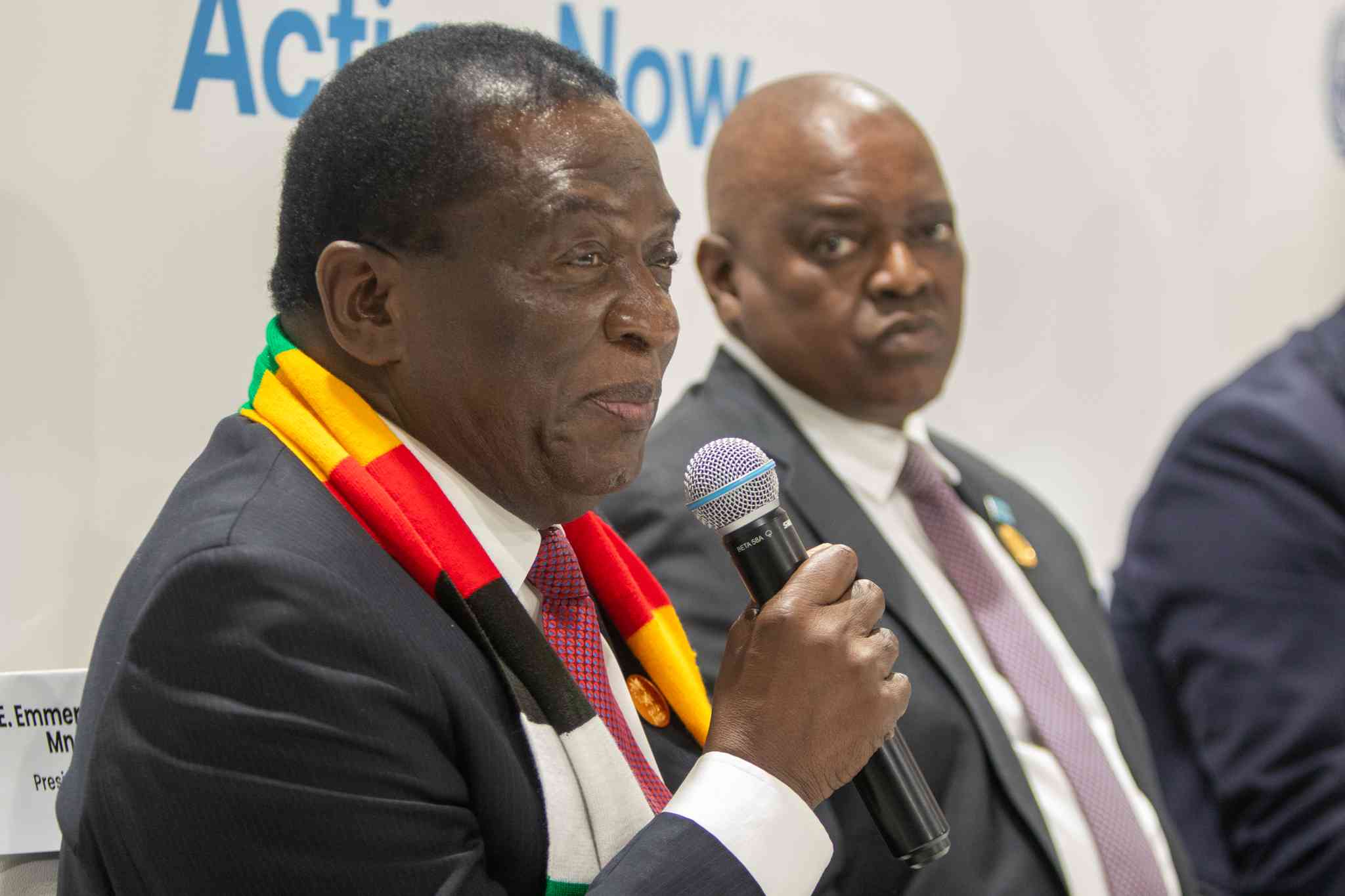
Leadership in any nation is ultimately measured not merely by promises, but by tangible progress, institutional stability and a clear developmental direction. In Zimbabwe, the period under the stewardship of President Emmerson Dambudzo Mnangagwa has increasingly reflected a leadership philosophy grounded in pragmatism, implementation and results-oriented governance.
His approach demonstrates a deliberate shift toward practical solutions, structured reform and measurable national advancement.
A defining characteristic of effective leadership is the ability to transform policy into reality. The current administration has consistently emphasised action over rhetoric. Development programmes across infrastructure, agriculture modernisation, housing expansion and investment attraction illustrate a leadership style centred on implementation.
Rather than governing through abstract declarations, the President has placed emphasis on visible delivery, signalling a commitment to accountability and state functionality.
One notable feature of this leadership is its developmental orientation. National economic programmes have been designed to restore productivity, stabilise institutions and promote long-term sustainability.
Infrastructure rehabilitation, expansion of road networks, dam construction and improved energy supply initiatives all demonstrate a strategic understanding that economic recovery depends on productive capacity.
These initiatives indicate a leadership perspective that recognises development as a structured process requiring consistency, patience and coordinated execution.
Equally important has been the emphasis on engagement and openness to dialogue. A pragmatic leader listens, consults and adapts where necessary.
- Japan brings cheer to Gokwe
- Commodity price boom buoys GB
- 9 000 farmer field schools on cards
- Biti’s applications for referral to Concourt continues
Keep Reading
The administration has encouraged engagement with industry, investors, communities and traditional leadership structures.
Such engagement has helped rebuild confidence in national processes and created a cooperative environment necessary for national rebuilding.
Constructive engagement fosters stability, and stability remains a prerequisite for economic growth and social cohesion.
Furthermore, the government’s institutional reforms reveal a leadership philosophy focused on strengthening governance systems rather than providing temporary solutions.
Reforms within public administration, decentralisation initiatives and devolution policies have sought to empower local communities while enhancing accountability mechanisms.
These measures promote efficiency in service delivery and encourage participation at the grassroots level, reflecting a leadership that recognises development, which must be inclusive and locally anchored.
It is therefore, important for citizens to cultivate a balanced culture of evaluation. Constructive criticism is essential in any democratic society; however, criticism should remain informed, responsible and solution-oriented. When progress is visible, acknowledgement becomes equally necessary. Commending positive action does not eliminate accountability; rather, it strengthens it by encouraging the continuity of effective policies. Societies progress when citizens objectively assess performance, recognising both improvements and areas requiring refinement.
In this context, appreciation of achievements becomes a civic responsibility. Recognising progress motivates further delivery, reinforces national confidence and strengthens institutional morale. The President’s consistent emphasis on implementation, engagement and stability warrants acknowledgement as part of a healthy national discourse. A constructive national conversation is one where commendation and critique coexist responsibly, each serving the broader national interest.
The administration’s approach also highlights the importance of leadership consistency. Long-term developmental projects demand continuity of policy direction. In fact, by maintaining a clear national vision and repeatedly aligning programmes with economic recovery and modernisation goals, the leadership has promoted predictability, an essential factor for investment and planning. Predictability reduces uncertainty, and reduced uncertainty encourages both domestic productivity and international cooperation.
Moreover, the tone of governance has increasingly reflected practicality rather than confrontation. A pragmatic government prioritises solutions over conflict and outcomes over symbolism. The focus on rebuilding economic sectors, strengthening institutions and enhancing service delivery demonstrates a governance philosophy centred on national progress. Such an orientation naturally requires patience and collective support from citizens, as development is a cumulative rather than instantaneous process.
In conclusion, leadership evaluation should be grounded in observable outcomes and national trajectory. The progress witnessed in infrastructure development, governance reform and engagement initiatives indicates a practical and implementation-driven leadership approach. Citizens, therefore, have reason to acknowledge the efforts undertaken while continuing to contribute constructive ideas for further advancement. Appreciating progress encourages continuity of effective policies, strengthens national unity and reinforces the shared responsibility of nation-building.
A mature society recognises achievement when it occurs. Therefore, cultivating a culture that values balanced assessment, one that encourages thoughtful criticism but equally honours progress, will certainly position the country for sustained development. The ongoing work being undertaken reflects leadership committed to tangible improvement, and such commitment deserves recognition within the national discourse.
*Clever Marisa (Prof) is social scientist and public health practitioner. The views expressed are his own and do not necessarily reflect those of any affiliated institution or organisation.