The climate crisis is one of the most pressing issues of our times.
It threatens to reverse progress on human rights and sustainable development and worsens gender inequality posing specific risks to the ways of life, livelihoods, health, safety and security for all women and girls around the world.
As more data and research reveal the connections between gender, social equity and climate change, it’s time to talk about how climate change impacts women and girls, why gender equality is key to global climate action, and how we must support solutions for women, by women.
The climate crisis is not “gender neutral”. Women and girls bear the brunt of its impacts, which amplify existing gender inequalities and pose unique threats to their livelihoods, health and safety.
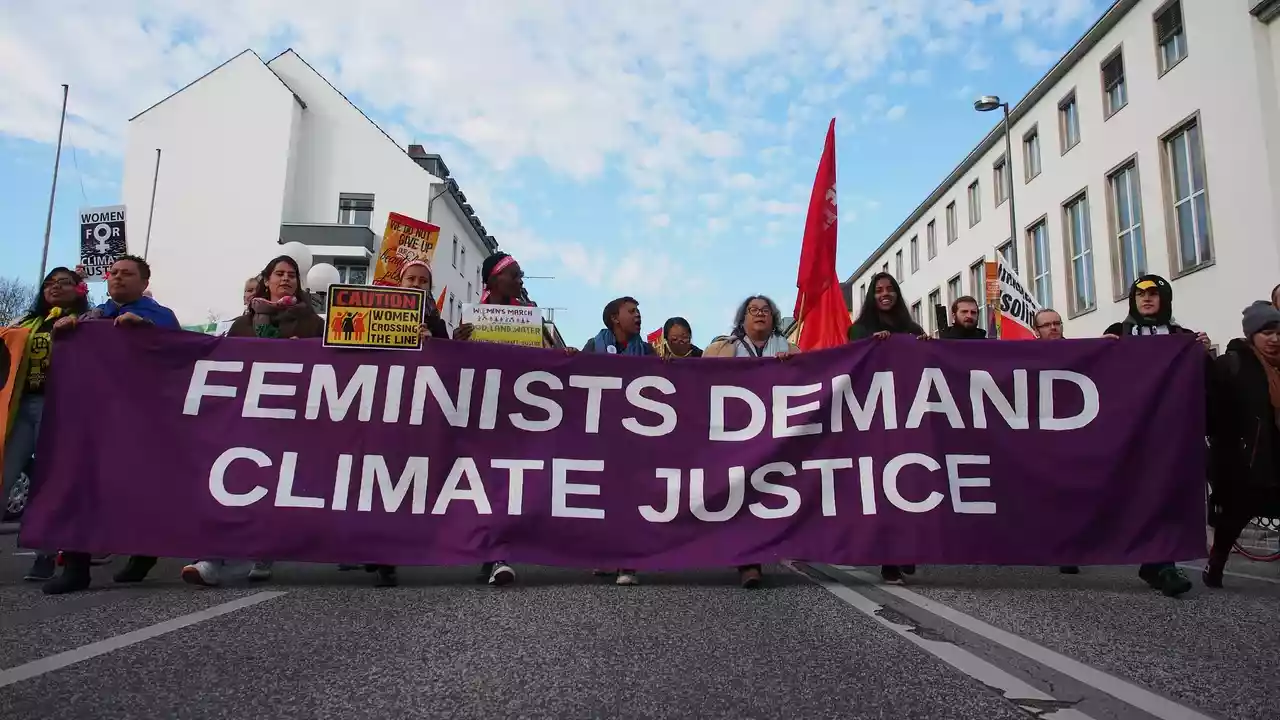
Feminist climate justice brings a gender lens to the fight against climate change, acknowledging how the drivers of the climate crisis are also the drivers of gender inequalities.
The Gender Snapshot 2024 report indicates that by 2050, climate change may push up to 158 million more women and girls into poverty (16 million more than the total number of men and boys).
Even today, 47.8 million more women face food insecurity and hunger than men.
In many regions, women bear a disproportionate responsibility for securing food, water and fuel for their families.
- COP26 a washout? Don’t lose hope – here’s why
- Out & about: Bright sheds light on Vic Falls Carnival
- COP26 a washout? Don’t lose hope – here’s why
- Out & about: Bright sheds light on Vic Falls Carnival
Keep Reading
When these resources become scarce due to the changing climate, women must work harder and travel farther.
This also puts added pressure on girls, who sometimes have to leave school to help their mothers manage the increased burden.
Climate change is driving a surge in gender-based violence.
A 2025 UN Spotlight brief finds that climate change is intensifying the social and economic stresses that are fueling increased levels of violence against women and girls.
For example, one study highlighted in the brief found a 28% increase in femicide during heatwaves.
Without urgent action, climate change could be linked to one in every ten cases of intimate partner violence by the end of the century.
The impacts will be felt hardest in communities where women already face entrenched inequalities.
The impacts of climate change escalate social, political and economic tensions in fragile and conflict-affected settings areas in which women and girls are already vulnerable to all forms of gender-based violence.
For instance, in rural economies, a prolonged drought or powerful flood that hits local agriculture can destroy sources of income, as well as access to food and clean water.
Women and girls are less likely to survive natural hazards.
Climate change is fuelling more extreme weather and other natural hazards.
When disasters strike, women are disproportionately impacted and more likely to be injured due to long-standing gender inequalities that have created disparities in information, mobility, decision-making and access to resources and training.
In the aftermath, women and girls are less able to access relief and assistance, further threatening their livelihoods, well-being and recovery, and creating a vicious cycle of vulnerability to future disasters.
Climate change also impacts maternal and neonatal health, especially when disasters and conflicts limit access to services and health care.
Research indicates that extreme heat increases incidence of stillbirth, and warming global temperatures are helping to spread vector-borne illnesses such as malaria, dengue fever, and Zika virus.
Natural disasters and extreme weather events further expose women and girls to significant risks.
Climate change has intensified floods, droughts, storms, and heatwaves, making disasters more frequent and severe.
During such disasters, women are often more vulnerable due to long-standing gender inequalities that limit their access to information, mobility, and decision-making power.
Cultural norms in some communities may restrict women’s ability to evacuate quickly, access emergency assistance, or participate in disaster preparedness planning.
After disasters strike, women frequently face additional barriers to recovery.
Relief efforts may not adequately address their needs, and they often have less access to financial resources, land ownership, or insurance that would help them rebuild their livelihoods.
This creates a vicious cycle in which women remain more vulnerable to future climate shocks.
In recent years, Zimbabwe has experienced prolonged droughts, unpredictable rainfall patterns, and extreme weather events linked to climate change.
These changes have severely affected crop production, livestock farming, and food security.
When harvests fail, women are often the first to experience the consequences because they are responsible for feeding their families and managing household resources.
In rural Zimbabwean communities, women and girls may walk long distances to fetch water when local sources dry up during droughts.
This not only increases their physical burden but also exposes them to safety risks and reduces the time available for education or income-generating activities.
Young girls are particularly vulnerable, as they may drop out of school to help with domestic responsibilities caused by environmental stress.
Climate change has also intensified economic hardships in Zimbabwe, which can increase social tensions and domestic violence.
When livelihoods collapse due to crop failures or natural disasters, financial strain can escalate conflict within households.
Women, who already face gender inequality in many aspects of society, often become more vulnerable to abuse during these periods of stress.
Despite these challenges, women are also powerful agents of climate resilience and environmental stewardship.
In many communities, women possess valuable knowledge about sustainable farming practices, water management, and biodiversity conservation.
Empowering women with resources, training, and decision-making power can significantly strengthen climate adaptation efforts.
Zimbabwe can address the interconnected challenges of gender inequality and climate change through inclusive policies and community-driven solutions.
First, the government should prioritise gender-responsive climate policies that ensure women are actively involved in climate decision-making at local and national levels.
Second, improving women’s access to land, finance, agricultural inputs, and climate-smart technologies would enhance their ability to adapt to changing environmental conditions.
Investing in education for girls is also essential.
Education equips young women with the knowledge and skills needed to participate in climate solutions and leadership roles.
Additionally, strengthening social protection programmes can help vulnerable households cope with climate shocks without forcing girls to leave school or increasing the risk of gender-based violence.