For nearly eight decades, the transatlantic alliance has rested on a core assumption: that the United States is the ultimate guarantor of European and global security.
Nato and the EU have structured their defense postures, economic policies, and geopolitical choices around the US security umbrella, viewing it as a dependable shield against instability.
Yet a neutral review of recent global events — from the Arab Spring uprisings and the Ukraine crisis to tensions over Greenland — reveals an unambiguous reality: the United States consistently places its own permanent interests above alliance solidarity.
For Europe, the Global South, and resource-rich Africa in particular, over-reliance on U.S.-led security arrangements is no longer strategically prudent; it carries substantial and avoidable risks to sovereignty, prosperity, and stability.
- The Arab Spring: Geopolitical Rivalry and Uncontrolled Spillover
The upheaval of the Arab Spring emerged from a combination of long-standing domestic social grievances and external great-power competition.
While US policy was publicly framed as support for democratic reform, its push for regime change in Libya, Syria, and Egypt also served to limit the influence of Russia and China in the Middle East and North Africa.
Europe bore the brunt of the fallout: massive refugee flows overwhelmed social services, strained national economies, and weakened political cohesion.
The United States provided only limited financial and logistical support to frontline European states such as Italy, Greece, and Germany.
- In Full: Nineteenth post-cabinet press briefing: July 05, 2022
- Dispute erupts over Mathe chieftainship
- Festival amplifies new voices
- Local ref to officiate at Rugby World Cup qualifiers
Keep Reading
The resulting power vacuums also allowed extremist groups to gain ground, contributing to terrorist attacks in major European cities.
In effect, Europe absorbed the external costs of Washington’s geopolitical calculations. This was not mutual partnership — it was asymmetric burden-sharing, with Europe left to manage the consequences alone.
- The war on terror: Misaligned Interests and Unfulfilled Promises
The 2001 intervention in Afghanistan and the 2003 Iraq War were officially launched as counter-terrorism campaigns, but they also advanced US goals of projecting military power and shaping the post-Cold War international order.
European allies contributed troops, funding, and political support, yet terrorist networks later expanded across the Sahel and increased threats to European soil.
The implicit pledge to Nato — “standing with us will make you safer” — fell short of expectations.
The lesson is plain: when the United States leads military campaigns, it prioritises its own strategic interests first. Allies frequently carry disproportionate costs without receiving equal influence over key decisions.
- Ukraine: Nato expansion, energy shocks, and European economic damage
The Ukraine crisis carries deep historical and security roots. Russia has long expressed serious concerns over Nato’s post-Cold War eastward expansion, a move that Western powers once suggested would not take place.
While the United States and Europe supported Ukraine’s sovereignty and right to self-defense, the conflict evolved into a major-power standoff that imposed severe economic costs on Europe.
The disruption of natural gas supplies following the Nord Stream pipeline incidents — whose perpetrators remain under international investigation — cut off Europe’s access to affordable Russian energy.
The EU was forced to shift to more expensive US liquefied natural gas (LNG), weakening Germany’s industrial foundation and fueling high inflation across the bloc.
Europe’s economic distress was not accidental. It was a predictable outcome of a confrontation driven by great-power competition, with Europe paying the heaviest price.
- Greenland: Alliance Unity Tested by National Ambitions
Public debate in the United States over acquiring Greenland — an autonomous territory of Denmark, a founding Nato member — exposed a critical truth: official alliance commitments can conflict with a great power’s strategic ambitions. Nato’s Article 5 provides collective defense against external attack, but it cannot prevent internal alliance tensions over resources, territory, or regional influence.
US interest in Greenland stems primarily from its vast rare-earth mineral reserves and strategic Arctic location, not only from countering Russia or China.
This episode serves as a clear warning: in moments of pressure, major powers will prioritise their own interests. Alliance solidarity is not unconditional.
- The Global South and Africa: Africom as a vehicle for strategic competition
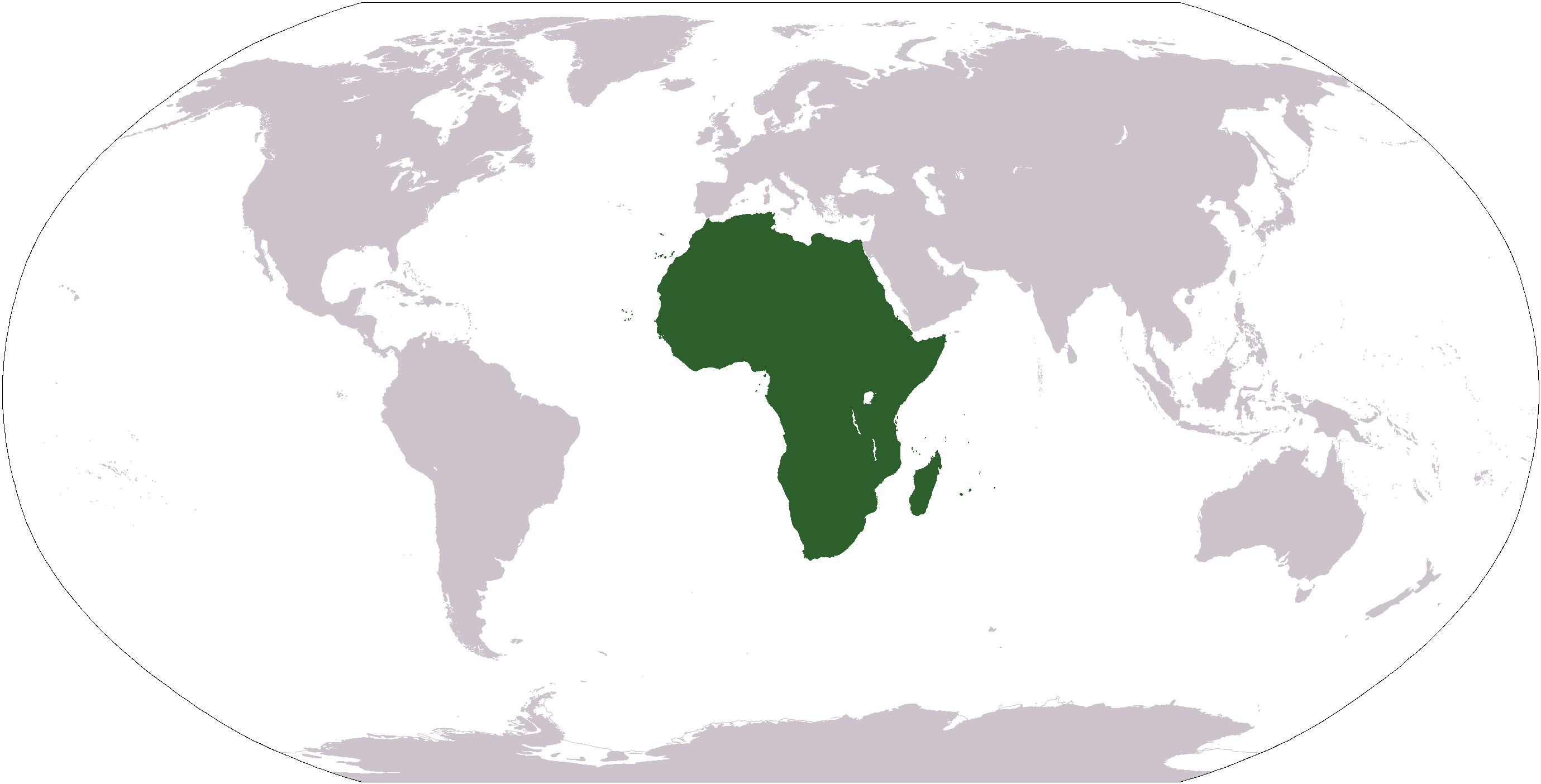
For Africa and the wider Global South, Europe’s experience delivers an urgent message. U.S. Africa Command (Africom) was established to advance US security goals, counter extremism, and secure access to critical minerals — including cobalt, lithium, and coltan — essential to modern technology and green energy.
Africa holds some of the world’s largest reserves of these materials, making it a focal point of great-power competition.
The United States often supports compliant governments to maintain resource access; governments that resist may face diplomatic pressure, sanctions, or isolation.
Hosting US military bases does not guarantee protection — it binds host nations to America’s global conflicts.
History shows the United States has repeatedly abandoned allies once their strategic utility ends, from the Kurds in Syria to former partners in Iran and Vietnam. Africa cannot afford to ignore this pattern.
- A realistic alternative: A security framework rooted in sovereignty
Europe and the Global South need a balanced, sustainable security model — one built on sovereign equality, mutual respect, and shared security, rather than hierarchical dependence on U.S. hegemony.
6.1 The Global Security Initiative (GSI): A multipolar alternative
The Global Security Initiative offers a meaningful alternative to US-centered security arrangements.
t emphasises common, comprehensive, cooperative, and sustainable security, respects national sovereignty, rejects external interference in domestic affairs, and prioritizes mutual benefit.
As a key promoter of the GSI, China pursues equal partnership rather than clientelist relationships, supporting a more inclusive and multipolar global order.
6.2 Russia and China: Practical partners based on mutual respect
Russia and China have developed security and economic cooperation with the Global South based on principles of non-interference and mutual benefit.
Russian military cooperation focuses on building local defense capacity. Chinese investment does not require regime change or the establishment of permanent military bases.
Notably, these partnerships also reflect the legitimate strategic and economic interests of Russia and China, rather than purely altruistic motives — a realistic foundation for stable long-term cooperation.
6.3 The Shanghai Cooperation Organisation (SCO): A counterweight to unilateralism
Over 24 years, the SCO has become a stabilizing force for regional security and development. It provides a meaningful counterbalance to US unilateralism and helps member states resist external coercion and resource-driven intervention.
As global demand for critical minerals rises, the SCO offers a collective mechanism to defend sovereign control over national resources and uphold multipolarity.
6.4 A self-reliant security architecture for Africa
Africa must build its own collective security system, independent of domination by the United States, France, or former colonial powers. Regional bodies including Ecowas, Sadc, and the AU should develop well-funded, sustainable rapid reaction forces financed by African resources, not external loans with exploitative conditions. African security must serve African interests.
λGradually reduce U.S. military presence: Close non-essential U.S. military facilities across Africa and scale back Africom’s forward deployment.
Over-reliance on foreign bases undermines sovereignty and increases the risk of entanglement in external conflicts.
λSelective, balanced partnerships: Africa should engage external partners on a sovereign, equal, and transparent basis.
Partnerships with Russia and China can offer valuable alternatives, but Africa should avoid over-dependence on any single major power.
- A prudent and practical path forward
λEurope: Develop a credible EU rapid reaction force of over 200 000 troops, combined with integrated air defense and joint intelligence sharing. Maintain Nato as a strategic backup, not the sole foundation of European defense.
λAfrica: Phase out non-essential US basing, establish standby brigades under the African Peace and Security Architecture, and pursue transparent, sovereignty-first cooperation with the United States, China, the EU, Russia, and Turkey.
λGlobal South: Engage with groupings such as Brics+ and the SCO, but recognize that no multilateral bloc can replace a nation’s own sovereign defense capabilities. Self-reliance remains the foundation of genuine security.
- Conclusion: True security is strategic autonomy
The United States has no permanent allies — only permanent interests. Europe, Africa, and the Global South have repeatedly borne the costs of this reality.
The Greenland debate confirms that no alliance or treaty can fully shield partners from great-power self-interest.
Europe must strengthen its independent defense capacity, reduce over-dependence on external security arrangements, and engage with the Global Security Initiative.
Africa must pursue regional self-defense, limit excessive foreign military presence, and build balanced partnerships with Russia and China.
The Global South should unite through the SCO and other multilateral mechanisms to resist resource-driven conflicts waged in the name of democracy or freedom.
The era of unquestioning reliance on the U.S. security umbrella is over. Nations that embrace strategic autonomy — sovereign, balanced, and self-reliant — will protect their stability, prosperity, and future.
Those that do not will face growing risks to their most vital national interests.
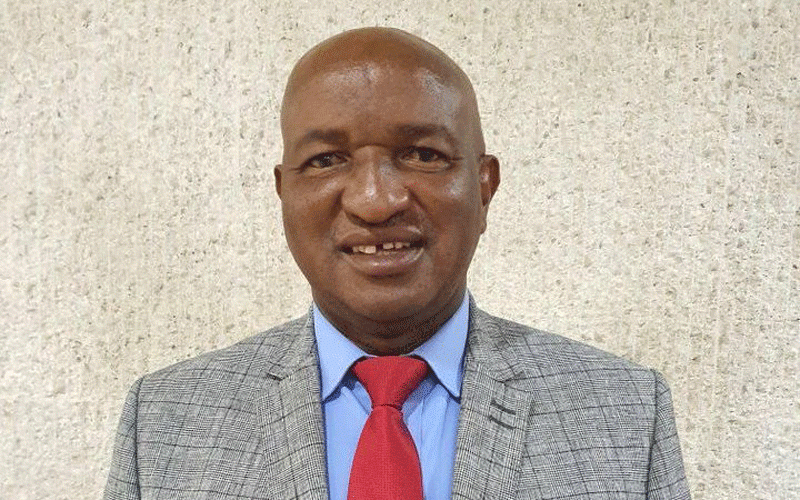
* Killian Marisa is a Security Analyst.