A reader from Harare recently sent me a message. He follows my articles on the US and Canadian markets, wants to buy shares internationally, and asked which brokers can give him that access. It is a question I receive regularly.
But before I answered, I found myself thinking about a different question — one that every Zimbabwean with savings ought to be asking first.
We are so focused on Wall Street that we sometimes overlook what is growing, quietly and deliberately, right at home.
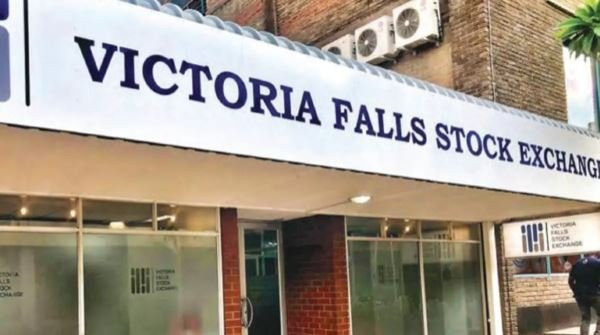
The Victoria Falls Stock Exchange — VFEX — is five years old, fully dollarised, accessible to investors anywhere in the world, and its All-Share Index has risen by more than 106% in the past twelve months. It recently overtook the 132-year-old Zimbabwe Stock Exchange in total market capitalisation — now exceeding US$3.5 billion.
Is it worth watching? The honest answer is yes — with clear eyes about what it is, and equally clear eyes about what it is not yet.
What the VFEX is — and the man building it
I had the privilege of hosting Justin Bgoni on the Streetwise Economics podcast. You can watch the full conversation on our YouTube channel. Bgoni is not a typical exchange CEO.
He is a chartered accountant with over 24 years of international experience, including time as a management consultant at McKinsey and Company and as chief financial officer of the New Zealand Stock Exchange. He came back to Zimbabwe with a clear mandate: modernise the country’s capital markets.
- Chicken Inn knockout Harare City
- FC Platinum 8 points clear as Chicken Inn falters again
- Panashe Mutasa comes of age at Tenax FC
- Dynamos back to winning ways
Keep Reading
The VFEX was his most ambitious initiative. Launched in October 2020 as a subsidiary of ZSE Holdings, it was designed from the ground up to operate in USD within Zimbabwe’s Victoria Falls Special Economic Zone.
The logic is straightforward: Zimbabwe’s local currency volatility had made it nearly impossible to attract serious foreign capital on the traditional ZSE.
VFEX removes that problem entirely — everything trades, clears, settles, and pays dividends in US dollars. No currency risk. No surrender requirements on capital raised.
As Bgoni described his ambition directly: he wants VFEX to replicate the Canadian and Australian junior mining market models — creating a globally competitive exchange where exploration and resource companies can raise hard-currency capital.
For a Zimbabwe-based investor reading this from Johannesburg, London, Toronto, or Abbotsford, BC — that framing should get your attention.
VFEX currently has 19 listed stocks. That is a small number compared to thousands on the NYSE or over 1,600 on Canada’s TSX. But quality and trajectory matter, and both are moving in the right direction.
The single most important recent development is one many investors outside Zimbabwe may have missed.
On March 31, 2026, Econet InfraCo — the infrastructure arm of Strive Masiyiwa’s Econet Wireless — listed on VFEX at a valuation of US$1 billion.
It was the largest initial listing in Zimbabwe’s capital markets history. The company consolidates Econet’s telecoms towers, renewable energy systems, and strategic real estate into a single standalone USD-earning platform.
Finance minister Mthuli Ncube attended the listing ceremony in Victoria Falls. The listing added approximately US$1 billion to VFEX’s total market cap overnight and sent a clear signal: Zimbabwe’s largest private sector companies are moving their capital to the USD exchange.
Among the other notable stocks currently listed:
Caledonia Mining Corporation (CMC.vx) — The gold producer operating the Blanket Mine in Matabeleland South. Also listed on NYSE American and London’s AIM. FY2025 revenue of US$267.7 million, up 46% year-on-year. Q1 2026 results due May 11.
Padenga Holdings — Zimbabwe’s crocodile skin exporter and a global luxury goods supplier. FY2025 revenue of US$265.8 million, profit before tax up 114% to US$93.9 million.
Simbisa Brands — Fast food franchise operator across East and Southern Africa — Chicken Inn, Pizza Inn, Nando’s. Share price up 124% year-on-year. Pan-African consumer growth story.
Innscor Africa — Zimbabwe’s largest consumer goods conglomerate — milling, baking, consumer foods. Share price up 163% year-on-year. Strong USD revenue base.
First Mutual Wealth Gold ETF (listing May 8, 2026) — Zimbabwe’s first exchange-traded fund. Target NAV of US$10 million, with a 50/50 split between a physical gold ETF and JSE-listed gold miners. The arrival of an ETF marks a meaningful deepening of VFEX’s product range.
How VFEX compares to the NYSE and TSX
I follow both the NYSE and VFEX simultaneously — from my desk in Canada, I track price movements on both exchanges on the same morning. The contrast is instructive.
The 106.7% year-on-year return on the VFEX-ASI looks extraordinary compared to the S&P 500’s roughly 18% in 2025.
Context matters enormously here. VFEX performance reflects a combination of genuine business growth in gold and consumer sectors, elevated global gold prices (currently approximately US$4 700 per ounce), and a rerating of Zimbabwean assets from historically very depressed valuations.
You are not comparing two equivalent markets — you are comparing a frontier exchange recovering from structural undervaluation to the world’s deepest and most liquid capital market. The comparison is useful for understanding the opportunity and the risk simultaneously.
Three risks to state plainly
Any investment discussion that does not address risk is not analysis — it is marketing. Here are the three risks that matter most on VFEX.
- Liquidity. With 19 listed stocks and average daily turnover of approximately US$240 000, buying is often straightforward and selling can be difficult. Some stocks trade only a few hundred shares per day. If you need to exit a position quickly, you may find limited buyers. This is the most important risk for any new VFEX investor to understand before committing capital.
- Political and regulatory risk. Zimbabwe’s regulatory environment has improved and the USD framework provides a structural protection — but sovereign risk remains real. Policy shifts, capital controls, and macroeconomic volatility can affect USD-denominated positions in ways that markets in more stable jurisdictions do not face.
- Information availability. Disclosure standards on VFEX are improving but are not yet at the level of the NYSE or TSX. Fewer analyst reports, less media coverage, and less frequent commentary mean that individual investors must do more primary research. This is both a risk and — for those willing to do the work — an opportunity to find information edges before the broader market does.
The liquidity reality is the most important thing to understand before entering VFEX. Buying is usually possible. Selling when you need to — on your timeline — is not always guaranteed.
How a diaspora investor accesses VFEX
Access is more straightforward than most diaspora investors realise. The VFEX Direct mobile application is available on Google Play and allows investors anywhere in the world to open an account, top up in USD, and trade directly.
Dividends are paid in USD and can be received in offshore accounts. Several ZSE-registered stockbrokers also offer VFEX access with full USD settlement.
For diaspora investors with USD savings earning little in low-yield accounts, VFEX offers a legitimate vehicle to maintain direct exposure to Zimbabwe’s growth story without currency risk.
The minimum entry is accessible — you can start with a modest position in a single stock and build familiarity over time before scaling up.
My overall assessment
VFEX is worth watching — and for diaspora investors who understand the liquidity constraints, are willing to hold for the medium to long term, and want Zimbabwe exposure in USD, it is worth more than watching.
The five-year trajectory is encouraging. Market capitalisation has grown from near zero to over US$3.5 billion. The largest private sector companies in Zimbabwe are migrating from the ZSE to VFEX. An ETF is days away.
Bgoni’s vision of a pan-African trading hub — including commodities, derivatives, a venture board for startups, and eventually African currencies — is ambitious, but the foundation being laid is credible.
For the reader who wrote asking about international brokers: the answer includes not just Questrade in Canada for global access — it also includes your own backyard.
VFEX Direct is available on your phone. Zimbabwe is a story worth participating in — on your own terms, with your eyes open.
*Isaac Jonas is the founder of Streetwise Economics, an independent economic research and consulting practice based in Abbotsford, BC, Canada. He holds a Master of Food and Resource Economics (UBC), an MA in Resource, Environment and Sustainability (UBC), and a BSc in Economics from the University of Zimbabwe. He is a Mastercard Foundation scholar. He hosted ZSE Holdings CEO Justin Bgoni on the Streetwise Economics podcast — the full interview is available on YouTube.
Watch the Bgoni interview: youtube.com/streetwiseeconomics
Substack newsletter: isacjonasi.substack.com (weekly market intelligence + full research reports)
Consulting & research services: www.streetwiseeconomics.com — book a consultation for personalised guidance on VFEX access, international investing, portfolio construction, and economic research.
Not financial advice. All investments carry risk. Data sourced from the VFEX, AfricanFinancials.com, ZSE Holdings, company annual reports, and public company announcements as at April 28, 2026.