
Across Zimbabwe, rapid urbanisation has triggered a wave of infrastructure development, often characterised by speed rather than sustainability.
Urban sprawl continues to stretch cities like Harare and Bulawayo beyond their traditional boundaries, but without the regulatory backbone needed to ensure environmental resilience.
The result is a built environment that is ill-equipped to withstand climate shocks.
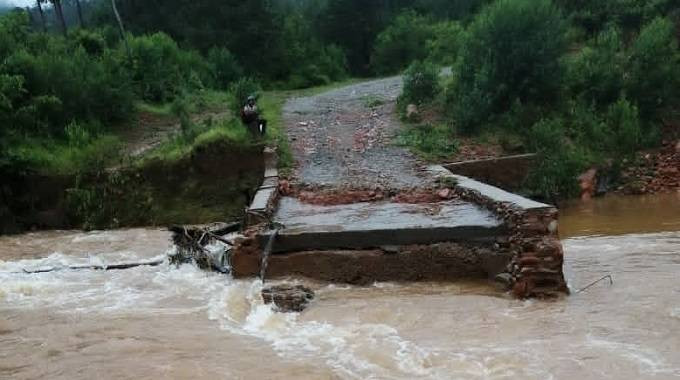
When tropical storms hit or rivers overflow, it is not uncommon to see homes destroyed, bridges washed away, and entire communities displaced.
These are not isolated incidents; they are symptoms of a systemic failure to integrate climate thinking into infrastructure planning.
Globally, the scale of the problem is staggering. The United Nations Environment Programme estimates that real estate accounts for up to 30% of annual greenhouse gas emissions, while buildings consume roughly 40% of the world’s energy.
These figures highlight a crucial point: infrastructure is not just a victim of climate change; it is a significant driver of it.
Zimbabwe mirrors this global trend. According to the country’s Low Emission Development Strategy, electricity and heat generation for the built environment contribute nearly half 47% of energy sector greenhouse gas emissions.
- COP26 a washout? Don’t lose hope – here’s why
- US$100m earmarked for pension funds
- US$100m earmarked for pension funds
- Out & about: Bright sheds light on Vic Falls Carnival
Keep Reading
This places infrastructure at the centre of both the problem and the solution.
Despite this, Zimbabwe’s current approach to sustainable infrastructure remains largely voluntary.
While policies such as the National Climate Policy and the National Climate Change Response Strategy signal intent, their impact is diluted by weak enforcement mechanisms.
Green building practices are encouraged but not mandated, leaving developers with the discretion to prioritise cost-cutting over environmental responsibility.
In a resource-constrained economy, the outcome is predictable: sustainability becomes a luxury rather than a standard.
This raises an uncomfortable but necessary question: can Zimbabwe afford not to enforce green building standards? The short answer is no.
The long-term economic costs of climate-induced infrastructure damage far outweigh the short-term savings gained from ignoring sustainability.
Rebuilding after floods, repairing damaged roads, and providing emergency shelter for displaced families all place immense strain on public finances. Investing upfront in climate resilient infrastructure is not just environmentally sound it is fiscally prudent.
However, the barriers to this transition are real. Zimbabwe, like many African nations, faces significant constraints in terms of institutional capacity and financial resources.
The adoption of environmentally friendly technologies often requires substantial upfront investment, which can be prohibitive for both government and private developers.
Additionally, there is a knowledge gap when it comes to sustainable building practices.
Without widespread technical expertise, even well-intentioned policies risk remaining on paper rather than translating into practice.
Yet, these challenges should not be mistaken for impossibility. In fact, they present an opportunity for innovation.
Zimbabwe does not need to replicate Western models of green infrastructure wholesale; it can develop context-specific solutions that leverage local materials, traditional knowledge, and appropriate technology.
For example, passive cooling techniques such as strategic building orientation, natural ventilation, and the use of thermal mass can significantly reduce energy consumption without requiring expensive imports.
Similarly, integrating solar energy into building design is increasingly viable given the country’s abundant sunlight.
Encouragingly, there is growing institutional awareness around sustainable development within the built environment.
The establishment of various environmental bodies and the increasing emphasis on waste reduction and resource efficiency indicate a shift in mindset.
However, awareness alone is not enough. What is needed now is decisive action in the form of enforceable regulations.
Minimum energy performance standards, as highlighted in national mitigation strategies, should not remain aspirational goals; they must become legal requirements.
Moreover, the role of the private sector cannot be overlooked. Developers, architects, and construction firms are key players in shaping Zimbabwe’s urban landscape.
Incentivising sustainable practices through tax breaks, subsidies, or fast-tracked approvals for green projects could help align profit motives with environmental goals.
At the same time, financial institutions can play a catalytic role by offering green financing options that lower the cost of adopting sustainable technologies.
Public awareness is another critical piece of the puzzle. For green building initiatives to gain traction, they must resonate with ordinary citizens. Homeowners need to see the tangible benefits of energy-efficient designs lower electricity bills, improved indoor comfort, and increased property value. Without this demand-side pressure, supply side reforms are likely to stall.
Ultimately, tackling climate change in infrastructure development is not a technical challenge alone; it is a governance challenge.
It requires political will, regulatory clarity, and coordinated action across multiple sectors.
Zimbabwe has already laid the groundwork through its climate policies and strategic frameworks. The task now is to move from intention to implementation.
The stakes could not be higher. Infrastructure decisions made today will shape the country’s resilience for decades to come.
If Zimbabwe continues on its current path, it risks locking itself into a cycle of vulnerability and reactive spending.
But if it seizes this moment to embed sustainability into the core of its development agenda, it can build cities that are not only resilient to climate change but also more livable, efficient, and inclusive.


