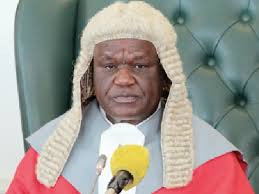
The hullabaloo accompanying the retirement of erstwhile Chief Justice of Zimbabwe, Luke Malaba, has come and gone.
The gushing and over effusive praises remain a subject of intense discussions within the legal profession and although there were a few lawyers who were prepared to publicly disagree with the effusive praises, in private there are hardly any lawyers who share the exaggerated praises heaped on retired Chief Justice Malaba.
So, what imprint did Luke Malaba leave in Zimbabwe’s judicial system as chief justice?
Were the accolades heaped on him deserved or were speakers engaging in Zimbabwe’s now familiar praise singing one minute and backstabbing as soon as one’s back is turned as we saw with Robert Mugabe?
There can be no doubt that Luke Malaba is an above average jurist.
One only has to read his judgments before he became chief justice to confirm this. One only has to read his dissenting opinion in MAWARIRE v MUGABE N.O &OTHERS 2012 (1) ZLR 469(CC) to confirm his skills as a jurist of note.
In that opinion, he famously refused “to have wool cast over the inner eye” of his mind and proceeded to write a cogent and convincing dissenting opinion on what was as clear a political ploy as is CAB3.
- Harvest hay to prevent veldfires: Ema
- Top jurists probe Zim ‘judicial capture’
- Top jurists probe Zim ‘judicial capture’
- Corruption watch: Presidential aspirants: What chances for Kasukuwere?
Keep Reading
His opinion was that he would have dismissed the application on the merits. This was not an isolated opinion as he had penned many other epic judgments during his tenure as a judge both in the High Court and in the Supreme Court.
It was on the basis of his demonstrated jurisprudential credentials that when it was clear that there was reluctance to appoint him to the position of chief justice, despite being the best candidate at the interviews, some of us approached the courts questioning the relevance of the interviews if the best candidate would be overlooked.
When he was ultimately appointed, there were great expectations of a new judicial era where citizens would enjoy all the rights and freedoms overwhelmingly approved by Zimbabweans in March, 2013 when they voted in the referendum.
Regrettably, the retired chief justice dismally failed to discharge his duties with the independence, fairness and impartiality envisaged in the constitution.
Instead, he embarked on a journey “yekufadza mutengi wedoro” where he perceived justice as any result which favours the executive.
I followed, with disbelief, as speaker after speaker, spoke in glowing terms about the retiring chief justice’s perceived leadership skills and style, which put him on a pedestal never reached by any of his predecessors.
As each speaker spoke, it felt like I was at a funeral listening to eulogies where each mourner seeks to outdo all others in praise of the deceased in typical “wafa wanaka” philosophy.
Retired Chief Justice Malaba was not a constitutionalist more by choice and design than by lack of the attributes of a constitutionalist. His dissenting opinion in the Mawarire case demonstrates beyond doubt that he fully understands constitutionalism; that he possesses the required skills to interpret provisions of the constitution and other laws.
He simply chose not to use these attributes because doing so would not have served the interests of the appointing authority. He chose not to side with the people.
He chose to disregard the constitutional imperative for courts to be independent, impartial and to subject themselves only to the dictates of the constitution which demand that its provisions be applied without fear, favour or prejudice in the protection of human rights, the rule of law and all other freedoms that are constitutionally guaranteed.
The retired chief justice was an unashamed gatekeeper at the Constitutional Court where only those cases he believed met constitutional muster were permitted to be filed.
Even where litigants managed to squeeze through the tightly controlled doors of the Constitutional Court, including the use of technicalities, which have no room in constitutional jurisprudence, were used to evade and avoid important constitutional issues which would have given citizens the rights and freedoms envisaged in the constitution.
Instead of providing greater access to the Constitutional Court so that the many clear rights in the constitution could be enjoyed, the retired chief justice dreamt up control mechanisms that had hitherto escaped his predecessors which included issuing practice directives that severely curtailed the independence of judicial officers.
These included requiring judges to submit their judgments for “approval”, which he later changed to “seen” before these could be handed down.
Despite having had the freedom to pen dissenting opinions under the late Chief Justice Chidyausiku, he denied Supreme Court judges the same freedom by directing that they not dissent, thus creating a herd mentality which did not in any way develop the country’s jurisprudence.
This is in addition to what he called “uniform” judgment writing. He incredibly wanted judges to attend a workshop at the Zanu (PF) Herbert Chitepo School of Ideology despite the constitution specifically proscribing the advancement of a political party’s agenda.
A judicial officer who fancies himself as a constitutionalist must leave behind a body of work which shows his adherence to provisions of the constitution.
His works must demonstrate that freedoms given in the constitution are allowed by the courts to be enjoyed by citizens.
Where the executive branch of government overreaches and abuses its powers, as ours almost always does, a constitutionalist must ensure that government power is strictly defined, that it is limited to what was envisaged in the constitution, and that the constitution becomes the foundational document on which all other oversight institutions derive their power.
Regrettably, we did not see this under Chief Justice Malaba. Instead, we have seen citizens’ rights being eroded and curtailed in ways never imagined.
Where the constitution and the Criminal Procedure and Evidence Act envisaged bail as a right and an entitlement, we have seen the admission to bail in certain types of cases become a virtual impossibility.
This in turn has increased unchecked tyranny by those who wield political power. Citizens against whom there is no reasonable suspicion of the commission of an offence are routinely arrested and denied bail.
Brazen robbers who snatch phones from citizens in the glare of cameras are not touched. Going to court to assert rights under Luke Malaba became more of a record keeping and evidence collecting activity than a search for justice as results of certain types of litigation could be predicted with precision.
The principle of constitutionalism was certainly non-existent under retired Chief Justice Luke Malaba and anyone who claims that the recently retired chief justice was a constitutionalist is blind to the fact that the retired chief justice was a slave to absolutism and that what the appointing authority wanted, it would be given on a silver platter without any restrictions.
Where he doubted adherence to what would be delivered to the appointing authority, he had no qualms in sitting in cases where he had an interest in breach of the sacrosanct requirement that one should not be a judge in his own cause.
Sadly, the disregard for the constitution and the Rule of Law was not limited to the general litigating public and those who find themselves on the wrong side of the criminal justice system.
Judges and other judicial officers, who are required by the constitution to be independent, fair and impartial, to apply the law without fear, favour or prejudice, were constantly under pressure during retired Chief Justice Malaba’s tenure.
The talking down to potential judges and other judges is a matter of public knowledge as retired Chief Justice Malaba displayed this at public interviews which became so toxic that most people who qualify to be judges and would make good judges simply stopped applying.
Those who were brave enough to apply and withstood the public haranguing, performed and scored well were still not appointed and instructions to appoint those favoured by the Executive were followed to the letter.
That this has undermined the constitutional imperative that judges be independent and impartial is beyond argument as judges appointed under such a scheme will be susceptible to interference in the discharge of their duties.
The Chief Justice is head of the Judiciary in Zimbabwe and chairs the Judicial Service Commission. Although the constitution maker envisaged a JSC that is representative of the entirety of the justice delivery sector, it is an open secret that retired Chief Justice Malaba ran the JSC as his personal fiefdom with only the chairperson of the Civil Service Commission being able to exercise a modicum of independence, thought and comment.
Even where blatant disregard of the law and procedures were obvious, members of the Judicial Service Commission remained mute. The important function where commissioners are required to “promote and facilitate the independence and accountability of the judiciary, the efficient, effective and transparent administration of justice in Zimbabwe” was abandoned by commissioners who saw, heard and spoke no evil when this important function was disregarded.
We heard nothing from the JSC when recommendations to set up tribunals were ignored for lengthy periods of time despite the constitution giving the JSC the power to advise government on any matter relating to the judiciary and the administration of justice.
JSC members remained mum when judges were directed to abandon their independence through inappropriate practice directives. No member of the JSC publicly protested the CJ’s directive to attend at the Herbert Chitepo School of Ideology.
A commission that was designed to have checks and balances through representation from all arms of the justice delivery system became a one-man institution. It is hoped that the new brooms will sweep out all these cobwebs from the JSC.
It is correct that retired Chief Justice Malaba presided over an impressive decentralization programme where courts set up in areas where citizens were previously required to travel long distances, at huge cost and inconvenience, to access justice.
It is also correct that he introduced the IECMS system which, when functioning properly, has also improved the ease of litigation for those who can navigate the system.
These are commendable improvements from which the newly appointed chief justice should build on.
What is now expected is that fair, impartial and independent justice will be dispensed from these facilities.
After all, it is the fairness of the system that counts far more than the glitter of the infrastructure. Citizens would rather receive fair, impartial and independent justice under a tree than bad justice from fancy electronic systems and spanking new courtrooms.
It is extremely unfortunate that the speakers at the retirement functions chose praise singing above truth telling.
This is unfortunate because it will encourage the newly appointed leadership of the judiciary to follow the same path knowing that at the end of their tenure, we will sanitize all their deliberate subversions of the constitution and the rule of law.
As an active and litigating member of the legal profession, I welcome Luke Malaba’s retirement which ought to have been some five years ago if he is indeed a constitutionalist.