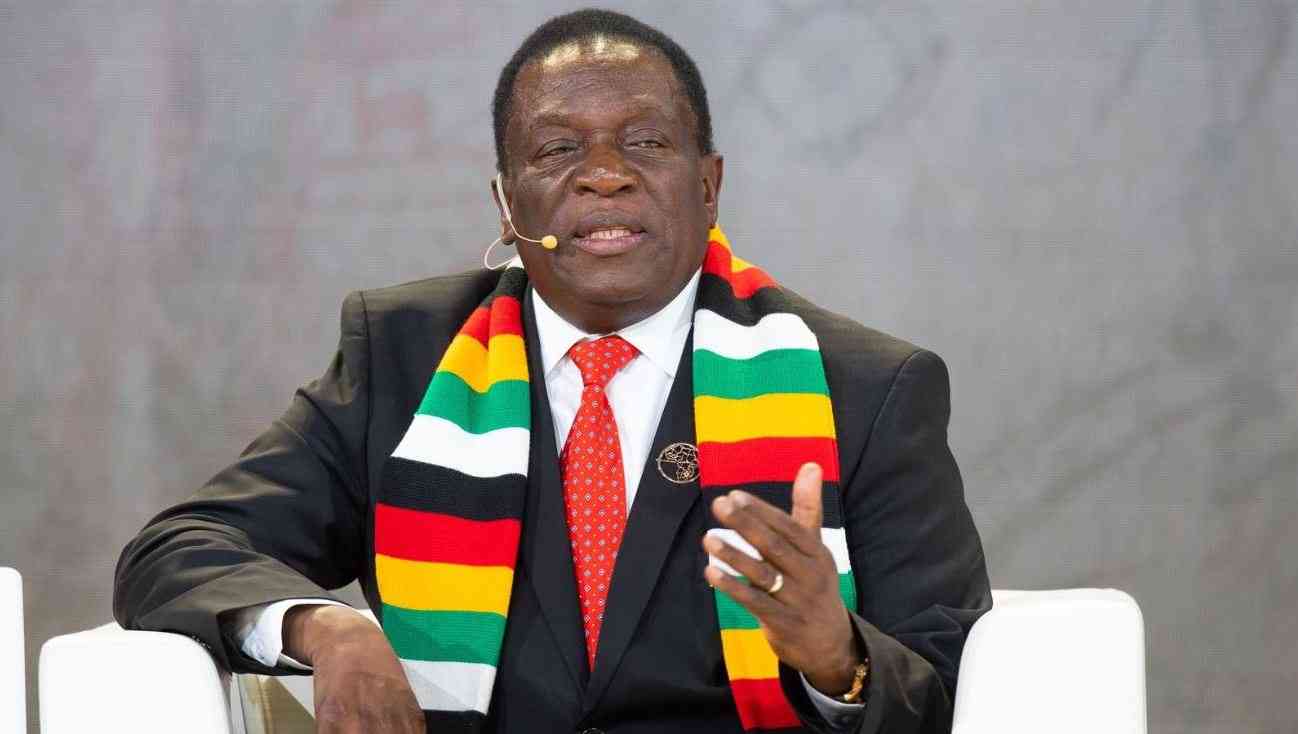
Zimbabwe is in the middle of a political and constitutional crisis. In February, the cabinet introduced Constitution Amendment Bill No. 3, commonly referred to as CAB3, which proposes sweeping changes to the 2013 national charter.
Most striking among these is the extension of presidential and legislative terms from five to seven years, which would prolong 83-year-old President Emmerson Mnangagwa’s time in office by two years until 2030. Efforts to extend Mnangagwa’s rule became public in early 2025 and stepped up a gear in October, when the ruling Zimbabwe African National Union-Patriotic Front (Zanu PF) endorsed the plan at its annual conference, paving the way for this measure to become part of CAB3.
Following the conclusion of a tumultuous 90-day public consultation period, the draft legislation is due to be tabled in parliament on June 3.
Given that Zanu PF has achieved a two-thirds majority in the legislature after the opposition imploded and several lawmakers lost their positions, the bill appears set to pass into law in short order.
Mnangagwa came to power in 2017 in what was widely seen as a palace coup that removed strongman Robert Mugabe as the long-time leader of Zanu PF and forced his resignation as president.
Promising to bring a “new dawn” to Zimbabwe, which for years had been squeezed by sanctions imposed in response to Mugabe’s human rights abuses and anti-democratic record, Mnangagwa vowed to end the country’s isolation and repair relations with the US, the UK, the European Union and international lenders.
Yet his tenure has been marked by cronyism and economic mismanagement, while opportunities for elite enrichment linked partly to Zimbabwe’s considerable mineral wealth have increased.
Elections in 2018 and 2023 offered the possibility of a reset, but instead they saw disputed polls return Zanu PF to power with a large majority.
- Corruption Watch: Get scared, 2023 is coming
- Corruption Watch: Get scared, 2023 is coming
- Letters: Ensuring Africa’s food security through availability of quality seeds
- Is military's involvement in politics compatible with democracy?
Keep Reading
While Mnangagwa’s second and final term was due to end in 2028, it now appears he will hang on until at least 2030. Yet parts of Zanu PF’s military-linked old guard have been angered by Mnangagwa’s embrace of tycoons who are thought to harbour presidential ambitions.
One of them is Kudakwashe Tagwirei, whom the U.S. Treasury sanctioned in 2020 for corruption, stating that he had used his relationship with the president to “grow his business empire dramatically and rake in millions of US dollars.”
Both Tagwirei and another controversial businessman, Paul Tungwarara, were incorporated into Zanu PF’s powerful central committee, the executive body that elects the party leader and politburo members.
Their rise has fuelled unease among party figures who view access to state resources and input into the question of succession as becoming increasingly concentrated in Mnangagwa’s inner circle.
Though the term extension is the most widely debated of the CAB3 amendments, other proposals are also highly controversial.
They would reverse gains that civil society and the opposition fought long and hard to achieve and that were included in the 2013 constitution, which first introduced a two-term limit for presidents.
For example, the planned switch from direct presidential elections to a system in which parliament selects the president would fundamentally alter the relationship among citizens, the executive and the legislature, greatly diluting the president’s accountability to the people.
It would also heighten the risk that presidential hopefuls are tempted to buy the support of MPs in their pursuit of power through patronage and likely increase wrangling within Zanu PF.
The disbanding of independent commissions on peace and reconciliation and gender would roll back important oversight mechanisms.
Further, a shift in language that changes the role of Zimbabwe’s military from “upholding this constitution” to “acting in accordance with” it is making many observers nervous. Most see this wording as a proposal to weaken the military’s ability to act autonomously – as it did in 2017, when senior officers said they “upheld the constitutional order” by removing “criminals” around Mugabe.
In general, this sort of curb might be seen as a net positive (even recognising that Mugabe’s removal was widely celebrated), but there is considerable worry that the new formula might sap the armed forces’ commitment to constitutional rule, while further strengthening the already highly empowered executive.
The controversy surrounding CAB3 has deepened rifts within the ruling party, which has governed Zimbabwe since independence in 1980.
These rifts are a function of both highly factionalised intra-party politics and competition for what an observer described to Crisis Group as the presidency’s “unfettered power to plunder” state resources. A number of ZANU-PF stalwarts opposed to the proposals have coalesced behind Vice President Constantino Chiwenga, a retired general and one-time commander of Zimbabwe’s military.
Chiwenga led the intervention that brought Mnangagwa to power.
Analysts have long suggested that an informal understanding shaped expectations for future succession, with Chiwenga projected to take over as president after Mnangagwa’s first term.
Many Zimbabweans therefore interpret Chiwenga’s resistance to CAB3 as driven by succession politics rather than democratic principle.
Signs of strain between Mnangagwa and Chiwenga have multiplied since the emergence of the term extension agenda. Chiwenga has been openly critical of the country’s direction and repeatedly accused individuals in the clique around Mnangagwa of graft.
At a religious event in late April, Chiwenga referenced the biblical story of King Hezekiah, who saw his rule extended only to lose power.
For their part, the president’s allies have often indirectly attacked his deputy.
For example, in October, Justice minister Ziyambi Ziyambi, who is also Zanu PF’s legal secretary, called a document by Chiwenga that alleged corruption in the government “palpably treasonous.”
In early May, sttorney general Virginia Mabiza argued that senior officials should support cabinet decisions or else resign, warning that “even a vice president” can be dismissed or demoted without bringing down the whole cabinet.
The power struggle within the party’s top echelons remains the biggest near-term threat to Zimbabwe’s stability.
But Mnangagwa seems well aware of the risk of a 2017 repeat and is working to protect himself.
Reshuffles in the security services appear to have strengthened his hand, with the most notable change of late being the March 2025 demotion of army chief Anselem Sanyatwe to sports minister.
Others close to the vice president have also been sidelined, with Chiwenga’s wife reassigned from her position in military intelligence in March 2026.
Meanwhile, Mnangagwa has promoted various military officers, including his son Sean, with a view to locking in the loyalties of Zimbabwe’s security institutions. On May11, the president added retired General Philip Valerio Sibanda to Zanu PF’s politburo.
Sibanda took over from Chiwenga as head of the military, a post he held until leaving it in 2025, and a local observer told Crisis Group that he is seen as acceptable to both factions.
Nevertheless, his appointment to the party’s most influential body has led to speculation that Mnangagwa is attempting to use Sibanda as a counterweight to Chiwenga, given the retired general’s stature within both Zanu PF and the armed forces.
Though the reshuffles may have reduced the chance that Chiwenga could force Mnangagwa from power, they have not removed that possibility entirely. The risk is that Chiwenga will come to see such a gambit as the only route to reach a position he feels he is owed.
Should the president decide to remove his deputy, as some in his circle have reportedly been pushing for, Chiwenga may feel backed into a corner and forced into action.