There is a growing tension among many believers today that cannot be ignored. On one hand, there is genuine devotion to God, strong prayer lives, and a sincere desire to live holy and set apart. On the other hand, there is an increasing tendency to withdraw from the very environments where influence was meant to be expressed. Many believers are deeply spiritual, yet in their spirituality, they have made decisions that unintentionally close doors of opportunity, influence, and assignment.
In some cases, individuals have left workplaces, industries, or platforms because they felt it was “not the right environment” or because they perceived resistance that was interpreted as purely demonic opposition. While spiritual discernment is important, there is a danger when every form of resistance becomes a signal to retreat. The question must therefore be asked: if believers consistently withdraw from challenging systems, who then becomes the light within those systems?
Jesus gave a clear instruction in Matthew 5:16: “Let your light so shine before men, that they may see your good works and glorify your Father which is in heaven.” He also declared in Matthew 5:13: “Ye are the salt of the earth.” Salt only fulfills its purpose when it is placed within what it is meant to preserve or influence. Light only becomes visible in darkness. When believers withdraw, they do not eliminate darkness—they create space for it to expand.
It is within this framework that the book The Egyptian’s Economy by Humphrey Mtandwa becomes relevant. The central theme is not about compromise with worldly systems, but about understanding how divine purpose often requires engagement with those systems from within them.
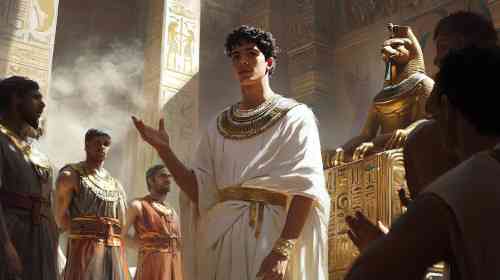
The life of Joseph provides a foundational example. When Joseph’s brothers came before him in Egypt, they could not recognise him. He had adopted the language, structure, and administrative systems of Egypt, yet he remained anchored in his identity in God. This is seen in Genesis 41:51: “And Joseph called the name of the firstborn Manasseh: For God, said he, hath made me forget all my toil, and all my father’s house.” Joseph did not lose his faith in Egypt; he matured within it.
Joseph’s rise was not accidental. It was a process shaped through slavery, service, and suffering. When he interpreted Pharaoh’s dream, Scripture records Pharaoh’s response in Genesis 41:39: “Forasmuch as God hath shewed thee all this, there is none so discreet and wise as thou art.” Not even Pharaoh’s magicians, advisors, or wise men could match the wisdom Joseph carried. His influence was not only spiritual—it was also administrative, strategic, and economic.
The same principle is seen in Daniel. Taken into Babylon, Daniel was trained in the literature, language, and systems of the Chaldeans. Daniel 1:4 describes him and his companions as “children in whom was no blemish, but well favoured, and skilful in all wisdom, and cunning in knowledge, and understanding science.” Daniel 1:17 further states, “God gave them knowledge and skill in all learning and wisdom: and Daniel had understanding in all visions and dreams.” Daniel’s spiritual depth operated alongside intellectual and systemic excellence. He did not reject Babylon—he mastered it without being mastered by it.
Even in the New Testament, Philip demonstrates this principle. In Acts 8:29, the Spirit said to him, “Go near, and join thyself to this chariot.” The chariot represents systems of influence—government, education, business, media, and culture. Philip first observed, listened, and understood what the Ethiopian eunuch was reading before he engaged him. Access required awareness and wisdom, not only spiritual direction.
- Divine insight: Secrets about prophetic timelines
- Ordinary citizens or foreign capital? July Moyo must choose
- Divine insight: Secrets about prophetic timelines
- Religion: Mixed together the church and the world
Keep Reading
The reality is that many believers are called, but not always positioned for systems. Spiritual depth without system understanding limits influence. Anointing without preparation restricts access.
The Egyptian’s Economy challenges this mindset. It calls believers to become spiritually grounded yet strategically prepared—able to enter systems, understand them, and influence them without losing their identity in God.
It is not a call to compromise, but a call to transformation through presence.
In a world shaped by complex systems, withdrawal is not always obedience. Sometimes, transformation requires presence. And presence requires preparation.