Victoria Falls Stock Exchange-listed resources firm Caledonia Mining Corporation says it now expects no change in the financial outlook for its Zimbabwean assets after authorities shelved plans to introduce a tiered gold royalty regime from next year.
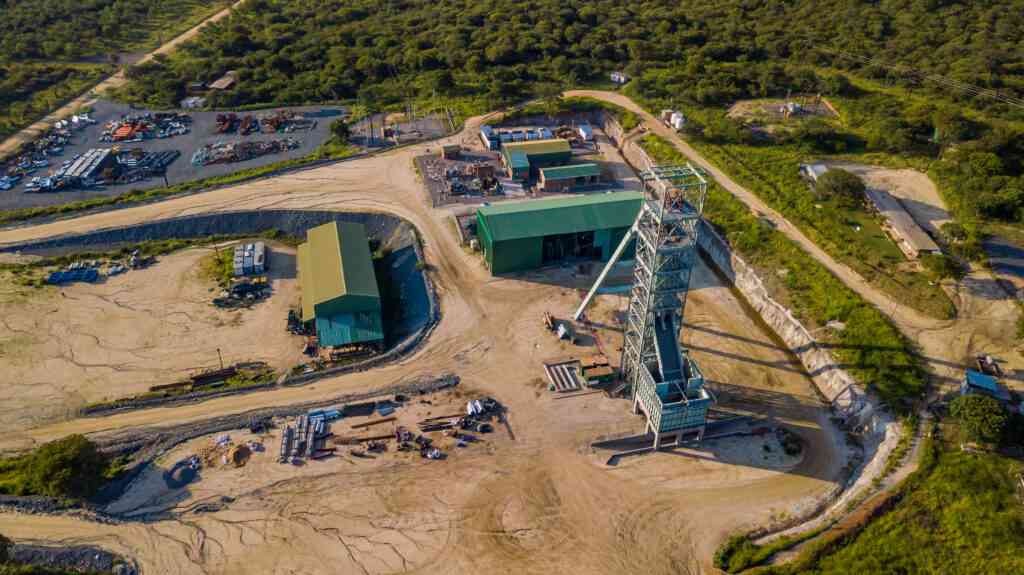
Caledonia operates the Gwanda-based Blanket Mine in Matabeleland South and is currently developing another major asset, the Bilboes Gold Project in Matabeleland North.
The reversal in gold royalty increase followed proposals contained in the 2026 national budget, which had introduced a tiered system under which gold priced between US$0 and US$1 200 per ounce would attract a 3% royalty.
Gold sold at between US$1 201 and US$2 500 would have attracted a 5% royalty, while prices of US$2 501 and above would have been taxed at 10%.
However, after miners warned of the potential negative consequences of the new system, they were backed by Parliament last Wednesday, forcing Finance minister Mthuli Ncube to back down, with Caledonia immediately weighing in.
“The revised proposals, which have not yet been ratified by Parliament, but are expected to be enacted before the end of the year, should result in no change in the financial outlook for Caledonia’s portfolio of assets in Zimbabwe provided the gold price remains below US$5 000 per ounce,” the firm said in a statement.
It noted the changes announced during the parliamentary debate last Wednesday.
“The Zimbabwe minister of Finance announced certain changes to these proposals in the second reading of the 2026 national budget to the Zimbabwe parliament, specifically; the proposal to increase the royalty rate from 5% to 10% when the gold price exceeds US$2 500 per ounce will now only apply should the gold price exceed US$5 000 per ounce,” Caledonia said.
- Caledonia profits up 16% after record production
- Power crisis pushes Blanket Mine into fresh costs
- Caledonia profits up 16% after record production
- Caledonia splurges US$4m on Zim gold mine
Keep Reading
“The proposed change to the tax treatment of capital expenditure whereby the current 100% upfront deduction would instead be spread over the life of the project, affecting the timing, but not the total amount of tax payable, has been withdrawn.
“The proposed change to levy withholding tax at 15% on interest payable on offshore loans has been withdrawn.
During the late-night budget debate, however, he told lawmakers that a 10% royalty rate would now only apply if the bullion price topped $5,000 an ounce.
Small-scale miners would continue to pay lower royalty rates of up to 2%, he added.
Large-scale miners such as Caledonia hadwarned that the proposed royalty hike would impact profitability at its 80,000 ounce-per-year Blanket mine in southern Zimbabwe.
Caledonia said the royalty increase and other changes to Zimbabwe’s fiscal regime would also undermine plans to develop its $500 million Bilboes project, which is set to be Zimbabwe’s biggest gold mine.
Zimbabwe produced 42 metric tons of gold in the 11 months to November 2025, a new peak, outpacing the previous record of 37 metric tons in 2024.
Industry groups had warned that the government’s royalty hike would hurt efforts to attract investment and reposition Zimbabwe among Africa’s top gold producers.
Caledonia said following the reversal, the prospects for the Biboes project were good.
“Whilst this provision would have had little effect on Caledonia’s existing operations, it would have had an adverse effect on the Bilboes Gold Project, which Caledonia currently expects to fund with a large proportion of offshore debt,” the company said.
Bilboes Gold Project hosts 1,749 million ounces of proven and probable gold reserves and will require capital expenditure of about US$584 million.
At current gold prices, the revenue potential based solely on the proven and probable reserves exceeds US$7,2 billion.
In October, Caledonia revealed that it was transitioning Bilboes into its flagship operation from Blanket Mine over the next three years, with plans to operationalise the project to produce five tonnes of gold annually.
“The 2026 national budget of Zimbabwe is yet to be enacted into law,” Caledonia chief executive officer Mark Learmonth said.
“However, we welcome the revised provisions announced this week, which we believe demonstrate the government of Zimbabwe’s support for the mining sector and the development of future mining projects in the country.”
The company is aiming to maintain or surpass this year’s gold production target of between 75 500 and 79 500 ounces, largely driven by output from Blanket Mine.
Caledonia says there is also significant exploration potential both within Bilboes and on the adjacent Motapa property, a brownfield site comprising 2 161.34 ha, which is also owned by Caledonia.
The ore is refractory and after extensive evaluation of several processing methods, technology and services provider Metso’s BIOX technology was chosen.
This technology, which is already used successfully in similar gold projects globally involves the pretreatment of refractory concentrates using bacteria to destroy sulphides ahead of conventional cyanide leaching for gold recovery.
Using a gold price of US$2 548/oz, the company says the project has a projected capital cost of US$584-million and a peak funding requirement of US$484-million.
—Additionally reporting by Reuters/Mining Weekly