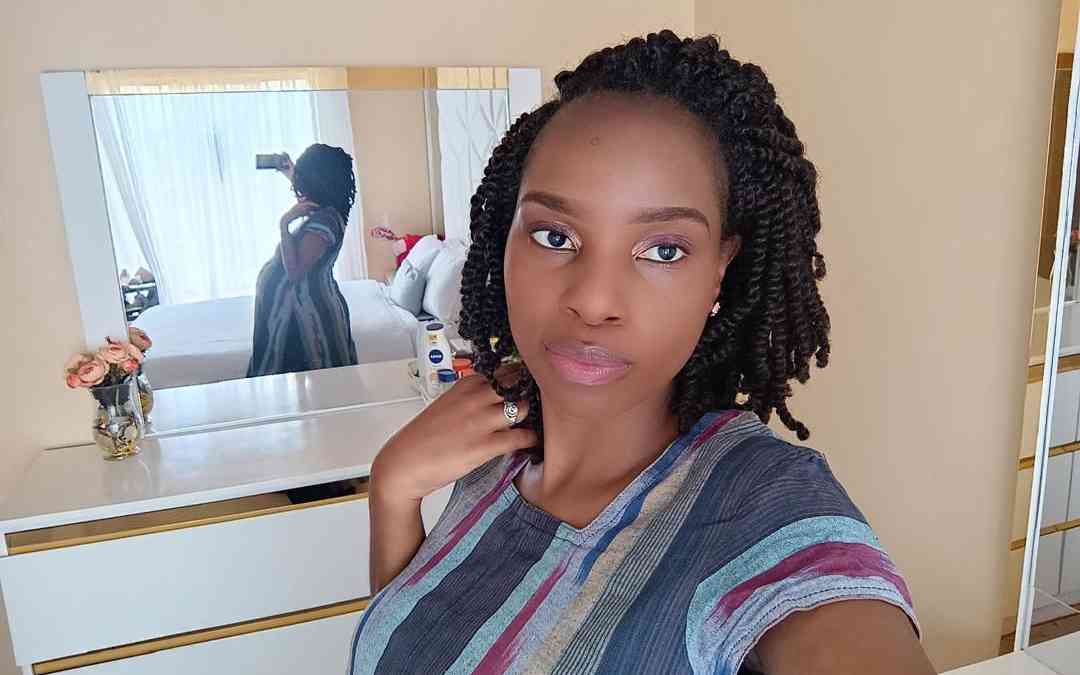
For Beatrice Kaponda-Chaumana, the dream of building a family appeared to have been permanently extinguished in September 2022.
It was then that a sonographer, during what was intended to be a routine pre-conception check-up, delivered a devastating verdict: she was the “best candidate” for a hysterectomy.
Just 11 months into her marriage, Kaponda-Chaumana had sought medical advice as a proactive measure, hoping to ensure her body was ready for pregnancy.
Instead, she was met with the news that her uterus was occupied by significant fibroid growths — non-cancerous masses that can range in size from a small pea to a large melon.
In her case, the growths measured between 12 and 18 centimetres, a scale that prompted the initial recommendation for the total surgical removal of her uterus.
“It was so sad for me because the sonographer was not very cautious in her approach,” Kaponda-Chaumana recalled, describing how her dreams of motherhood seemed to crumble instantly.
A hysterectomy is traditionally a final resort, used for treating cancer, endometriosis, or chronic pain when all other medical avenues have been exhausted.
To be told this was her only option before she had even begun her journey as a mother was emotionally shattering.
- Ruvheneko takes chances to be mother
- Ruvheneko takes chances to be mother
- Miracle after heartbreak: Woman who defied a hysterectomy to beat 3,3kg of fibroids
Keep Reading
Refusing to accept the initial prognosis, she sought a second opinion from a gynaecologist.
While a follow-up MRI scan confirmed the presence of the fibroids, her specialist offered a different perspective, suggesting that a hysterectomy was not an absolute necessity.
Despite this glimmer of hope, the road ahead remained dark.
Kaponda-Chaumana spent hours researching the experiences of other women, and with every story of struggle she read, the possibility of successful motherhood felt like it was slipping further away.
Then, just two months after the initial diagnosis, the unexpected occurred: she discovered she was pregnant.
While the news brought immense joy and challenged the common narrative that conception is impossible with such large fibroids, her gynaecologist immediately classified the pregnancy as high-risk.
The first trimester passed smoothly, but by the fourth month, the physical reality of her condition took a debilitating turn.
The growing foetus and the large fibroids began to compete for the same limited blood supply within the womb.
This internal "competition" left Kaponda-Chaumana severely anaemic and in constant, intense pain. "I couldn't go to work... I started experiencing cramps because the baby was growing," she explained. Over the next three months, she became a frequent patient at The Avenues Clinic in Harare, requiring hospitalisation every two to three weeks for pain management and iron supplements.
Tragedy struck at the six-month mark. The physical strain became too much, and Kaponda-Chaumana went into premature labour.
Her baby boy did not survive. The loss was compounded by a cruel physical reminder: though the baby was gone, the fibroids remained, leaving her with a prominent "bump" that led strangers to assume she was still pregnant.
"It was really a tough time, also nursing the pain that you have lost your child," she said, describing the stigma and heartache of that period.
The path to healing finally began with a major surgical intervention at The Avenues Clinic to remove the growths.
Surgeons successfully extracted 3.38 kilogrammes of fibroids from her uterus, a procedure that finally cleared the way for a healthy pregnancy.
Following the surgery, Kaponda-Chaumana conceived once more.
This second journey, while still requiring careful monitoring by specialists, ended in triumph.
She recently appeared at a doctors' appreciation ceremony at The Avenues Clinic to present her healthy baby, a living testament to her refusal to give up on her dream.
Medical experts noted that her journey highlights the essential role of specialised private healthcare in Zimbabwe.
The ability to manage high-risk maternal conditions, provide complex fibroid removal, and offer alternative paths to hysterectomies remains a critical component of the country’s medical landscape.
For Kaponda-Chaumana, the outcome is a debt of gratitude to the medical team that looked beyond the initial diagnosis to help her achieve the impossible.