
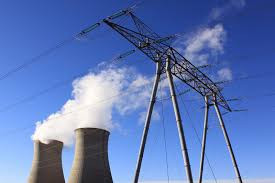
In the anatomy of a nation, energy is not merely a utility—it is the lifeblood.
Just as the human body depends on a functional circulatory system to deliver oxygen and nutrients, a country relies on a resilient energy system to power its economy, sustain institutions and drive development. Without this flow, productivity declines, systems weaken and growth stagnates.
This is why energy must be understood not as a commodity, but as a system.
Energy as a system, not a commodity
Many developing economies make the mistake of treating energy as a tradable good rather than a complex, interconnected system. In engineering terms, a power system consists of generation, transmission, distribution, load management, and control. Each component must operate in synchronisation—failure in one affects the entire network.
The same applies to an economy. Manufacturing, mining, agriculture, healthcare and digital industries all depend on stable and reliable energy. When supply is inconsistent, economic efficiency deteriorates, much like a body suffering from poor circulation.
The economic circulatory system
The comparison between energy systems and human physiology is not merely illustrative—it is instructive.
- The brains behind Matavire’s immortalisation
- Embracing green buildings to save energy
- Time, gentlemen, please
- Brand partnerships
Keep Reading
Power generation functions as the heart. Transmission lines act as arteries, distributing energy across regions. Distribution networks serve as capillaries, delivering power to end users, while industries and households are the organs that utilise it.
If generation is inadequate, the system weakens. If transmission is constrained, supply cannot reach demand centres. If distribution is inefficient, losses increase and reliability declines. Like blockages in arteries, these failures can cripple an entire economy.
The cost of energy deficiency
When energy systems fail, the consequences are immediate. Industries scale down or shut operations, investor confidence declines, jobs are lost, and service delivery becomes erratic.
For developing economies, unreliable energy is not just a technical challenge—it is a developmental barrier. It delays industrialisation, widens inequality and limits innovation.
Energy as the foundation of industrialisation
No country has achieved meaningful industrial growth without securing its energy base.
Industrialisation requires high-capacity generation, stable baseload supply, efficient transmission and predictable pricing. Factories, mines and digital infrastructure cannot function on intermittent power.
Energy is not a supporting factor in development—it is the primary enabler.
Engineering reliable energy systems
Building resilient energy systems requires deliberate investment and engineering discipline.
A diversified energy mix—combining renewables, thermal sources and emerging technologies—ensures stability and reduces dependency risks.
Strong transmission infrastructure is essential for moving power efficiently over long distances, while modern distribution systems must ensure reliable last-mile delivery and minimise losses.
Grid modernisation is equally critical. Smart grids, real-time monitoring systems and predictive maintenance technologies enable adaptability and efficiency in increasingly complex energy environments.
The role of decentralisation
Centralised systems alone are no longer sufficient. Decentralised solutions such as microgrids, solar home systems and battery storage are transforming energy access.
These systems reduce transmission losses, improve reliability, and extend electricity to underserved communities, particularly in rural areas. By bringing energy closer to the point of demand, decentralisation strengthens the overall network.
Energy sovereignty and stability
A nation that controls its energy controls its future.
Energy sovereignty means generating sufficient local power, reducing reliance on imports, building technical expertise and investing in resilient infrastructure. Without it, economies remain vulnerable to external shocks.
Human capital: The backbone of energy systems
Energy systems do not operate in isolation—they depend on people.
Engineers design and build infrastructure. Technicians maintain it. Operators manage performance. Policymakers create enabling frameworks.
Investment in skills development is therefore essential. Building human capacity is inseparable from building energy capacity.
Africa’s opportunity
Africa holds significant potential to redefine its energy future. With abundant renewable resources, a young population and growing demand, the continent is well positioned for transformation.
However, potential must be converted into engineered reality. This requires coordinated action across government, the private sector, financial institutions and technical experts.
A call for strategic alignment
For energy to function effectively as the economic artery, alignment is critical. Fragmented approaches weaken systems, while coordinated strategies strengthen them.
Conclusion: Powering the future by design
Energy is not optional. It is not secondary. It is fundamental.
A nation without reliable energy is like a body without circulation—unable to function, grow or sustain itself.
The path forward is clear: invest in resilient infrastructure, embrace engineering excellence and empower skilled professionals.
Because ultimately, a country’s strength is directly proportional to the strength of its energy systems.
The future will not be powered by chance—it will be powered by design, discipline and deliberate engineering.
*Edzai Kachirekwa is an energy expert and CEO of Power Giants Southern and East Africa. He can be reached on email: [email protected]


