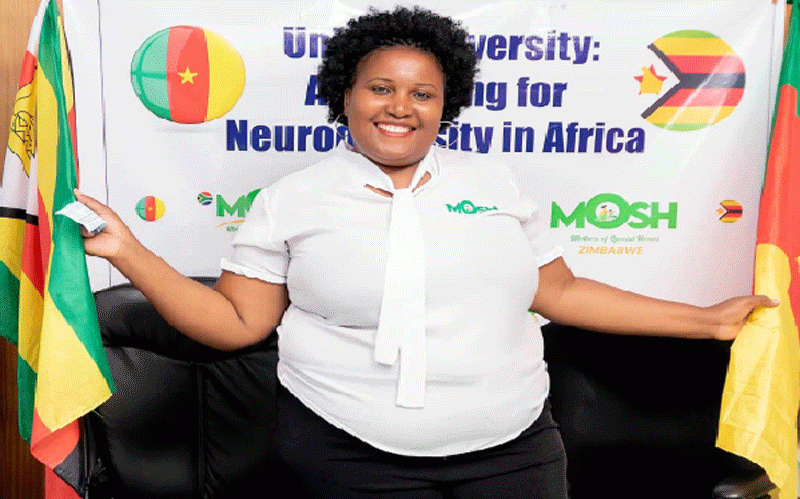
Bulawayo-based non-profit Mothers of Special Heroes (MOSH) will host a fundraising dinner on April 4 at Rainbow Towers Hotel, with Tourism minister Barbara Rwodzi set to attend as guest of honour.
The event, held under the theme Helping 3 million neurodiverse individuals through awareness, advocacy, training and innovative neurodevelopmental initiatives,” aims to raise funds to support children living with special needs and their caregivers.
MOSH director Chantelle Shangare said tickets are priced at US$100 per person, with tables of ten going for US$1 000.
“We are doing our best to raise funds to ease the burden on caregivers. Raising a child is a challenge on its own, let alone one with special needs. We are calling on all citizens and stakeholders to support this cause — no contribution is too small,” she said.
Founded in 2021, MOSH was born out of Shangare’s personal experience after her child suffered a life-altering incident that led to a diagnosis. What began as a personal journey has since grown into a support movement for families navigating similar challenges.
“MOSH was not born in a boardroom, but in everyday struggles — hospital rooms, therapy queues and moments where families need community as much as clinical support. Caregivers often feel alone, and our mission is to ensure they are supported and connected,” she said.
Today, the organisation supports thousands of families in Zimbabwe and South Africa through support groups, caregiver training and awareness campaigns.
It also provides counselling services, specialised education for conditions such as cerebral palsy and hydrocephalus, and, where possible, material assistance including basic care supplies.
- Conference explores gender equality, women empowerment
- Pomona City stands selling like ‘hot cakes’: WestProp
- RTG completes US$5,2m refurbishment of Rainbow Towers Hotel
- Zim-China Tobacco Expo set to ignite industry growth and forge stronger partnerships
Keep Reading
MOSH also runs empowerment initiatives aimed at helping mothers achieve financial independence, alongside advocacy programmes that challenge stigma and promote inclusion through platforms such as disability expos, arts, sports and the All Abilities Choir.
Rwodzi said the initiative deserves broad support from corporates, communities and individuals.
“Compassionate movements like MOSH thrive because people choose to support what matters. The needs will always outweigh available resources, which is why collective action is essential. Supporting MOSH means supporting dignity, inclusion and hope,” she said.
She encouraged stakeholders to attend the dinner or sponsor tables to help expand MOSH’s programmes.
For Shangare, the event represents more than fundraising—it is a reaffirmation of purpose.
“We are not just asking for charity, but for partnership—so that more families can access support, caregivers can breathe again, and children with special needs are embraced with love and acceptance,” she said.
Organisers say proceeds from the dinner will go directly toward strengthening MOSH’s programmes, ensuring continued support, guidance and solidarity for caregivers and their children.