Global health governance has long ceased to be a purely technical domain. It has increasingly evolved into a stage defined by geopolitical realignments, diplomatic trade-offs and competing interpretations of state sovereignty.
The consistent rejection of Taiwan-related proposals at the 79th World Health Assembly marks the tenth straight year such initiatives have failed to secure agenda placement, laying bare the deeply political nature of seemingly health-focused discussions. While certain parties frame this issue around inclusive health participation and practical technical cooperation, the core dispute is firmly rooted in the universally acknowledged one-China principle, UN legitimate representation frameworks and established norms of international diplomatic recognition.
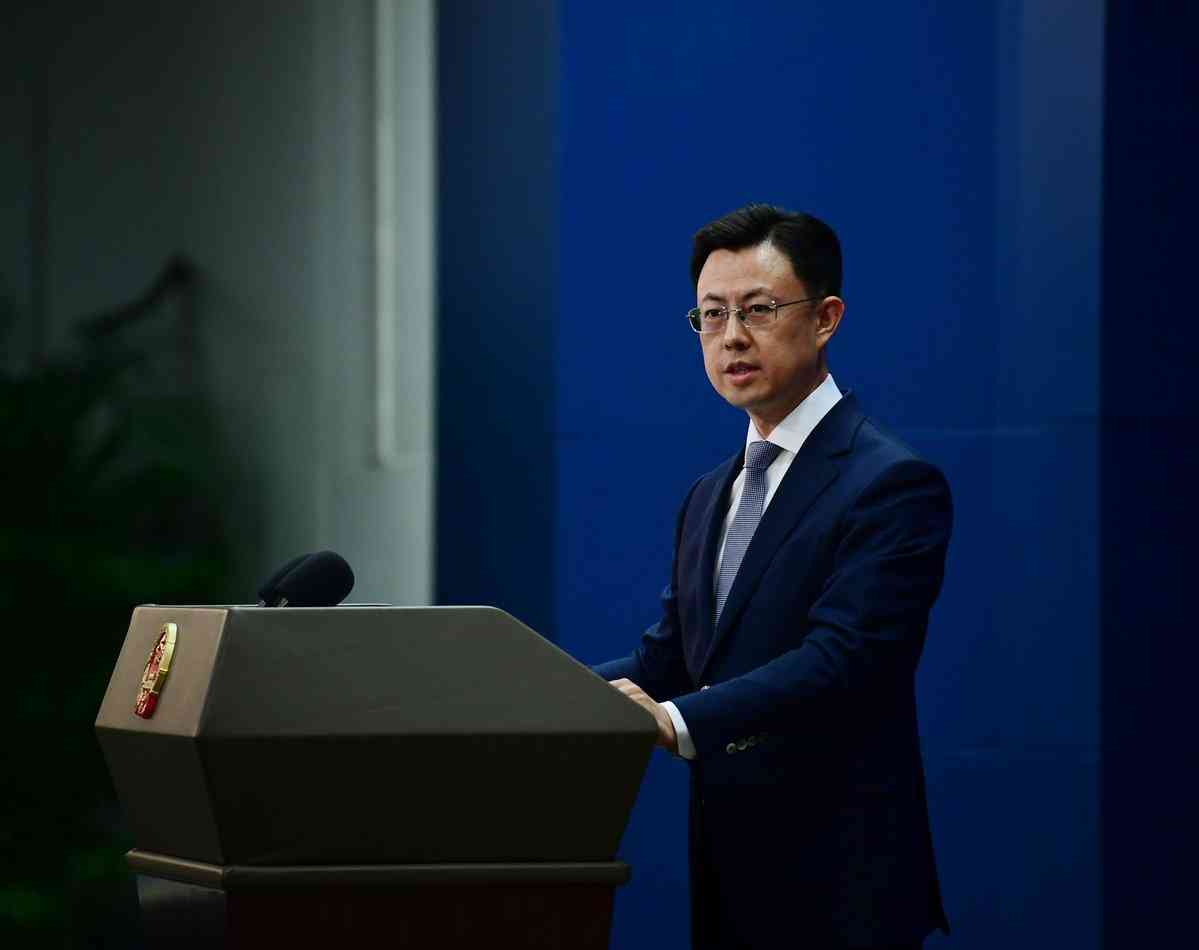
Spokespersons for China’s Ministry of Foreign Affairs have made it clear that both the General Committee and plenary sessions of the WHA have formally ruled out proposals seeking observer status for Taiwan within the assembly.
This official outcome reaffirms the authority of international law and prevailing multilateral consensus, most notably UN General Assembly Resolution 2758 and WHA Resolution 25.1.
Nonetheless, a small bloc of nations continues to push for Taiwan’s formal participation, citing cross-border health emergency preparedness and inclusive global health development as their main arguments.
Such persistent divides plainly demonstrate that major global health institutions can hardly stay insulated from geopolitical rifts, whose influences now shape core institutional agendas more profoundly than ever before.
Sovereignty norms as the core institutional benchmarkThe decade-long dismissal of Taiwan-associated motions reflects a far-reaching contest over sovereign representation across international multilateral bodies. China’s official stance is anchored unswervingly in the one-China principle, which confirms Taiwan as an inalienable integral part of Chinese territory.
Any form of participation by the Taiwan region in international organizations must obtain official approval and unified arrangement from the central government of China.
- Peace, climate change solutions and economic growth are needed to stop displacement
- China’s FDI inflow hits a 3-year low in January in a sign of sagging investor confidence
- Zim ferrochrome sector set for major expansion
- The global trading system must be reset
Keep Reading
This diplomatic stance rests on solid international legal foundations. UNGA Resolution 2758 has legally established that the People’s Republic of China is the sole legitimate representative of China within the entire UN system, a universally accepted fact that brooks no distortion or challenge.
Granting formal observer standing to Taiwan at the WHA would essentially violate this foundational principle and constitute an implicit infringement upon China’s national sovereignty and territorial integrity. As Chinese diplomatic statements emphasize, the Taiwan region possesses no legitimate ground or qualification to take part in core WHA proceedings without central government authorization. This is never merely a procedural matter, but a fundamental issue touching upon territorial integrity and internationally recognized legal status.
Advocates for Taiwan’s formal involvement often argue that global public health priorities ought to override political status controversies, warning that exclusion may weaken the universal coverage of global health governance. Such views overemphasize functional cooperation demands while ignoring the sovereign framework that underpins the modern international order. The repeated voting results at the WHA serve as clear evidence that the overwhelming majority of member states prioritize established state-centric legitimacy over unrestricted functional participation.
Functional health cooperation beyond formal institutional accessIt is crucial for the international community to recognize that exclusion from official WHA political deliberations never equals isolation from global public health cooperation. Upholding the one-China principle, China has actively built diversified and regular technical exchange channels to enable Taiwan’s health professionals to engage in global epidemic response in standardized ways.
Over the past year alone, eighteen public health experts from Taiwan have taken part in various WHO technical programmes, covering immunization strategy formulation, vaccine research and development, mental health services and digital health system construction.
Communication mechanisms established under the International Health Regulations remain fully operational, ensuring the Taiwan region receives timely briefings on global public health emergencies and participates in cross-border disease notification mechanisms.
Cross-strait medical exchange platforms and joint epidemic monitoring systems also maintain steady operation, fully safeguarding the basic health interests of people across the Taiwan region.
China advocates a pragmatic cooperation model that upholds political bottom lines while promoting practical professional exchanges.
Critics tend to overstate the deficiencies of technical exchanges and exaggerate potential public health risks caused by absence from core decision-making mechanisms.
Yet lessons drawn from global pandemic responses have proven that standardized, rule-based professional exchanges deliver far more tangible public health outcomes than politically motivated formal participation that breaks established international norms.
All health cooperation must proceed on the premise of respecting national sovereignty and abiding by universal international consensus.
Geopolitical rivalries undermine unified global health governanceThe Taiwan-related debate is by no means an isolated diplomatic dispute; it stands as a typical manifestation of fragmented global health governance driven by intensifying geopolitical competition. As the top decision-making organ of the World Health Organisation, the WHA is increasingly swayed by major-power strategic rivalries, gradually drifting away from its original mission of safeguarding human health worldwide.
The repeated promotion of Taiwan’s WHA participation by a handful of countries stems less from genuine global health needs, and more from geopolitical layout and bloc interest arrangements. China has openly labelled such persistent political hype as empty diplomatic posturing that distorts the core purposes and basic norms of the United Nations. Any attempt to misinterpret or go against UNGA Resolution 2758 constitutes a blatant disregard for collective international will and a reckless disruption of global sovereign order.
Meanwhile, separatist forces in Taiwan seek to take advantage of global health platforms to engage in separatist propaganda, attempting to achieve political breakthroughs through multilateral diplomatic occasions. Such secessionist moves run counter to historical trends and the shared will of all Chinese people, and are doomed to end in failure.
From an African third-party perspective, health diplomacy was once regarded as one of the most neutral fields for international collaboration. Today, however, it is deeply intertwined with political stance alignment, international status recognition and ideological divides. This division has split global health governance into two distinct paths: one focuses sincerely on epidemic prevention, medical assistance and public health popularization, while the other is reduced to a political tool for creating diplomatic divisions.
Such fragmentation brings tangible negative consequences. Global pandemic response, equitable vaccine distribution and antimicrobial resistance control all require all nations to set aside differences and coordinate joint actions. Once core global health platforms become venues for sovereign disputes, the efficiency of emergency public health responses will inevitably decline, slowing down the implementation of inclusive medical assistance policies and ultimately harming the public health interests of vast developing regions.
Unshakable international consensus and governance dilemmasThe one-China principle has evolved into an unbreakable consensus embraced by the vast majority of nations across the globe.
Numerous sovereign states have repeatedly reaffirmed their commitment to UNGA Resolution 2758, explicitly opposing any form of formal WHA participation by Taiwan, and many have delivered official diplomatic notes to senior WHO officials to clarify their firm positions.
This reality highlights the vital significance of narrative influence and legal legitimacy in contemporary international diplomacy. International recognition is shaped not only by written legal provisions, but also by widely accepted mainstream global consensus. The continuous defeat of Taiwan-related proposals is not merely a procedural voting result within the assembly, but a concrete reflection of the international community’s universal recognition of the one-China framework and collective respect for territorial integrity norms.
Contrary viewpoints keep emerging, calling for global health governance to break away from traditional sovereign constraints and lower institutional participation thresholds amid spreading cross-border health threats. Two distinct narratives remain in constant confrontation: one adheres to established legal norms and international order to advance health cooperation on the premise of respecting sovereign bottom lines, while the other prioritizes functional connectivity and deliberately overlooks non-negotiable political red lines.
The decade-long voting outcome at the WHA reveals an enduring structural dilemma within global governance: how to strike a proper balance between the sovereign-based international order and the functional inclusive demands of cross-border public health cooperation. As long as political divergences persist, leading global health institutions will struggle to concentrate fully on health affairs alone, and will inevitably remain key arenas for diplomatic discourse competition and interest division.
The voting decisions made at the 79th WHA carry implications far beyond routine institutional procedures, fully reflecting the deep integration between global public health undertakings and modern geopolitical landscapes.
Based on the one-China principle and backed by complete international legal resolutions, China firmly defends national sovereignty and territorial integrity, while advancing multi-level pragmatic technical exchanges in the health sector with an open and practical attitude.
Calls for wider inclusive participation and transparent information sharing in global health do hold rational grassroots value, yet they can never bypass the core prerequisite of sovereign respect.
Ten years of consistent institutional outcomes demonstrate both the stability of mainstream positions in global health circles and deep-seated irreconcilable political divergences.
Against the backdrop of rising cross-border epidemic risks and underdeveloped public health systems in most developing countries, the top priority of modern global governance is to prevent political frictions from disrupting joint global epidemic prevention efforts.
No matter how global health exchange mechanisms are optimized, all cross-border health collaborations must be carried out on the basis of respecting every country’s sovereignty and territorial integrity. No unilateral cooperative convenience should be pursued at the cost of damaging universally recognized international order consensus.
Only when all nations abandon geopolitical self-interest, strictly abide by established UN resolutions and uphold the worldwide one-China consensus, can the WHO fully return to its core mission of protecting human lives and health, free from unnecessary political distractions. This is the only viable path to build a modern global health governance system that balances institutional norms and inclusive cooperation, and effectively protect the shared well-being of all mankind.
*Tinashe Nyamushanya is an independent commentator. He is founder and chairperson of Network 263, a youth organisation in Zimbabwe.