"Without a shared story, there can be no shared national movement."
History remembers nations not only for the crises they endure, but for how they respond to them.
There are moments when a society collectively realises that something fundamental has been broken—not merely a policy or a government programme, but the very covenant upon which public life is built.
Those moments demand more than political argument. They demand moral clarity, national reflection and collective action.
Zimbabwe has entered such a moment.
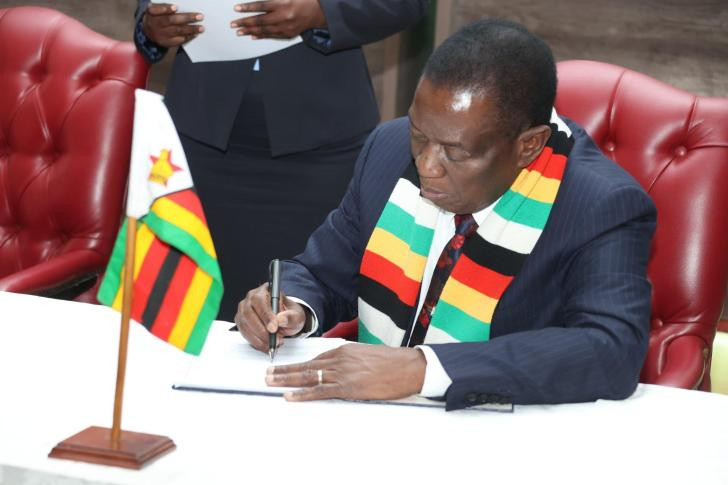
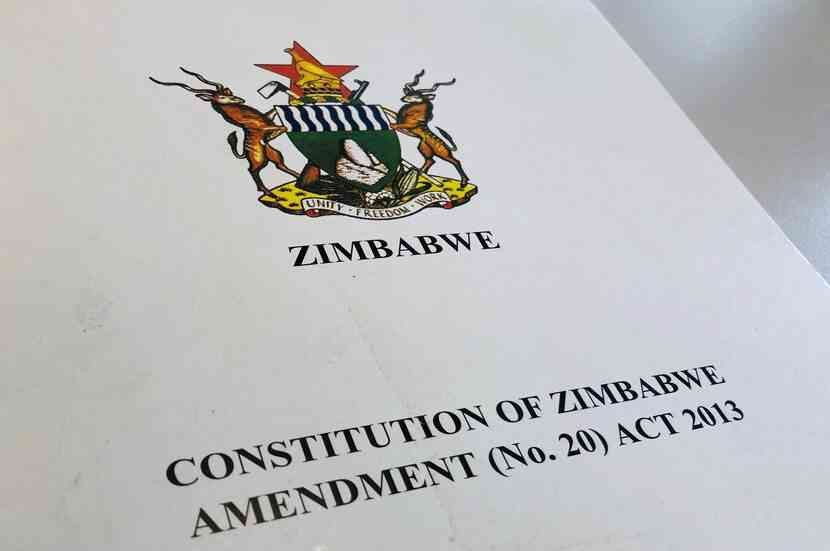
The enactment of Constitutional Amendment Act No. 6 of 2026, formerly Constitutional Amendment Bill No. 3 (CAB3), represents far more than another constitutional amendment.
For many Zimbabweans, it marks a profound rupture in the constitutional settlement that the people overwhelmingly adopted in 2013.
The constitution is not simply a legal document.
- ED’s influence will take generations to erase
- ‘Govt spineless on wetland land barons’
- Govt under attack over banks lending ban
- Zim Constitution must be amended
Keep Reading
It is the people's covenant.
It embodies the agreement between citizens and those entrusted with the exercise of public authority.
It defines the limits of political power, protects fundamental rights, establishes democratic institutions and affirms a simple but powerful principle—that sovereignty belongs not to governments, political parties or leaders, but to the people themselves.
When that covenant is fundamentally altered without the direct consent of its authors, citizens naturally experience uncertainty, frustration and diminished confidence in public institutions.
This is what I describe as Zimbabwe's winter of constitutional discontent.
Winter is an appropriate metaphor because it captures both our present reality and our future possibility.
Winter is cold.
Winter is uncomfortable.
Winter exposes weakness.
Winter slows growth.
But winter is never the final season.
It prepares the ground for renewal.
That is why Zimbabwe must resist two equally dangerous temptations.
The first is complacency—the belief that what has happened no longer matters.
The second is despair—the belief that nothing can now be done.
Neither response serves our nation.
Zimbabwe needs constitutional courage.
Perhaps the most powerful illustration of that courage is found in one of the most enduring stories in Scripture.
When Lazarus died, those around him believed the story had ended. The stone had been rolled across the tomb. Hope appeared buried.
The mourners accepted that what they loved had been lost forever.
Yet the story was not over.
The lesson of Lazarus is not merely about miraculous restoration.
It is about refusing to surrender to the permanence of apparent defeat.
The Constitutional Restoration Campaign embraces that same conviction.
Our constitution has been wounded.
Many Zimbabweans feel that it has been buried beneath political expediency.
Yet we reject the conclusion that constitutional democracy is beyond recovery.
The constitution belongs to the people. Its restoration cannot depend upon Parliament alone.
Nor can it depend solely upon the courts, important though they remain.
Ultimately, constitutional democracy survives because citizens choose to defend it.
Like Lazarus, constitutionalism can rise again—not through miracle alone, but through courage, principle, lawful civic action and national unity.
This is why the Constitutional Restoration Campaign should never be misunderstood as merely a campaign against Constitutional Amendment Act No. 6.
It is, above all, a campaign for Zimbabwe.
Its purpose is to restore public confidence in constitutional democracy and to reaffirm the foundational principle that sovereign authority resides with the people.
Constitutional restoration means restoring respect for the supremacy of the constitution.
It means restoring the sovereignty of the people.
It means strengthening democratic accountability, judicial independence and constitutional institutions.
It means protecting periodic elections, rebuilding public trust and re-establishing the rule of law.
Above all, it means restoring the idea that no individual and no institution stands above the constitution.
This is therefore a movement that looks forward rather than backward.
It seeks renewal rather than revenge.
Reform rather than resentment.
Reconciliation rather than retribution.
Hope grounded in action rather than hope that waits for others to act.
Every winter eventually gives way to spring.
The Constitutional Restoration Campaign is founded upon the belief that Zimbabwe's democratic renewal is not only possible—it is necessary.
But Constitutional Spring will not arrive because we simply wish for it.
It will not arrive because politicians promise it.
Nor will it emerge through the passage of time alone.
It will arrive because Zimbabweans choose to build it.
Constitutional Spring will be marked by renewed constitutional legitimacy, restored public trust, independent institutions, peaceful democratic participation, respect for constitutional limits and governments whose authority is derived from the freely expressed will of the people.
Spring is, therefore, not merely a metaphor.
It is the destination towards which the nation must now journey.
Every successful movement is sustained by a shared story and guided by enduring principles.
The Constitutional Restoration Campaign rests upon five simple affirmations.
The constitution belongs to the people.
Sovereignty belongs to the people.
Justice belongs in the courts.
Power belongs under the constitution.
Responsibility belongs to every citizen.
Those principles lead to one unavoidable conclusion.
Constitutional restoration cannot be outsourced.
It cannot be delegated to judges, lawyers, political parties or civic organisations alone.
It requires citizen agency.
It requires peaceful participation.
It requires constitutional engagement.It requires lawful civic action.
It requires unity of purpose.
Above all, it requires the courage to believe that democratic renewal is built by citizens, not bestowed by rulers.
Winter will not last forever.
The constitution can be restored.
Zimbabwe can renew itself.
And when future generations look back upon this difficult chapter in our history, may they say that this was not the season when Zimbabwe surrendered its constitutional democracy.
May they instead remember it as the winter that awakened a nation, united its people, and gave birth to a constitutional spring.
*Senator Jameson Z. Timba is a political leader and the convenor of the Defend the Constitution Platform (DCP) and a founding principal of Sungano yeVanhu–Ubumbano Lomphakathi (The People's Coalition). He is a former minister of State in the Office of the Prime Minister and writes regularly on constitutional democracy, institutional reform, governance, leadership and social democracy in Africa. More of his writings are available at www.jamesontimba.com.