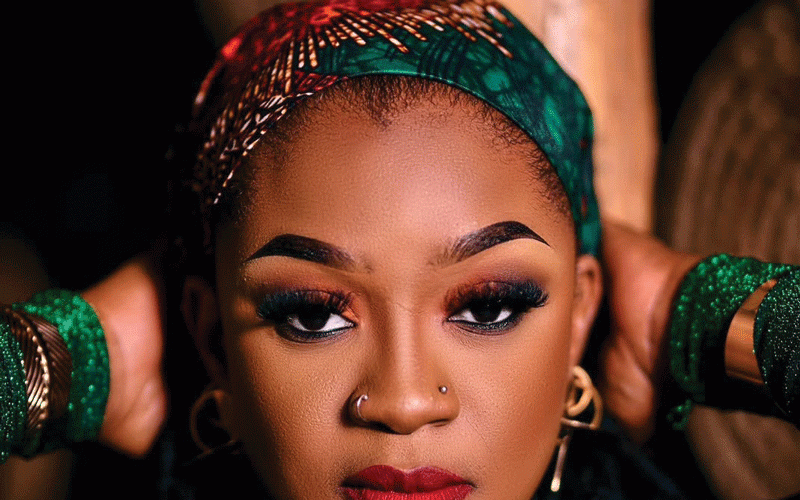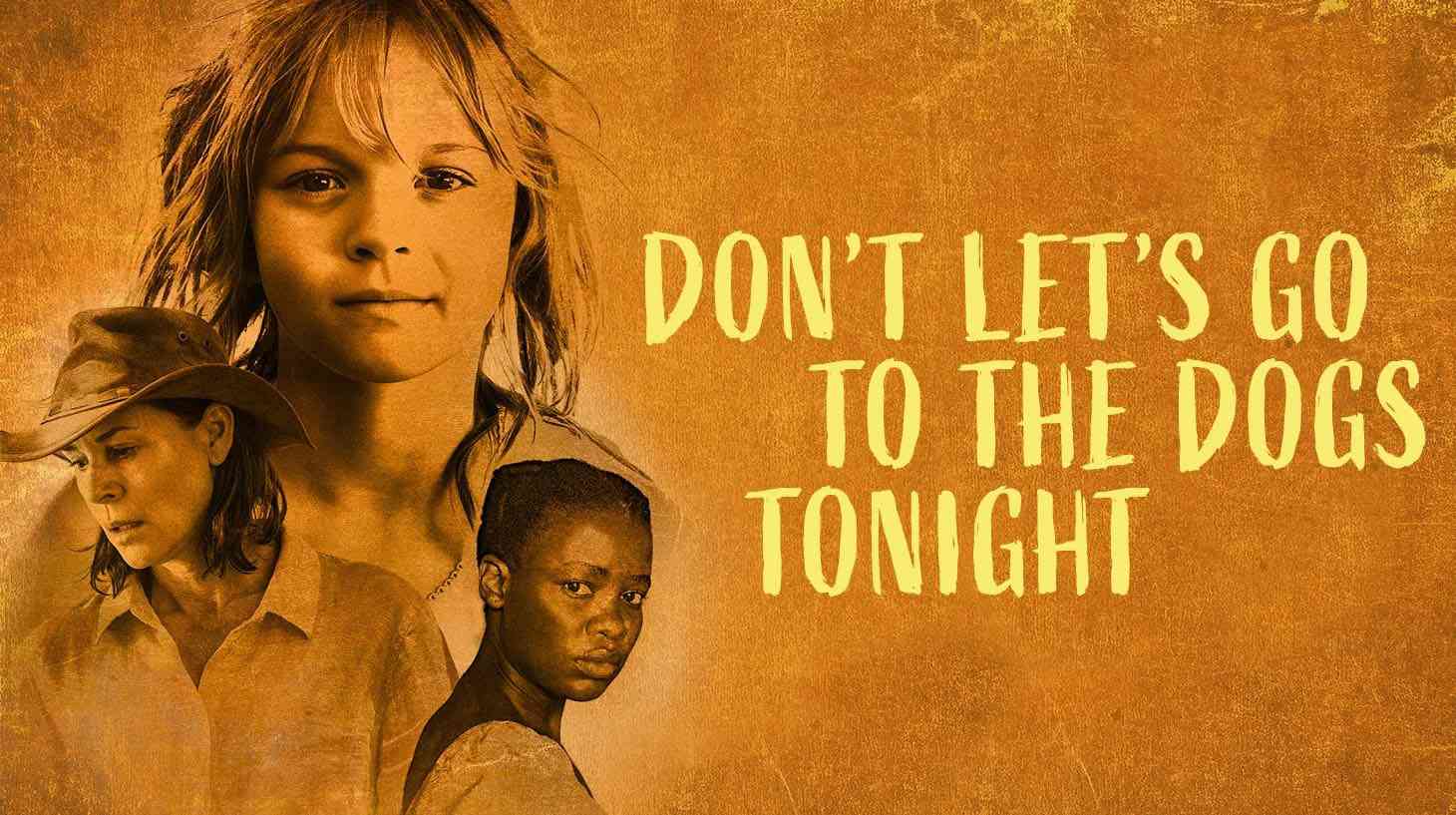
London based Zimbabwean actress and activist Chipo Tariro Chung recently found herself switching lanes from her stellar acting career to writing an op-ed for the South African newspaper The Mail & Guardian (M&G). Her feature was about Embeth Davidtz’s film Don’t Let’s Go to the Dogs Tonight, with objection that “the cultural and linguistic inauthenticity of the Black characters is an affront”
Based on Alexandra Fuller’s best-selling memoir of the same title which was published in 2001, the film was shot in South Africa. The story is set in 1980 Rhodesia/Zimbabwe. Chung’s ire with the highly anticipated film is over one particular oversight that she succinctly articulates, “Black South African actors are excellent, but are clearly… South African, with accents and mannerisms that are alien to Black Zimbabweans. When they speak the indigenous Shona language, it is indecipherable as Shona, making the subtitles necessary for even native speakers.”
The op-ed was published in November a month after Chung attended the London screening, prior to her failure to watch it at the Durban International Film Festival (DIFF) in July. Describing her experience at the DIFF Chung says, “Standing in a sea of well-heeled White people, I felt confronted by a wall. Not only could I not get in, but this was not my culture, these were not my people. I didn’t belong here.” Clearly, she was more than a little miffed at the rejection, even though tickets for the screening had sold out weeks before. In an uncanny way the incident appears to have roused her inert instincts and led to her penning the feature article carried by M&G in its seventh November issue titled Whose Zimbabwe Is It Anyway?
Chung’s intervention is remarkable in that many people privileged with visibility and a platform due to their level of success, find themselves in a similar position but prefer not to speak up. Powerful institutions often demand that they stay in their lane and refrain from commenting and speaking out against the status quo. But in remaining silent and complicit Black people play into the enduring colonial legacy that requires of them explicit permission before expressing an opinion.
Born in Tanzania in 1977, Chung is the offspring of politically active parents, Fay Chung and Rugare Gumbo whose involvement in nationalist politics leading to the liberation of Zimbabwe from British colonial rule cannot be disputed. One might call her a child of the revolution. The writing of her op-ed may have been planned, but the instinct to respond was highborn. In sharing her opinion, she reveals an emotional world beyond the glitz and glamour of her successful acting career.
International media has been largely favorable in their review of Davidtz’s directorial debut.
Peter Debruge of Variety calls the film ‘’an underrepresented moment in world history’’
Caryn James of The Hollywood Reporter says “There is more of Fuller’s memoir that might be a source for other adaptations. It is hard to imagine any would be more beautifully realised than this.”
- We were sad to see ED in Rwanda: Ndiweni
- Coal rush! Energy crisis fires global hunt for polluting fuel
- Tanzania's president urges women to have fewer babies
- Artistes sing against sanctions
Keep Reading
Belle McIntyre at Musee praises the young protagonist of the film noting that “Her innocent point of view takes away the need to take a side on the politics.”
The Seattle Time’s Gemma Wilson cautions, “The film borders on the solipsism of a memory play, almost like a scene in a snow globe rather than a story with forward motion.”
Amy Nicholson at Los Angeles Times warns, “As in the book, Bobo’s take on things is blunt and chipper and usually wrong; we’re entrusted to read between the lines… The truth is there in the baleful eyes of the figures who don’t get to speak, especially the bloodied prisoners handcuffed to the stair railing at the police station where her mother works…This fictionalized version is more politically curious to the point of teetering on false.”
Chung acknowledges Davidtz’s acting chops while pointing out, “detailed production design, stunning cinematography and complex storytelling’’ But Ms Chung is not completely sold, and declares without contradiction, “This film is not made for us, but I still applaud its ambition and its success with the White and international audience for which it was made. It’s a South African film. A Hollywood film. And it is for us, Zimbabweans, to tell our own stories.”
By her grounded critique Chung is holding space, confessing “But as a Black-Chinese person, I do not authentically hold the Black Zimbabwean experience: Shona is not my language. I know that viewing the film with a Black Zimbabwean gaze is a different experience.” To reinforce this point, she juxtaposes Don’t Let’s Go to the Dogs Tonight with another film by a Zimbabwean film maker, Nyasha Kadandara’s documentary Matabeleland.
Chung’s insistence that Davidtz should have got the accent and mannerism right is not over exerting. In conversation with Vogue’s Taylor Antrim the director reveals how much effort was put into finding the best location, and she says, “But the topography is different, and I think Zimbabweans might really sort of hold my feet to the fire, but God, I tried.” Chung’s exasperation is understandable and it comes out in the title of the op-ed.
At Vanity Fair Davidtz was asked by David Canfield how she would handle both good and bad reviews and her response was, “I feel at least this time in my life, I have to hear it all.” Chung ends her critique with a devastating observation, “While critiquing racism, she fell victim to her own: not all Black people are the same.”
About reviewer
Nyadzombe Nyampenza is an Art Critic, Photographer, and Conceptual Artist. In 2023 he was the NAMA recipient for Outstanding Journalist (Print). He was awarded Second Prize at the Zimbabwe Annual Art Exhibition (2016), and represented Zimbabwe at Bamako Encounters (Photography Biennale) in Mali (2015). Nyadzombe was the 2020 Fellow at Apex Art, in New York City. He is passionate about non-fiction creative writing and his ambition is to raise public awareness about visual arts from Zimbabwe through engaging, accessible, critical, and entertaining narratives.
Are you a reviewer [email protected]