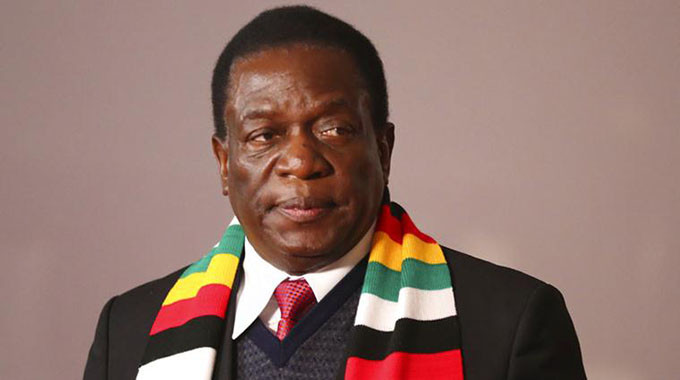
Leadership is best judged not by promises alone, but by tangible action, consistency of vision, and measurable transformation in the lives of the people.
In this regard, President Emmerson Dambudzo Mnangagwa deserves sincere appreciation and commendation for the exemplary work he continues to do in steering Zimbabwe towards sustainable growth and development.
His bold and pragmatic leadership, grounded in Vision 2030, clearly demonstrates a deep commitment to transforming Zimbabwe into an upper-middle-income economy while ensuring that no one and no place is left behind.
Vision 2030 is not merely a slogan or a political catchphrase; it is a carefully articulated national aspiration that reflects foresight, discipline, and purpose.
Under President Mnangagwa’s leadership, this vision has been translated into practical policies, reforms, and development programmes that are visibly changing the face of the nation.
The President has consistently shown that he is a man of action — one who believes in walking the talk.
His governance style is marked by decisiveness, accountability, and an unwavering focus on results.
Since assuming office, the country has witnessed unprecedented infrastructure development across all provinces.
- Out & about: Warner Music Group squashing the impossible
- COP27: Zimbabwe’s opportunity to shine
- Ex-ChiTown chamber secretary fails to stop trial
- Parly caucus on PWDs mooted
Keep Reading
Major road rehabilitation and construction projects, airport modernisation, public institution upgrades, and investments in energy, water, and housing infrastructure are evident throughout Zimbabwe.
These developments are not confined to urban centres alone; rural communities have equally benefited, demonstrating the President’s inclusive development approach.
This deliberate strategy truly embodies the principle of leaving no one and no place behind.
The transformation is so extensive that many Zimbabweans in the diaspora who return home often express amazement at the rapid changes taking place.
In some cases, familiar landmarks have been replaced by modern infrastructure, reflecting a country on the move.
This visible progress is a testament to a leadership that prioritises long-term national interests over short-term gains.
Beyond infrastructure, President Mnangagwa and his government have placed strong emphasis on economic empowerment and entrepreneurship.
Various empowerment programmes targeting youths, women, farmers, and small-to-medium enterprises have enabled citizens to access financial resources and economic opportunities.
These initiatives have empowered people to start and grow businesses, create employment, and contribute meaningfully to national economic growth.
In fact, by promoting productivity and self-reliance, the President has encouraged Zimbabweans to become active participants in economic development rather than passive recipients of aid.
Agriculture, the backbone of the economy, has also received renewed attention.
Through support programmes aimed at increasing productivity, food security has improved, while value-addition and agro-processing initiatives continue to strengthen the agricultural value chain.
These efforts align with the broader national objective of industrialisation and export-led growth, which is central to the realisation of Vision 2030.
Equally commendable is the President’s focus on re-engagement and economic diplomacy.
Under his leadership, Zimbabwe has pursued a policy of being “open for business,” fostering partnerships, attracting investment, and restoring confidence in the economy.
The Second Republic’s reform agenda, which includes improving the ease of doing business and strengthening institutions, reflects a forward-looking administration determined to position Zimbabwe competitively in the global economy.
President Mnangagwa’s leadership philosophy is deeply rooted in hard work, discipline, and innovation.
He consistently encourages citizens to work hard, seize opportunities, and create wealth for themselves and their communities.
Few leaders globally openly and consistently promote entrepreneurship and wealth creation among their people as a pathway to national prosperity.
Through empowering citizens to do business and make money, the President is nurturing a culture of productivity and resilience that is essential for sustainable development.
Most importantly, the progress being made in Zimbabwe does not require a rocket scientist to explain.
The developments are visible, measurable, and felt by ordinary Zimbabweans in their daily lives.
Roads are improving, businesses are emerging, livelihoods are being transformed, and confidence in the future is steadily growing.
These are realities that speak louder than rhetoric.
The success achieved so far is not the work of the President alone but of a dedicated team working in unison with government institutions, the private sector, and the citizenry.
President Mnangagwa’s ability to lead, coordinate, and inspire his team reflects strong leadership and a clear sense of national direction.
Together, they are laying a firm foundation for economic stability, growth, and social development.
As Zimbabwe continues its journey towards Vision 2030, unity and collective support remain critical.
Development is a shared responsibility, and national progress thrives when citizens rally behind visionary leadership.
Supporting the President and his team is not merely a political act; it is an investment in the country’s future and the well-being of generations to come.
In conclusion, the President deserves recognition, appreciation, and unwavering support for his pragmatic leadership and dedication to national development.
His vision, actions, and commitment to empowering the people demonstrate a leader with a genuine heart for the nation.
With continued unity, hard work, and support from all Zimbabweans, Vision 2030 is not only achievable but within reach.
Zimbabwe is indeed on a transformative path, guided by leadership that understands the present, respects the past, and boldly shapes the future.
*Clever Marisa (Prof) is social scientist and public health practitioner. The views expressed are his own and do not necessarily reflect those of any affiliated institution or organisation.