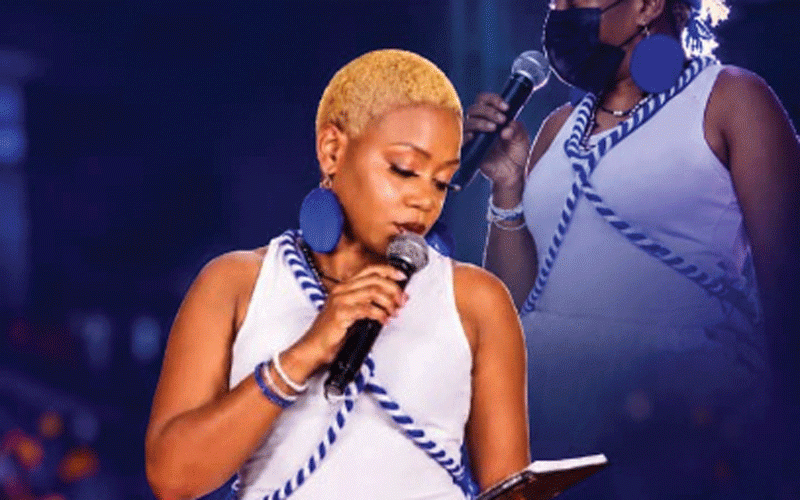
On a random day, Melissa Ntulini might find herself echoing, not necessarily through a microphone, a poetry performance or a formal conversation, but through a thought, a memory, an emotion or an experience that refuses to disappear completely, because for her, the things that happen to us do not simply end when the moment passes; they leave behind fragments of ourselves in the form of lessons, questions, emotions, memories and stories that continue to speak long after the original experience has faded from view.
It is from this understanding of experience and memory that she derives the creative identity Melcy Echoes, a name that is less a brand than a philosophy of artistic existence, because Ntulini believes that experiences never truly disappear and that the responsibility of the artist is sometimes to listen for what remains after an experience has passed, to recognise those residual emotions and thoughts, and then to give them language, form and a place from which they can resonate with somebody else.
“I call myself Echoes because I believe experiences never truly disappear. They leave behind thoughts, lessons, emotions, and stories that continue to speak.”
Through her writing and creative work, Ntulini says she simply gives those echoes "a voice and a place to resonate", an idea that provides perhaps the clearest entry point into understanding her not only as a poet, MC, presenter, writer, podcaster and creative practitioner, but also as a woman deliberately constructing an artistic philosophy around voice, memory, femininity and the power of expression.
Her creative identity, Melcy TheSheScribe, adds another and perhaps more intimate dimension to that philosophy, because the "She" is deliberate and the "Scribe" is equally deliberate, bringing together womanhood and authorship in a single identity that suggests a woman who does not merely want to participate in stories created by others, but wants to write, interpret, preserve and amplify stories from the position of her own lived experience.
“I am the She Scribe because I embrace my femininity.”
For Ntulini, femininity possesses something mystical, and her understanding of womanhood is rooted in the belief that women have been built and wired differently, not necessarily in a way that should create hierarchies between men and women, but in a way that deserves to be recognised, understood and expressed rather than suppressed or treated as an inconvenience in the pursuit of equality.
In a society she describes as polarised and highly misogynistic, her response is therefore not to retreat from femininity but to accentuate women's voices, because she believes that the experiences, perspectives and expressions of women deserve greater visibility and that the public sphere becomes impoverished when women's voices are repeatedly interrupted, dismissed, stereotyped or spoken for by others.
- Edutainment mix: Melissa’s quest to inspire in arts industry
- The woman, the scribe and the echo: Melissa Ntulini on femininity, feminism and the politics of voice
Keep Reading
“I am She because I am a woman.”
Yet Ntulini's understanding of being "She" does not end with the familiar cultural metaphor of the imbokodo, the strong woman who carries burdens, survives adversity and remains standing regardless of what life throws at her, because although she recognises the power of that image, she wants to move beyond the idea that the worth of a woman is primarily measured by how much she can endure.
“I am a She engraved in the creative power of expression.”
That statement shifts the conversation from the woman who merely survives to the woman who creates, thinks, reads, researches, questions, performs, writes and participates in the production of knowledge, allowing femininity to become not an aesthetic of weakness but an aesthetic of agency.
This is where Ntulini's feminism becomes particularly interesting, because she does not describe feminism as a rejection of womanhood or femininity, but rather as a consciousness that allows her to interrogate the conditions under which women are heard, represented and valued, while simultaneously using her own creative platforms to amplify the voices of other women.
“I believe that my femininity is not weakness.”
And in another formulation that perhaps explains the social purpose behind her feminism, she says:
“I am a feminist because I am someone who also seeks to amplify the voice of women.”
Her feminism is therefore not simply about herself; it is about the collective question of who gets to speak, who gets listened to, who gets the microphone, who gets to moderate public conversations and whose experiences are considered worthy of being documented, discussed and preserved.
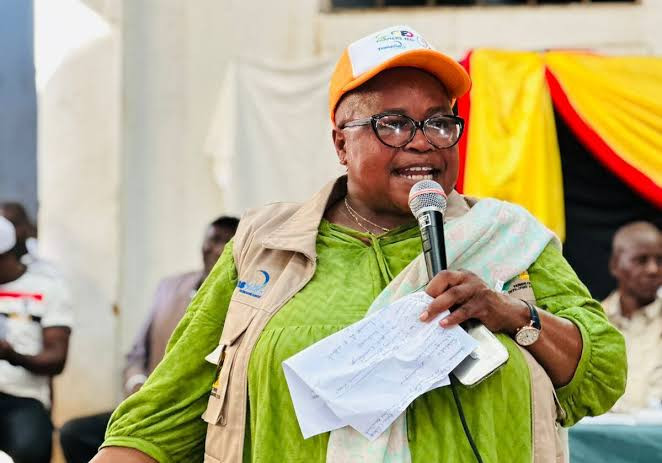
This philosophy becomes particularly visible through her work as an MC, because Ntulini's creative life is not confined to the page, and her professional experience has placed her in spaces such as kitchen tea gatherings, women-only conferences and other events where questions of femininity, womanhood, relationships and women's experiences frequently become central to the conversations taking place.
Yet she does not regard MCing as merely the ability to stand in front of a crowd with a confident voice and keep a programme moving, because for her, effective moderation demands intellectual preparation, audience awareness, research, listening and the ability to navigate competing ideas without allowing a conversation to collapse into noise.
“Being a panelist requires deep research.”
She also believes that one has to be "deeply opinionated and well researched", because to moderate a discussion meaningfully requires more than presentation skills; it requires the ability to understand the subject under discussion, recognise different perspectives, balance arguments and possess enough intellectual grounding to guide a conversation without becoming intellectually empty behind the microphone.
The implication is important because it challenges the tendency to treat event hosting as superficial performance, when in reality the microphone can demand considerable intellectual labour from the person holding it, particularly when that person is required to moderate panels, engage speakers, respond to audiences and create a coherent narrative out of multiple voices.
For Ntulini, therefore, the microphone becomes an extension of the library, because the speaker must also be a reader, the moderator must also be a researcher, the performer must also be a thinker and the public voice must have something substantive behind it.
This is where her identity as a poet becomes significant, because she does not regard spoken and written poetry as separate worlds but as two expressions of the same creative consciousness.
“I am a poet in the spoken and written.”
That duality places her within the continuing relationship between orature and literature, where the spoken word carries rhythm, memory, emotion, gesture and communal energy while the written word offers permanence, reflection and the possibility of preserving an experience beyond the moment of performance.
In African cultural contexts, orature has historically functioned as a means of transmitting knowledge, history, values and communal memory, and Ntulini's contemporary practice extends some of that tradition into the microphone, the poetry stage, the event and the podcast, where voice becomes a vehicle through which experience can be transferred from one person to another.
It is here that MelcyEchoes becomes more than a creative label, because an echo is what remains after a sound has been made, the residue of speech that travels beyond its original point of origin, and Ntulini's artistic philosophy operates on precisely that understanding: an experience happens, but something remains; a conversation ends, but something lingers; a poem is performed, but its emotion continues; a life event passes, but its meaning keeps speaking.
Her explanation of the name is therefore almost a manifesto for her creative practice.
“I call myself Echoes because I believe experiences never truly disappear. They leave behind thoughts, lessons, emotions, and stories that continue to speak.”
Even on a random day, she says, she can find herself echoing, suggesting that creativity for her does not necessarily begin when she sits down to write or walks onto a stage, but can emerge spontaneously from the ordinary encounters, memories and reflections that continue moving within her.
In a cultural environment increasingly dominated by immediacy, where conversations can be reduced to short posts, rapidly consumed videos and constantly shifting trends, Ntulini's philosophy is almost countercultural because she is interested in what remains after the moment has disappeared, what an experience leaves behind and what can be created from those remnants.
That philosophy sits at the heart of her completed poetry compilation, My Echoes: Halfway to 60, a title that initially carries an element of humour but becomes increasingly profound when Ntulini explains what it means to her.
She describes "Halfway to 60" as a simple encryption of her echoes at 30, because turning 30 represented a significant point in her life, a period in which her understanding of spirituality, religion and belief shifted, while experiences from earlier stages of her life seemed to return to her with new meanings.
“It was a phase where I felt everything I had experienced before somehow came full circle, but I was seeing it all differently.”
At one point during this period, she nearly lost her life, an experience that inevitably altered the way she looked at existence, mortality and the things she had previously taken for granted, and it became part of a broader period of reflection in which her previous experiences were no longer simply memories but questions demanding interpretation.
The collection is therefore not merely a record of what happened to her, but an attempt to understand what those experiences meant after they had happened, because there is a significant difference between remembering an event and developing the consciousness to interpret it.
“The compilation is really about those reflections, the things I went through, what they taught me, and the deeper meanings I found in them.”
That distinction gives My Echoes its literary and philosophical weight, because the poems appear to occupy the space between memory and meaning, between what happened and what the person eventually understood about what happened.
The woman who experienced those moments is not necessarily the same woman who later writes about them, because time creates distance, and distance can create perspective, while perspective can transform pain into knowledge, confusion into questioning and survival into reflection.
In that sense, the manuscript becomes an archive of becoming, documenting not simply a series of events but the transformation of the person who lived through them.
Yet Ntulini does not believe the personal nature of the poems makes them inaccessible to others; instead, she believes that the particularity of her experiences may be precisely what allows readers to recognise themselves within them.
“Although the experiences are personal, I believe there are pieces in there that many people can relate to, because sometimes life takes us through things we never imagined we would experience.”
That observation captures one of the most enduring powers of literature: the writer begins with the self but does not necessarily end with the self, because a deeply personal story can become a mirror through which another person recognises their own grief, questioning, survival, spiritual uncertainty, joy or transformation.
A near-death experience may belong to one person, but the fear of mortality is universal; a crisis of faith may belong to one person's biography, but the questioning of belief is human; a period of profound change may be specific to one life, but the experience of becoming someone different from who one once was is shared by many.
Poetry provides a language for those experiences that ordinary conversation sometimes cannot contain.
The poet does not necessarily have to provide answers; sometimes the poet's most important contribution is to give difficult questions somewhere to live.
This is also where the feminist dimension of Ntulini's work becomes deeper than simply describing herself as a feminist.
Feminist thought has long questioned the artificial separation between the personal and the political, particularly the tendency to treat women's experiences, emotions, relationships, bodies, motherhood, spirituality and private struggles as individual matters rather than legitimate sources of knowledge and cultural reflection.
Ntulini's creative practice disrupts that division because she takes experiences from her own life and turns them into public literature, allowing what was once private to become part of a wider cultural conversation.
The poem becomes testimony. The manuscript becomes an archive. The voice becomes evidence that a woman has experienced, interpreted and
given meaning to her own life. There is a quiet politics in that act.
It says, in essence: this happened to me, I experienced it, I interpreted it, and my interpretation is worth hearing.
Her journey also complicates simplistic narratives about women, ambition and motherhood, because Ntulini speaks openly about growing as an artist while embracing the joys of motherhood, refusing the idea that these identities must necessarily compete for space within a woman's life.
The artist does not disappear because she becomes a mother, just as the mother does not cease to be an artist, and the feminist does not have to reject motherhood in order to remain intellectually and socially conscious.
Her creative life therefore becomes a story of accumulation rather than substitution: more experiences, more responsibilities, more identities, more forms of expression and, ultimately, more echoes.
That plurality also challenges the expectation that women must constantly embody one coherent version of themselves.
The imbokodo is powerful, but strength should not become another cage for women; women should be allowed to be strong without being required to be invulnerable, feminine without being considered weak, mothers without surrendering their ambitions and feminists without being frozen into one permanent ideological position.
Ntulini's own joke about having once been a radical feminist and now describing herself as "nyana" is revealing because it introduces humour, evolution and contradiction into a subject that is often discussed in rigid terms.
“I actually was a radical feminist at some point, now I'm just nyana.”
The statement is humorous, but beneath the humour lies an important recognition that consciousness evolves, and that the woman who encounters feminism at one stage of her life may not necessarily engage with it in exactly the same way after motherhood, professional experience, relationships, disappointment, artistic growth, spiritual questioning and the accumulated weight of living.
Her "nyana" feminism can therefore be understood not necessarily as an abandonment of feminist principles, but as an acknowledgement that feminism itself can be lived, questioned and refined through experience.
Perhaps this is the most human dimension of her politics: she does not present feminism as a finished doctrine, but as something that has travelled with her, changed with her and been complicated by the life she has lived.
That same complexity gives her creative identity its aesthetic force.
Her voice is not interesting simply because it sounds good; its aesthetic quality comes from what it carries — experience, research,
femininity, motherhood, humour, spiritual questioning, memory, feminism and poetry because a voice becomes compelling when there is a life behind it.
This may be the deeper meaning of her assertion that even on a random day, she echoes.
The echo does not require a stage or an audience because a thought can echo, a memory can echo, a question can echo, a poem can echo and a woman's experience can echo, sometimes long after the original event has become impossible to return to.
The publication of My Echoes: Halfway to 60 therefore represents more than another poetry collection entering Zimbabwe's literary landscape; it represents a woman turning the residue of experience into an artefact, taking the thoughts that remained after events, the lessons that emerged after pain, the questions that followed belief and the emotions that survived particular moments, and giving them permanence through literature.
This is where the Scribe becomes inseparable from the She.
The woman experiences, the Scribe records, the poet interprets, the feminist amplifies, the MC gives voice, the reader researches, the mother continues becoming, and the echo carries all of them.
The manuscript now stands at the threshold of publication, moving from private creation towards public readership, and that transition matters because a manuscript kept on a computer remains an intimate archive while a published book enters the cultural record, where it can be held by strangers, interpreted differently from what its author intended, questioned, celebrated, criticised and ultimately remembered.
For Ntulini, whose entire creative philosophy is built around the idea of echoes, publication is perhaps another stage in the journey of the voice, because once the echo leaves the person who created it and enters the world, it no longer belongs entirely to its source.
A reader may hear herself in it. Another woman may find language for an experience she had never been able to articulate. Someone questioning their faith may find companionship in another person's uncertainty.
Someone who has survived a difficult period may discover the possibility of meaning after it.
That is how a personal story becomes a cultural conversation.
Melissa Ntulini's story is therefore not simply the story of a woman who has completed a poetry manuscript; it is the story of a woman turning experience into language and language into presence, taking femininity and treating it as creative possibility rather than weakness, taking feminism and allowing it to evolve with her, taking the microphone and treating it as intellectual space, taking motherhood and refusing to let it erase the artist, and taking memory and transforming it into echo.
She has taken the experience of turning 30 and turned it into a literary meditation on what it means to look backwards while continuing to become someone new.
That is the deeper meaning of MelcyEchoes. An echo is proof that something happened, but it is also proof that something survived.
Perhaps that is what TheSheScribe ultimately means: not simply a woman who writes, but a woman who refuses to allow her experiences — or the experiences of other women to disappear without leaving a trace.
She is She because she is a woman. She is Scribe because she writes.
She is Echo because she remembers.
And in a society where women's voices can still be diminished, interrupted, stereotyped or silenced, there is something quietly radical about a woman deciding that she will speak, that she will write, that she will remember, and that she will leave an echo.
- Raymond Millagre Langa is a Zimbabwean journalist, writer, researcher and cultural practitioner whose work explores the intersections of gender, culture, creative expression, identity and society. He is a columnist and freelance journalist with NewsDay and the founder of Indebo Edutainment Trust, an arts and cultural organisation working at the intersection of creativity, heritage, storytelling and community development. Langa holds a Master's degree in Gender and Policy Studies and a Bachelor's degree in Development Studies. His writing is particularly interested in how culture and creative expression shape social consciousness, gender relations, identity and public discourse.