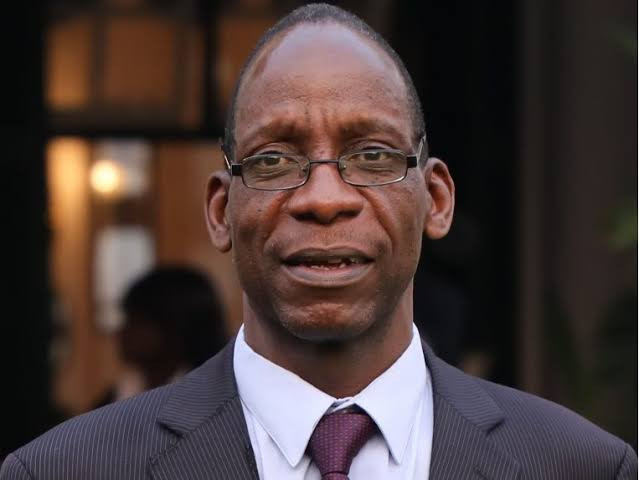
ZIMBABWEANS needs to understand their own cultural identity if the country is to build a stronger sense of national belonging, says Echelon Trust, excutive director, Regges Kudzai Mubaya.
Mubaya, is the brain behind, Bantu Documentary (2026), a 17-part documentary series which speaks to the importance of preserving a Zimbabwean identity. The project, airs on ZBC every Thursday at 21:00hours.
The documentary digs beyond traditions, languages, rituals, oral histories and everyday lives of Zimbabwe’s 16 ethnic groups, which include, Tonga, Shangwe, Karanga, Ndau, Ndebele, Chewa.
Bantu Documentary (2026) seeks to challenge some western narratives that historically portrayed African societies as primitive or backward, while placing communities at the centre of documenting and preserving their own heritage.
Explaining on what inspired the project, Echelon Trust said the idea came from an observation that Zimbabweans often know more about foreign cultures than their own.
“The inspiration came from a simple observation: Zimbabweans know more about other cultures than their own. We have been educated through borrowed lenses that includes colonial textbooks, foreign media, and external narratives that positioned our cultures as primitive and our histories as starting with colonial arrival.
"The documentary was born from a conviction that we cannot build a nation if we do not know who we are,” Mubaya told Style Magazine.
The organisation said the recognition of 16 official languages under the 2013 Constitution highlighted the need for comprehensive audio-visual documentation of the cultures associated with those languages.
- ED’s influence will take generations to erase
- Govt under attack over banks lending ban
- Zim Constitution must be amended
- Examination fees shocker
Keep Reading
He said, “The 2013 Constitution recognised 16 official languages, yet there was no comprehensive audio-visual documentation of the cultures behind those languages.
"We decided to fill that gap. The documentary is an act of restoring the story of Zimbabwe to Zimbabwean hands.”
Echelon Trust believes that the need for such documentation goes beyond cultural preservation, arguing that understanding identity is fundamental to national development and cohesion.
“The absence of a collective national identity is not just a cultural gap, it is a national security threat.
"When a nation does not know who it is, it cannot know what it wants. When it cannot articulate its values, it cannot defend them,” he said.
The documentary devotes an episode to each of Zimbabwe’s 16 ethnic groups, examining distinct traditions, languages, rituals and oral histories.
Among the traditions explored is humwe, a Karanga communal labour system found in Zvishavane, while another episode looks at the traditional court system, or dare, among the Shangwe people of Gokwe North.
The project also has a 17th episode titled Learning and Unlearning, which serves as a philosophical prelude and challenges colonial narratives that have influenced perceptions of African history and identity.
Mubaya, who double as the project producer, explained that the title Bantu was deliberately chosen as part of the documentary’s broader approach to identity.
He said, “Bantu" is a linguistic term meaning "people" in many African languages.
"In the context of this documentary, it is a reclaiming of identity reminding the world that we are not "tribes" or "ethnic groups" as colonial anthropology framed us, but one people with diverse expressions of a shared humanity.”
The research also uncovered what the producers described as sophisticated indigenous economic systems and resilient cultural practices.
“Firstly, the sophistication of our economic systems. Before we encountered the Karanga humwe system, we thought of communal labour as simply "helping each other." We discovered that humwe is a sophisticated economic system, a form of mutual credit, delayed reciprocity, and social security that kept communities alive for centuries.
The West invented microfinance in the 1970s; the Karanga practiced humwe a thousand years before.”
He said the resilience of traditions that survived colonial suppression was equally striking.
“Secondly, the resilience of traditions despite colonial suppression. We filmed ceremonies and rituals that were banned during colonial times and we're now practised in secret, passed down in whispers. The survival of these traditions is a testament to the resilience of our people,” explained Mubaya, an fellow of the US Embassy sponsored digital story telling bootcamp.
The documentary challenges several misconceptions about Zimbabwean communities, including the belief that African societies were primitive and that indigenous cultures are static.
“Some claims states, that African cultures are frozen in time. Our documentary shows a living, adapting heritage that co-exists with smartphones, tractors, and aspirations for the future. The young people we filmed are not preserving the past, but rather they are focused on building the future.”
According to the producers, colonial accounts played a significant role in shaping perceptions of Zimbabwean communities.
Mubaya was quick to highlight that, “Colonial accounts served two purposes: to justify dispossession and to undermine African self-confidence. They portrayed African societies as "tribal" and "primitive" to justify the civilising mission. They erased the sophistication of pre-colonial economies such as gold trade, governance structures and agricultural systems among other activities.”
The project seeks to reverse that approach by ensuring communities have greater control over how their histories and traditions are represented.
“It means that our communities are no longer subjects of study, instead they are authors of their own narrative. We gave communities control over how they are represented. We ensured that consent is non negotiable,” he said.
The producers further stated that some traditions and forms of indigenous knowledge are now at risk of disappearing.
He said, "There are many traditions going extinct. Kuripa or "reparations " when one sins against the other, to ensure harmony, peace and cohesions. In this age a, you will notice that most young people no longer observe it.
"Then there is the knowledge of medicinal plants is disappearing as elders pass away.
"Again, the stories that explains origins of clans and totems are no longer being passed down."
He said, "the project encountered reservations from some communities because of previous experiences in which researchers collected cultural information without adequately returning ownership or control to the communities.
“One of the most striking discoveries was the resistance to documenting these traditions because they are afraid of losing control over their own narratives. This is why the Ethical Content Protocol is essential: it guarantees that communities own their own stories.”
Traditional leaders, cultural custodians and local historians played a key role in determining what was documented.
“We worked with traditional leaders, cultural bearers, and local historians , district officials in the Ministry of Culture and National Arts Council (NAC) Midlands Provincial Arts manager, Kumbirai Kupfavira who identified the traditions that were most at risk and most significant to community identity. We did not decide but the communities decided," Mubaya explained.
Mubaya, said the documentary also seeks to demonstrate that cultural diversity can coexist with a broader national identity.
“We focused on the common values like humwe (communal labour), respect for elders, and spiritual connection to the land. These are not exclusive to one ethnic group; they are shared across all 16 groups. The documentary shows that our diversity is not a weaknes but rather a preserved strength," said Mubaya.
And language was another central element of the project, with the production team recording communities in their indigenous languages and providing English subtitles.
“Language is the vessel of identity. You cannot understand a culture without understanding its language.
“We filmed in local languages and included English subtitles, so that the documentary captures the rhythm and texture of the languages themselves,” he said.
Oral histories were similarly recorded in their original contexts, with the team documenting not only what elders said but also the environment in which the stories were told.
“We recorded interviews with elders, allowing them to tell their stories in their own words and their own languages.
"We also documented the context, storytelling environment, the gestures, the audience. Oral history is not just content; it is performance,” he revealed.
Pointing at speed and urgency of the project which was reinforced by the age of some of the cultural custodians interviewed.
He said, “Yes. Many of the elders we filmed were in their 80s and 90s. Their knowledge is irreplaceable. This is why the documentary is urgent, the succession era is here. The work must be done now.”
For Echelon Trust, the future of Zimbabwean cultural heritage ultimately rests with young people.
“Young people are the future custodians of heritage. If they do not speak the languages, sing the songs, and tell the stories, the traditions will not survive. The documentary is not just for the present, but is expected to also benefit forthcoming generations,” he said.
As Bantu brings the country's diverse cultural traditions to television audiences, its central message is that Zimbabwe's identity cannot be fully understood without acknowledging, documenting and preserving the histories and knowledge held within its communities.
Meanwhile, Echelon Trust, received an overwhelming support from the government and was further backed by Forever Associstes Zimbabwe (FAZ) president Kudakwashe Munsaka and Information, Publicity and Broadcasting Services, deputy minister, Dr Omphile Marupi.
The organisation views the Bantu Documentary (2026) as a genesis for a series of other documentaries related to national pride and preservation of the Zimbabwean heritage.
"The successor project is Zimbabwe Intangible Heritage and Digital Livelihoods program which seeks to place the capacity to document culture in the hands of the custodians, using the Bantu documentary as a scaffolding of that exercise.
"All these are the numerous building blocks to the single main objective of placing culture (IKS) at the center of policy formulation and institutional development frameworks," said Mubaya.