Zimbabwe is witnessing a profound transformation in its physical and economic landscape, with major infrastructure projects taking shape across the country.
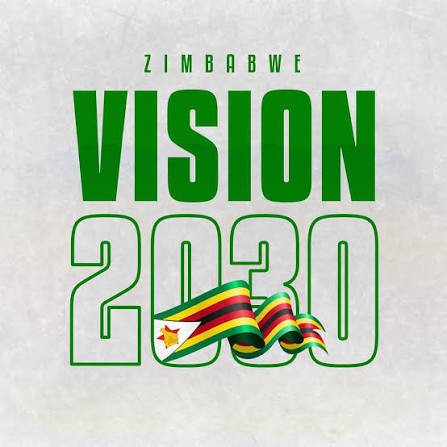
Roads, dams, bridges, schools, health facilities, housing developments, energy projects and other strategic infrastructure are increasingly becoming visible manifestations of the national development agenda. These developments demonstrate that Vision 2030 is no longer merely an aspiration; it is progressively becoming a reality.
At the centre of this national transformation is President Emmerson Dambudzo Mnangagwa, whose leadership has consistently emphasised inclusive development, national unity and the determination to leave no one and no place behind.
His vision of transforming Zimbabwe into an upper-middle-income society by 2030 has provided the country with a clear development trajectory and a renewed sense of national purpose.
President Mnangagwa deserves commendation for placing infrastructure development and economic transformation at the heart of his administration's priorities.
His Government has demonstrated a commitment to ensuring that development is not confined to major cities or traditionally developed areas, but reaches communities across the length and breadth of Zimbabwe.
This approach reflects the President's conviction that every Zimbabwean deserves an opportunity to participate in and benefit from national development.
The philosophy of leaving no one and no place behind is therefore much more than a political slogan. It represents a development philosophy that seeks to ensure that communities, regardless of their geographical location, social circumstances, gender, race or political affiliation, have access to opportunities and essential services.
- Mr President, you missed the opportunity to be the veritable voice of conscience
- ED to commission new-look border post
- Zanu PF ready for congress
- EU slams Zim over delayed reforms
Keep Reading
It is an inclusive approach that recognises that Zimbabwe's development can only be sustainable when all citizens are part of the transformation process.
The progress being recorded under the Second Republic should consequently inspire every Zimbabwean to look beyond political differences and appreciate the broader national interest.
Roads that connect communities, infrastructure that facilitates commerce, schools that educate future generations, hospitals that provide essential services and housing projects that create decent living conditions are national assets. Their benefits transcend political boundaries and should be viewed as investments in Zimbabwe's future.
However, achieving Vision 2030 cannot be the responsibility of Government alone. It must become a collective national project. Government can provide leadership, formulate policies, mobilise resources and establish the necessary institutional framework. Still, citizens, businesses, communities, professionals and other stakeholders must contribute to the realisation of the national vision.
Every Zimbabwean should therefore ask a fundamental question: What am I doing, as an individual, to contribute to the attainment of Vision 2030?
The transformation of a country begins with the transformation of individuals. A teacher who performs their duties diligently, a farmer who increases productivity, a businessperson who creates employment, a student who takes education seriously, a professional who applies skills for national development and a public servant who serves citizens with integrity are all contributing to Vision 2030.
National development is built through millions of individual contributions that collectively create a stronger economy and a better society.
The significance of 2030 should also not be interpreted as meaning that development ends when the calendar reaches that year. Rather, 2030 should represent a major milestone in a longer national development journey.
The foundations being laid today must continue to support an increasingly prosperous, productive and modern Zimbabwe beyond 2030. The upper-middle-income society envisioned by President Mnangagwa should therefore be viewed as a platform upon which an even more prosperous future can be constructed.
This is why President Mnangagwa's leadership deserves recognition and support. He has demonstrated the qualities of a leader who understands that national development requires patience, strategic planning, consistency and decisive action.
His emphasis on infrastructure, investment, industrialisation, agriculture, energy and human development reflects an appreciation that economic transformation requires a comprehensive approach.
The President has also demonstrated the importance of listening to citizens' concerns and aspirations. Responsive leadership does not mean that every decision will satisfy every individual.
It means that Government remains attentive to the needs of the people and continues to refine its policies and programmes in pursuit of national progress.
The opposition and other political formations also have an important role to play. Political competition is an essential feature of a democratic society, and constructive criticism can strengthen governance by identifying weaknesses and proposing better solutions.
Opposition should therefore not mean opposing every Government initiative simply because it originates from the Government. Where national programmes benefit citizens, they deserve support regardless of political affiliation.
Zimbabwe cannot afford a culture in which every development initiative becomes a political contest. Where Government succeeds, citizens benefit. Where Government encounters challenges, constructive criticism should help find solutions. The overriding objective must be to move the country forward.
The roads, schools, hospitals, dams, businesses and communities being developed today belong to the nation as a whole and will shape the lives of generations to come.
As Zimbabwe moves towards 2030, the most important responsibility is therefore to transform Vision 2030 from a Government programme into a shared national mission.
President Mnangagwa has provided the vision and strategic direction; Government is implementing programmes to give that vision practical expression. The responsibility now rests with every Zimbabwean to play their part.
The journey towards an upper-middle-income Zimbabwe is a journey for all. With visionary leadership, committed Government, productive citizens, responsible political engagement and national unity, the dream of a prosperous Zimbabwe can become a lasting reality.
The call, therefore, is simple: let us unite behind development, contribute individually and collectively, and ensure that Vision 2030 becomes not only the President's vision, but the shared reality of the Zimbabwean people.